Executive Overview
Eight episodes of visceral tension, boiling rage, and deeply entrenched systemic corruption culminated on August 31, 2026, with the explosive Season 1 finale of Hulu’s hit thriller, Furious. Created by Elizabeth Meriwether and anchored by powerhouse performances from Emmy Rossum, Lola Petticrew, and a chilling ensemble cast, the series has dominated streaming conversations. At its core, Furious has always been more than a standard revenge drama; it is a profound exploration of trauma, the commodification of vulnerability, and the long shadows cast by abuse.
For weeks, viewers have been gripped by a singular, haunting question: Who killed Isabel, and why?
The answer, unveiled in the gripping final hours of Season 1, subverts traditional mystery tropes. Rather than pointing the finger at the primary antagonists—the wealthy, insulated Easton family—the narrative reveals a far more tragic truth. Catherine (Lola Petticrew), consumed by trauma and acting out of agonizing mercy, was the one who ended her best friend’s life.
This revelation recontextualizes the entire series. Furious transforms from a classic whodunit into a harrowing psychological study of a traumatized mind trying to piece together its own fragmented history. With Hulu having already greenlit Season 2, the stage is set for an even darker, more introspective exploration of justice, vengeance, and moral corruption.
Detailed Chronology: Unraveling the Mystery of Isabel’s Death
To understand the climax of Furious Season 1, one must trace the breadcrumbs left across eight meticulously crafted episodes. The finale shatters long-held assumptions during Catherine’s confrontation on the Easton estate in Connecticut.
The Truth Behind the Panic Room
In the finale’s most harrowing sequence, the dark history between the young girls and the Easton family is brought to light. Years prior, during a visit to Jay Easton (Peter McRobbie) and his inner circle, a young Isabel (Larissa Campos) suffered catastrophic medical complications—specifically hemorrhaging resulting from childbirth—after being sexually abused by Jay, who subsequently left her to bleed out in his panic room.
Realizing the gravity of the situation, Emma Easton (Hope Davis) fetched Catherine to aid Isabel. Confined to the panic room and in agonizing pain, Isabel made a desperate plea to her best friend. Spotting a syringe filled with heroin on a nearby table, she begged Catherine to end her suffering.
An Act of Mercy and Dissociative Amnesia
Overwhelmed by grief, horror, and the immediate trauma of the environment, a tearful Catherine administered the lethal injection. In her final moments, Isabel tightly squeezed Catherine’s hands—a physical and psychological imprint that would haunt Catherine for years. This sensory memory explains a recurring motif from earlier in the season: Catherine’s profound numbness in her hands and her inability to remember why she could not feel them.
The psychological weight of this trauma manifested as dissociative amnesia, a severe defense mechanism wherein the brain blocks out memories too horrific to process. Catherine essentially became a vengeance-seeking force of nature, unconsciously hunting down those responsible for a tragedy her conscious mind refused to acknowledge.
Alice’s Fatal Decision
While Catherine’s fate is sealed—shot earlier in the evening by Emma Easton in the greenhouse and subsequently handcuffed by Alice (Emmy Rossum)—the finale delivers yet another seismic shock.
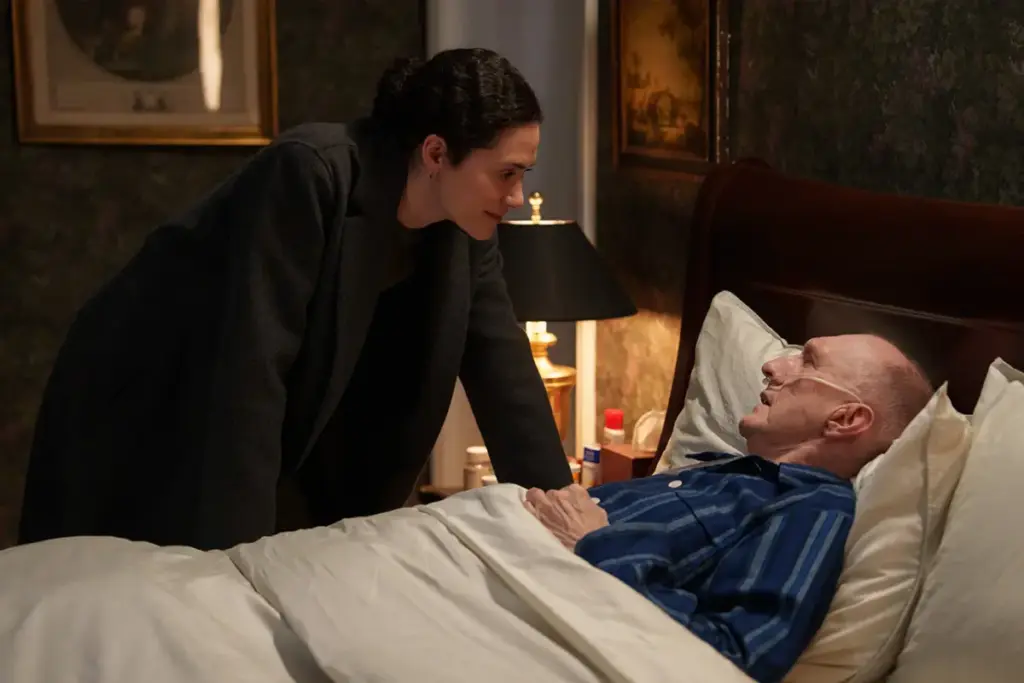
Alice, who has walked a morally ambiguous tightrope all season, sneaks into Jay Easton’s bedroom as he recovers. When Jay dismisses her by calling her "the movie star"—a callous reference to the exploitative video recorded of her during her childhood—Alice reaches her breaking point. In a cold, deliberate act of retribution, she steps on Jay’s oxygen tube and covers his nose and mouth, suffocating him as he goes into respiratory distress.
The truth of this murder remains a secret until Alice visits a recovering Catherine in prison, quietly letting her know that she shares a similar darkness. The season closes with Alice staring at the haunting footage of her teenage self before pulling up a digital ledger of everyone who downloaded the video, teasing a blood-soaked crusade for Season 10—pardon me, Season 2.
Supporting Context & Metrics: The Anatomy of a Streaming Phenomenon
Furious arrived on Hulu with significant expectations, and its performance has exceeded industry projections. The series has consistently dominated streaming analytics, capturing a massive share of the cultural zeitgeist.
Audience Engagement and Cultural Impact
- Demographic Reach: The series successfully bridged multiple demographics, drawing in psychological thriller aficionados, prestige television critics, and fans of character-driven dramas.
- The "Rossum Effect": Emmy Rossum’s dual role as both an on-screen powerhouse (Alice) and an executive producer has been widely cited by industry analysts as a masterclass in modern streaming casting. Her portrayal of a woman grappling with systemic exploitation has resonated deeply with contemporary audiences.
- The Petticrew Breakthrough: Lola Petticrew’s performance as Catherine has been lauded as one of the standout acting turns of the year, perfectly balancing vulnerability, wrath, and psychological fracture.
The Business of Streaming: Subscription Ecosystems
As Furious cements its status as a flagship Hulu title, it also highlights the platform’s evolving tier structures. For viewers looking to catch up on Season 1 before the arrival of Season 2, Hulu offers several accessible entry points:
- Hulu (With Ads): $11.99/month
- Hulu (Ad-Free): $18.99/month
- Disney+ Bundles: Starting at $12.99/month for ad-supported tiers, scaling up to $32.99/month for the comprehensive, ad-free Disney+, Hulu, and Max bundle.
These pricing models reflect the increasing value placed on premium, prestige scripted content like Furious in a hyper-competitive streaming landscape.
Official Statements & Creative Insights
Behind the intricate plotting of Furious is a writer’s room that embraced discovery over rigid blueprints. Series creator Elizabeth Meriwether sat down for exclusive interviews to discuss the unconventional path that led to the season’s staggering conclusion.
Elizabeth Meriwether on "Finding" the Ending
In a candid pre-season interview, Meriwether revealed that she and her writing team did not map out Catherine’s role in Isabel’s death from day one. Instead, the twist emerged organically after the first two episodes were already written.
"It came out in the writer’s room, this idea of memory, her piecing together the memories that she had of what happened to her," Meriwether explained. "So in a way, it’s not a whodunit; it’s the story of a serial killer trying to figure out why she’s killing so many people. It’s a serial killer trying to figure out why she’s a serial killer, which I think is really interesting."
Coming from a comedy background, Meriwether embraced a more improvisational, exploratory approach to the narrative arc. While such a method risks heavy backtracking, she noted that it kept the characters vital and rooted the mystery firmly in the psychology of trauma rather than mechanical plot devices.
"I knew that I needed a mystery, I knew I needed some kind of thing that’s pulling you through. We know who the killer is from the first moments of the show… I felt like there still needed to be something with a lot of secrets that needed to come out," she added.
Emmy Rossum on Power and Internal Transformation
Executive producer and star Emmy Rossum weighed in on how the finale alters Alice’s internal moral compass. For Rossum, the narrative is less about external victories and more about the psychological contamination that occurs when marginalized individuals seize power through violence.
"I think Alice and Catherine are people who have been underestimated and are both feeling somewhat powerless, even though they’re on these missions for justice and vengeance," Rossum shared. "And when Catherine later on says that killing someone is power, it’s taking power back, I think that changes something in the way that Alice thinks about what Catherine is doing."
Future Outlook: What Lies Ahead in Season 2?
With Hulu’s swift renewal of Furious for a second season, the creative team has a broad canvas to expand upon the psychological wreckage left in the wake of the Season 1 finale.
A Shift in Dynamic: Alice and Catherine
While Elizabeth Meriwether envisions Season 2 as an opportunity to explore another major narrative arc akin to the first season, Emmy Rossum’s focus remains squarely on character evolution. The unspoken understanding established when Alice visits Catherine in prison establishes a chilling alliance. No longer simply opposite forces of law and vengeance, Alice and Catherine are now bound by the shared, irreversible act of taking a life.
The Crusade Against the Exploiters
The final lingering image of Season 1—Alice staring at her childhood exploitation video and pulling up a comprehensive database of everyone who downloaded it—paves a clear and menacing path forward. Season 2 is poised to transform Alice from a reactive participant into an active, systemic hunter.
As Furious moves into its sophomore outing, it faces the enviable challenge of maintaining the suffocating tension that defined its debut while expanding its thematic scope. If Season 1 was about uncovering the buried truths of the past, Season 2 promises to examine the heavy, corroding cost of delivering vengeance in the present.
Furious Season 1 is streaming now on Hulu.