Executive Overview
For decades, the global oral care market has been defined by a familiar, functional hegemony. Giants like Crest, Colgate, and Listerine dominated drugstore shelves with stark, clinical packaging, abrasive formulas, and a singular message rooted in utilitarian hygiene. Today, that century-old paradigm is undergoing a radical upheaval.
A new wave of disruptors is transforming toothpaste and mouthwash from a mundane bathroom chore into an aspirational, skin-care-adjacent lifestyle ritual. At the vanguard of this movement is Boka, a ten-year-old oral care brand that is rapidly outpacing both legacy incumbents and fellow upstarts.
Acquired in 2024 by Essor Group—a digitally native CPG accelerator backed by venture capital heavyweights including Khosla Ventures, General Catalyst, and BlackRock—Boka has deftly navigated the transition from direct-to-consumer (DTC) novelty to mass-market phenomenon.
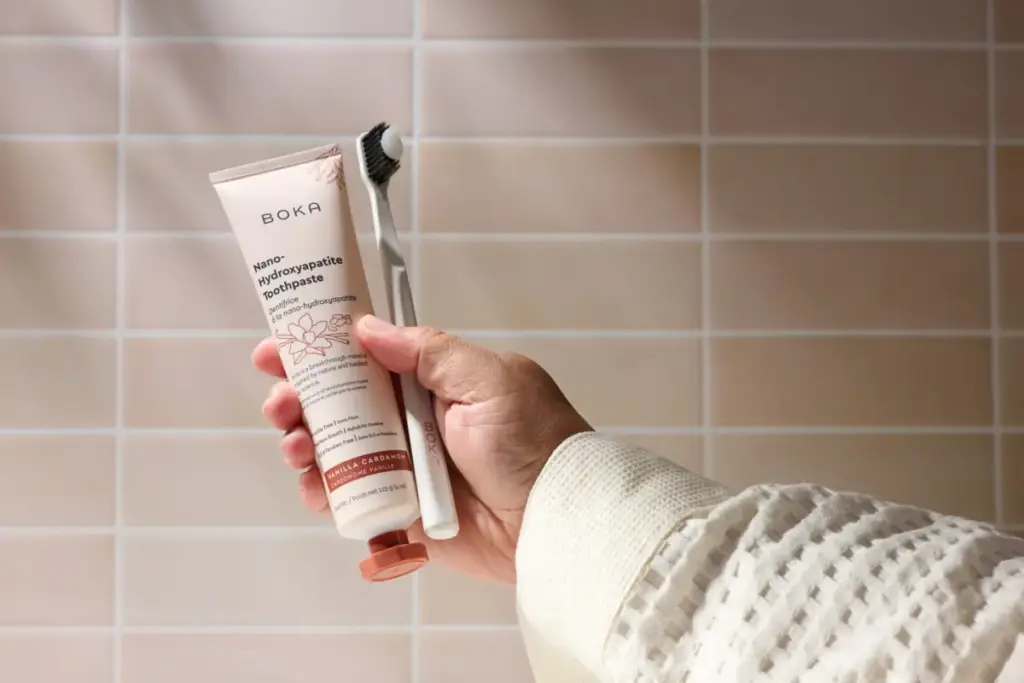
By marrying high-concept, gourmet-inspired flavor profiles with science-backed, skin-care-inspired formulations—most notably the space-age remineralizing agent hydroxyapatite—Boka has pulled off a rare retail feat. It bridges the gap between hyper-curated luxury markets like Erewhon and high-volume mass-market giants like Walmart.
As consumer awareness surrounding wellness, clean ingredients, and holistic health reaches an all-time high, Boka’s meteoric trajectory offers a masterclass in how to disrupt a legacy category by redefining what a consumer expects from their daily routine.
Detailed Chronology: From DTC Startup to Mass-Market Powerhouse
The Formative Years (2016–2023)
Founded in 2016, Boka entered the personal care landscape during the early boom of the direct-to-consumer movement. Back then, the market was beginning to see the first cracks in the armor of legacy giants like Procter & Gamble and Unilever. However, most alternative brands relied primarily on the simple premise of being "natural" or "fluoride-free" without offering a compelling, technologically advanced alternative to traditional dental care.
Boka recognized early on that consumers wanted more than just an absence of controversial chemicals; they wanted a functional upgrade. By incorporating hydroxyapatite—a biocompatible calcium phosphate derivative originally developed by NASA in the 1960s to combat bone and tooth degradation in astronauts—Boka positioned itself at the intersection of cutting-edge dental science and holistic wellness.
The Essor Group Acquisition and Strategic Scale (2024)
A pivotal turning point arrived in 2024 when Boka was acquired by Essor Group (formerly Heyday), a digitally native consumer packaged goods accelerator renowned for scaling disruptive wellness and beauty brands such as ZitSticka, Puracy, and FreshCap.
Under Essor’s stewardship, Boka received the operational muscle, financial backing, and supply-chain infrastructure needed to transition from a niche cult favorite into a formidable omnichannel brand. Sarah Mountcastle Mitchell, a veteran of prestige and clean beauty brands including Living Proof, Follain, First Aid Beauty, and PepsiCo, stepped into the general manager role at Boka in 2024.
Mitchell’s appointment signaled a deliberate strategic shift: treating oral care not as a medical necessity governed by ADA approvals alone, but as a dynamic category ripe for the principles of modern beauty marketing.
The Omnichannel Explosion (2025 and Beyond)
The strategic maneuvers implemented following the Essor acquisition bore immediate, staggering fruit in 2025. Having already established a loyal digital footprint and footholds in luxury grocery chains, Boka secured massive distribution deals with retail titans Walmart and Target.
The results defied traditional retail logic. While Boka’s price points at mass-market retailers often sit three to four times higher than conventional legacy competitors, the brand achieved a staggering 481% year-over-year retail growth in 2025.
Furthermore, according to internal company metrics, Boka secured its position as the No. 1 toothpaste brand by sales on Amazon. This dual dominance—thriving simultaneously in ultra-exclusive wellness hubs and sprawling mass-market retail chains—proves that the appetite for "everyday luxury" transcends traditional demographic boundaries.
Supporting Context & Metrics: The Science and Strategy Behind the Disruptor
The Skin-Careification of Personal Care
The phenomenon driving Boka’s success is part of a broader, macroeconomic shift across the fast-moving consumer goods (FMCG) landscape. Just as the beauty industry successfully elevated categories like hair care, body wash, and deodorants into sensorial, active-ingredient-driven experiences, wellness brands are now turning their attention to historically overlooked categories.
Dandruff care, allergy management, hearing health, and oral care are all undergoing what industry analysts term "beautification." At its core, this movement relies on three pillars:
- Better-for-you ingredients that actively nourish rather than merely strip or clean.
- Memorable, elevated branding that looks appealing on an open bathroom vanity.
- Appealing, tactile packaging that transforms a functional chore into a moment of self-care.
Boka embodies this shift by integrating ingredients traditionally reserved for high-end facial serums directly into its oral care lines. For example, the brand’s newly reformulated Whitening Powder incorporates niacinamide—a powerhouse skincare ingredient celebrated for its barrier-repairing and anti-inflammatory properties—because of its emerging benefits for oral tissue health. Other formulations leverage vitamin C, hyaluronic acid, and targeted probiotics.
Flavor as Fragrance
Moving away from the stinging, artificial mint flavor profiles that have defined toothpaste for a century, Boka approaches flavor development with the sophistication of a fine perfumery. The brand utilizes nuanced flavor descriptors that outline top and bottom fragrance notes.
Offerings like Coco Ginger, Lemon Lavender, and Cherry Blossom read less like dental hygiene products and more like artisanal gourmand fragrances. This sensory upgrade transforms brushing teeth from a clinical obligation into an indulgent olfactory experience.
The Science of Hydroxyapatite vs. The Fluoride Debate
Boka’s formulation philosophy is deeply rooted in transparency and safety. The brand purposefully omits controversial ingredients frequently targeted by wellness-conscious consumers, including sodium lauryl sulfate (SLS), parabens, artificial colorants, and harsh synthetic dyes.
Crucially, Boka’s flagship formulations are fluoride-free. While fluoride has long been the gold standard for cavity prevention endorsed by dental associations, a growing segment of the consumer base actively seeks alternatives. This consumer wariness is driven by various factors, including personal allergies, pregnancy precautions, and heightened public discourse—amplified by figures like Robert F. Kennedy Jr. and his campaign to remove fluoride from municipal water supplies.
For decades, natural oral care brands struggled because removing fluoride meant losing the primary active ingredient for enamel protection. Boka solved this dilemma by championing nano-hydroxyapatite (nHAp). Originally engineered by NASA in the 1960s to restore bone density and enamel loss experienced by astronauts in zero-gravity environments, hydroxyapatite makes up roughly 97% of human tooth enamel.
When applied topically via toothpaste, nHAp micro-particles bond directly to the tooth surface, filling microscopic fissures, remineralizing weakened enamel, and naturally whitening teeth without the abrasive scrubbing action of traditional silica pastes.
The market response to this scientific alternative has been monumental. Google Search data illustrates a profound cultural shift: between 2004 and 2022, consumer interest in "hydroxyapatite" was virtually nonexistent, consistently registering below 4 out of 100 on search interest metrics. However, between 2022 and 2025, the ingredient experienced exponential hockey-stick growth, hitting a historic 100/100 rating in April 2025—the highest search volume for the term in internet history.
Official Statements and Industry Insights
The philosophy fueling Boka’s ascent is rooted in a clear understanding of modern consumer psychology. As Sarah Mountcastle Mitchell explained in an interview with trade publication Glossy, the brand’s primary objective is to bridge the gap between clinical efficacy and lifestyle aspiration.
"Oral care is a category that has a lot of very big legacy players, but there’s an opportunity to think about oral care in more of the beauty sense," Mitchell told Glossy. "For example, we’re relaunching our Whitening Powder. We knew niacinamide was an ingredient that’s very popular and common in skin care, and it also has benefits in oral care. So, [we thought], ‘How do we weave those [skin-care] ingredients into the product?’"
Mitchell also emphasized the cultural significance of the brand’s broad retail footprint, which defies traditional categorization.
"We’re one of the few personal care brands that are available both at Erewhon and Walmart, so I think that speaks to consumers really looking for that everyday luxury wherever they’re shopping," Mitchell noted.
Addressing the historical evolution of natural alternatives, Mitchell highlighted how science has empowered modern brands to tell a more compelling, credible story:
"The interesting thing is that natural brands 20-30 years ago were all about the absence of fluoride, but there wasn’t another ingredient to take the place of fluoride. [Now we] can tell that story from [a science-backed] standpoint versus just saying you’re ‘fluoride-free,’ which has really helped us a lot with consumers."
This sentiment captures the broader market dynamics identified by market researchers and industry analysts. As legacy parent conglomerates like Procter & Gamble and Unilever grapple with declining market share against an unrelenting onslaught of agile disruptors, consumers are voting with their wallets. They are explicitly rejecting legacy formulations in favor of brands that respect their intelligence, wellness values, and aesthetic sensibilities.
Future Outlook: How Far Can the Beautification of Oral Care Go?
As Boka looks toward the future, the horizon appears remarkably unobstructed. For years, skeptics argued that premium-priced personal care products governed by wellness claims would hit a hard ceiling when attempting to scale beyond affluent coastal enclaves. Boka has decisively disproven that hypothesis.
The brand’s ability to command a price point three to four times higher than conventional competitors on the shelves of Walmart—while simultaneously dominating high-end luxury grocers like Erewhon—signals a fundamental rewiring of consumer behavior. Shoppers across every socio-economic bracket are willing to pay a premium for everyday items if those items deliver superior ingredient transparency, sophisticated sensory experiences, and verifiable scientific backing.
Reflecting on the runway ahead, Mitchell remains intensely optimistic about the category’s growth potential:
"When we entered Erewhon, the price point was in line with the competitor set. When we entered Walmart, our price point was probably three to four times higher than competitors, and we’re blowing all of our targets out of the water. To me, that says that consumers are looking for an alternative. […] I imagine there is a ceiling, but I don’t think we’ve seen it."
In the years to come, the broader oral care landscape will undoubtedly see legacy incumbents attempting to mimic Boka’s playbook—acquiring smaller clean-label brands, experimenting with hydroxyapatite, and introducing gourmand flavor profiles. Yet, brands that were born in this ethos, backed by sophisticated data-driven accelerators like Essor Group and helmed by executives fluent in both beauty marketing and scientific communication, maintain a vital first-mover advantage.
The dental aisle is never going back to the clinical, uninspired status quo. Boka has proven that when you treat a routine chore as an act of daily luxury and holistic health, the market response is not just a passing trend—it is a permanent revolution.