Executive Overview
For generations, the upper echelons of the horological world operated under a rigid, unwritten code: luxury was large, heavy, and explicitly masculine. The most prestigious complications, the highest-performing auction lots, and the best-selling catalog models were almost universally engineered for larger wrists. Traditional marketing departments neatly divided the ecosystem into two distinct buckets—robust, commanding men’s references and smaller, often gemstone-encrusted women’s pieces that were frequently treated as secondary afterthoughts rather than serious mechanical investments.
Today, that foundational paradigm is experiencing a seismic shift.
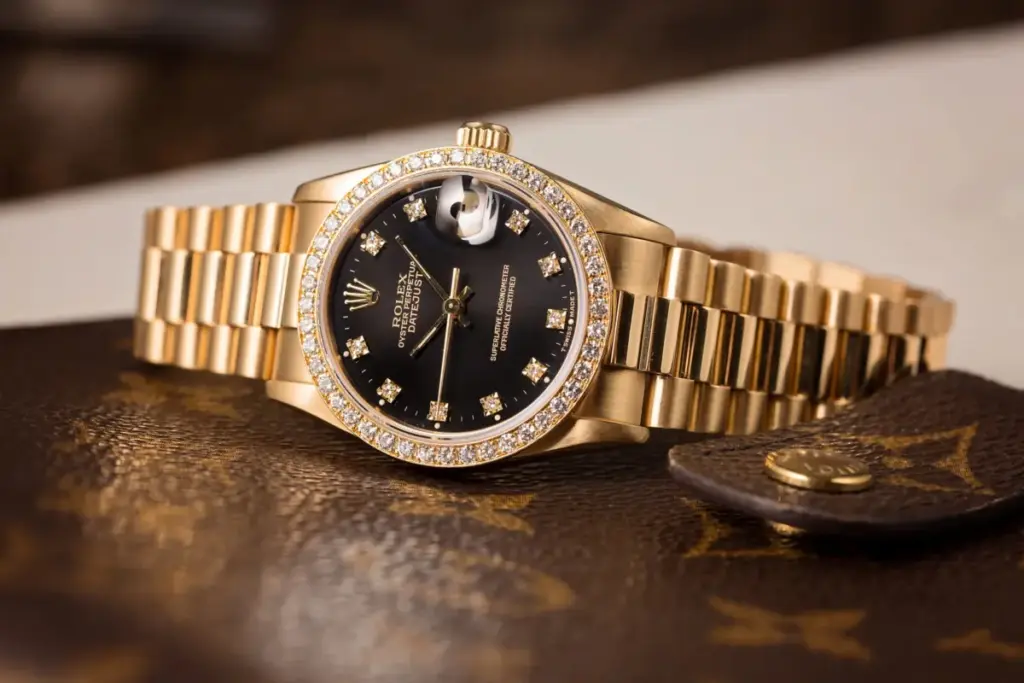
Recent secondary market data shared exclusively by prominent watch dealer Bob’s Watches reveals a striking financial reality: some of the best-performing, fastest-appreciating assets in the luxury timepiece sector over the past six months are women’s and smaller-scale watches. Models historically marketed toward female buyers—most notably the Rolex Lady-Datejust and the unisex-labeled Datejust 31—are surging ahead of their larger counterparts in terms of secondary market value appreciation, posting staggering gains that have caught industry veterans and investors completely by surprise.
This is not merely a fleeting stylistic fluctuation or a minor blip in the secondary market. According to industry executives, market analysts, and cultural data, the explosive growth of women’s and smaller watches represents a fundamental evolution in consumer behavior. Driven by a broader industry-wide aesthetic correction away from oversized 44mm+ timepieces, the powerful endorsement of global style icons, and a radical blurring of traditional gender lines in fashion, the luxury watch landscape is democratizing. Men are embracing traditionally feminine or unisex proportions, women are fiercely building serious mechanical watch collections, and the entire market is careening toward a multi-billion-dollar valuation equilibrium that threatens to rewrite the rules of luxury retail.
Detailed Chronology of the Shift: From Oversized Excess to Refined Proportion
To understand the magnitude of the current micro-trend, one must first look backward to the overarching macro-trend that dominated horology for the better part of two decades.
The Era of Oversized Dominance
Beginning in the late 1990s and accelerating rapidly through the 2000s and 2010s, the watch world was gripped by a fascination with mass. Influenced by a broader shift toward streetwear aesthetics, athletic physiques, and an appetite for immediate visual impact, case sizes crept steadily upward. Watches that had historically measured a classic, elegant 34mm to 36mm were suddenly dwarfed by 41mm, 44mm, and even 48mm chronograph beasts. Brands prioritized wrist presence above all else, often leaving collectors with slender wrists—and the entire demographic of female luxury buyers—underserved or forced to adopt oversized styles that defied ergonomic comfort and classical tailoring.
The Turning Point (Late 2023 – Early 2024)
The first subtle corrections began to appear in manufacturers’ catalogues as major heritage houses quietly shaved 1 to 2 millimeters off their flagship silhouettes. However, the secondary market was the true bellwether of change. Between December 2025 and May 2026, a sudden and ferocious liquidity wave hit specific small-format models.
Market trackers noted that the velocity of price appreciation for women’s references detached itself from historical baselines. While overall economic pressures occasionally cooled certain speculative men’s steel sports models, women’s luxury classics entered a golden age of compounding returns. References like the Rolex Lady-Datejust 6917 and 179174 recorded meteoric growth, with their secondary market valuations jumping well over 30% within a compressed six-month window. Even more dramatic was the performance of the Datejust 31. Marketed ostensibly as a unisex piece, its 31mm architecture positions it firmly within the traditional women’s sizing bracket. During this same period, its resale price skyrocketed by nearly 70%, signaling an unprecedented frenzy of buyer demand.
Supporting Context & Metrics: The Numbers Behind the Boom
The anecdotal buzz surrounding small watches is fully substantiated by hard market data and macroeconomic forecasts. The global women’s watch market is currently valued at approximately $27 billion annually. However, driven by the current accelerated growth rate, market intelligence projections indicate that this segment is on track to nearly double, reaching a staggering $50 billion within the next decade.
To put this trajectory into perspective, consider the broader market dynamics:
- The Men’s Market Baseline: The global men’s watch market currently stands at roughly $52 billion, expanding at a steady, mature annual rate of 5% to 10%.
- The Convergence Horizon: Should current consumer adoption trends persist, the women’s and smaller-format watch market will soon achieve valuation parity with the historically dominant men’s sector.
- Pricing Accessibility as a Catalyst: While high-end complications can command six figures regardless of size, the entry and mid-tier luxury brackets offer a compelling value proposition. The average secondary market price for a Rolex Lady-Datejust hovers between $5,000 and $10,000. In comparison, a classic men’s Datejust spans a wider bracket of $5,000 to $16,000. This lower barrier to entry makes premier luxury heritage accessible to a broader demographic of self-purchasing women who view watches not just as jewelry, but as liquid financial assets.
Official Statements and Industry Insights
Behind these numbers lies a profound psychological shift in how buyers interact with luxury goods. Industry leaders are unanimous in their assessment that this transformation is structural rather than superficial.
Paul Altieri, founder and CEO of premier secondary watch dealer Bob’s Watches, points out that while celebrity endorsements provide an undeniable spark, they cannot single-handedly engineer the kinds of sustained price surges observed in recent quarters.
"We do see a pop with some models after, say, Victoria Beckham is wearing it courtside at a Lakers game," Altieri explains. "That kind of thing will translate to a bump in demand and price on the market—but not 68%. That’s a bigger jump and indicative, in my opinion, of a larger trend."
Altieri identifies two principal engines driving this modern movement: structural shifts in consumer wrist preferences and the intentional dismantling of gender-segmented marketing by everyday buyers.
"The trend for the last 10 years was bigger and bigger watches," Altieri notes. "But now, it’s going the other way. A lot of new Rolex watches are going down by 1 millimeter or 2 millimeters in size due to consumer demand for smaller watches. The other factor: The industry can be pretty rigid about labeling watches as for men or for ladies, but the consumer is blurring those lines. A man can wear a 31-millimeter watch, and it’s totally fine."
This cultural fluidity is increasingly visible on red carpets and international fashion weeks. Over the past year, trendsetting male celebrities—including style icons like Timothée Chalamet, Jacob Elordi, and Connor Storie—have repeatedly captured global media attention wearing delicate, traditionally feminine timepieces from houses like Cartier and Tiffany & Co.
Martine Ilana, founder of women-focused watch brand La Lune, observes that this cross-shopping phenomenon is rewriting the very definition of modern elegance.
"Women have long borrowed from traditionally masculine watch styles, but I think we’re now seeing the movement go both ways," Ilana shares. "Men are increasingly open to smaller, more refined watches that may historically have been marketed toward women. There is something very modern about that shift. A smaller, cleaner watch can have a subtle, quiet-luxury appeal regardless of gender."
This embrace of "quiet luxury"—an aesthetic prioritizing understated sophistication, historical craftsmanship, and minimalist discretion over loud logos and oversized hardware—has acted as a powerful tailwind for smaller vintage and neo-vintage references.
Future Outlook: What Lies Ahead for the Horological Landscape
As the boundary lines between "men’s" and "women’s" timepieces continue to dissolve, the luxury watch industry is bracing for a profound operational transformation.
1. The Death of Gendered Marketing
Legacy watchmakers are discovering that rigid categorization alienates modern consumers. Millennial and Gen Z buyers—who prioritize personal expression over outdated demographic boxes—frequently cross-shop across traditional catalog divisions. In response, forward-thinking brands are gradually phasing out gendered monikers in favor of sizing-based nomenclature (e.g., categorizing collections by millimeter diameters such as 28mm, 31mm, 36mm, and 41mm). This shift allows the consumer to dictate how a watch fits their wrist, rather than letting a marketing department dictate who is allowed to wear it.
2. Product Development and R&D Adjustments
Watch manufacturers are already altering their product pipelines. Expect to see an influx of high-complication mechanical movements housed within smaller case architectures. Historically, if a buyer wanted a genuine in-house chronograph, a complex perpetual calendar, or a high-beat automatic movement, they were forced to accept a 40mm+ case. The demand for compact luxury means brands are investing heavily in miniaturizing high-end calibers without sacrificing performance, power reserve, or water resistance.
3. Investment and Secondary Market Dynamics
As secondary market data proves the exceptional liquidity and appreciation potential of smaller references, institutional and retail investors are adjusting their portfolios. The Rolex Lady-Datejust and Datejust 31 are no longer viewed merely as gifts or seasonal accessories; they are recognized as blue-chip assets capable of delivering returns that rival—and occasionally outpace—their larger male-oriented counterparts.
Conclusion
The ticking of the watch world’s future will not be measured by the sheer bulk of its hardware, but by its versatility and refinement. By casting off the rigid dogmas of the past, the luxury watch market has unlocked a dynamic new frontier. Whether it is a global superstar layering a diamond-paved Lady-Datejust for a cinematic press tour, or a discerning male collector seeking the understated poetry of a vintage 31mm dress watch, the message is clear: true style has never depended on millimeter counts. As the market marches toward its projected $50 billion milestone, the watch of tomorrow belongs to anyone bold enough to wear it.