Content warning: This story discusses suicide.
Executive Overview
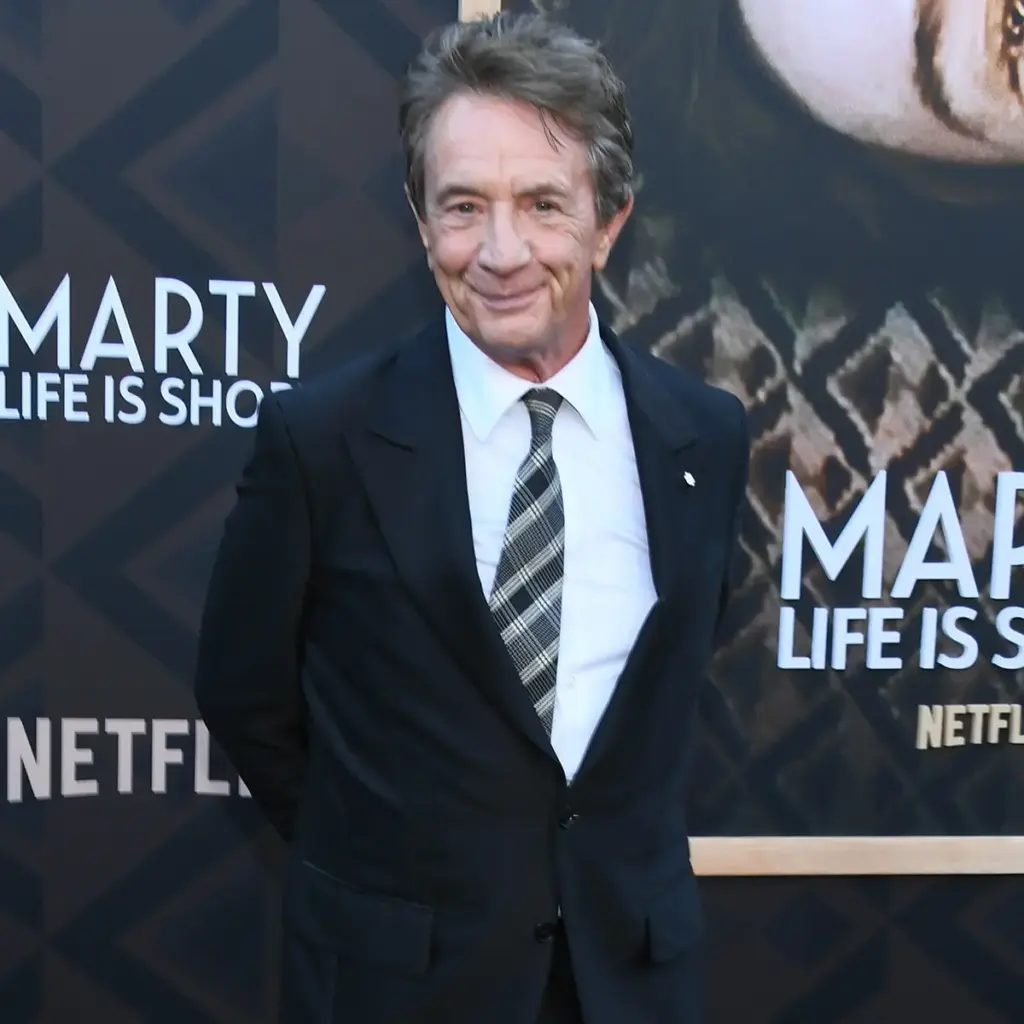
In the public eye, veteran comedian and actor Martin Short is celebrated for his vibrant energy, rapid-fire wit, and indelible comedic timing. Whether dazzling audiences on Broadway, bringing eccentric characters to life on Saturday Night Live, or anchoring the critically acclaimed Hulu comedy Only Murders in the Building, Short has spent decades channeling joy into the cultural zeitgeist. Behind the laughter, however, lies a deeply private man who has weathered an extraordinary cascade of unimaginable personal tragedies.
In a remarkably candid recent interview with IndieWire, the 76-year-old entertainer opened up about how he maintains his mental health amidst a lifetime marked by profound loss. From the sudden deaths of his parents and older brother during his teenage years in Hamilton, Ontario, to the passing of his beloved wife, Nancy Dolman, from ovarian cancer in 2010, and the heartbreaking, recent death of their daughter, Katherine Short, at the age of 42, Short has navigated towering waves of grief.
Yet, perhaps most surprising to contemporary audiences accustomed to modern therapeutic frameworks, Short revealed that he has never once stepped foot in a therapist’s office. Eschewing professional counseling entirely, the actor has instead relied on a combination of creative outlets, a tight-knit network of family and friends, and a demanding professional schedule to process his sorrow. This deep dive examines Short’s remarkable journey through grief, the historical backdrop of his early losses, his perspective on mental health and professional support, and how he continues to find the light amidst life’s deepest shadows.
Detailed Chronology: A Lifetime of Cumulative Loss
To understand Martin Short’s unique relationship with grief, one must examine the timeline of losses that have punctuated his life. Long before he became a household name, the foundational pillars of Short’s early life were systematically dismantled by tragedy.
The Formative Years in Hamilton: Losing Family Before Adulthood
Born in Hamilton, Ontario, Canada, Martin was the youngest of five children born to Olive Hayter, a concert violinist, and Charles Patrick Short, a corporate executive. By all accounts, his early childhood was comfortable and culturally rich. However, the trajectory of his youth shifted dramatically when he was just 12 years old.
His older brother, David Short, was killed in a devastating car accident. The loss of a sibling at such a tender age introduced the young Martin to the permanence of death far too early. Worse was yet to come. Just three years later, when Short was 15, his mother, Olive, passed away from natural causes. The compounding grief reached a devastating crescendo the following year when his father, Charles, died.
Reflecting on this period during a panel discussion at Netflix Is a Joke Presents: This Better Be Funny alongside close friend David Letterman in May, Short painted a vivid picture of sudden displacement:
"My father died the year after that. So, there was definitely a period where life changed completely."
At just 19 and 20 years old, instead of attending university with the typical carefree attitude of youth, Short found himself rattled, living in a large house in Hamilton with only a housekeeper. It was an era—the early 1970s—where psychological support systems were rudimentary at best and virtually nonexistent for grieving teenagers in industrial Canadian cities.
The Passing of Nancy Dolman
Decades later, after achieving international stardom and building a loving family, tragedy struck again. In 1980, Short married fellow Canadian actress and singer Nancy Dolman. The couple shared a deeply devoted marriage spanning three decades, raising three children together: Katherine, Oliver, and Henry.
In 2010, the family faced an insurmountable blow when Nancy was diagnosed with and ultimately succumbed to ovarian cancer at the age of 58. Her passing profoundly altered Short’s domestic reality, forcing him to transition into a single father while processing the loss of his life partner.
The Recent Loss of Katherine Short
Most recently, the Short family was struck by another unimaginable tragedy. In February, his and Nancy’s eldest daughter, Katherine Short, passed away at the age of 42 following lifelong, private struggles with her mental health. Her death was ruled a suicide.
For a father who had already buried a brother, both parents, and a wife, the loss of a child represents the deepest, most agonizing tier of human suffering. Yet, true to his character, Short has faced this latest chapter with a quiet, resolute dignity, leaning on the coping mechanisms he forged decades ago on the bicycle paths of Hamilton.
Supporting Context & Metrics: The Mechanics of Unconventional Coping
In an era where mental health awareness is at an all-time high and professional therapy is widely championed as the gold standard for psychological healing, Martin Short’s complete aversion to traditional therapy stands out.
When asked by IndieWire about his psychological toolkit, Short was unequivocal:
"I’ve never been in therapy. Never. Never."
The 1970s Reality: Isolation and Self-Reliance
Recalling his late adolescence in Hamilton, Short explained that seeking professional help simply wasn’t part of the cultural or familial lexicon of the time.
"When my brother and parents died, and I was now in this big house with the housekeeper at 19 and 20, it was Hamilton, Ontario, 1970. So it wasn’t about therapy; it was about no one."
Without peers or professionals to guide him through his complex trauma, the future comedian engineered his own survival strategy. He spent hours bicycling across the city, cycling up steep hills, and channeling his internal turmoil into painting and writing.
Furthermore, he benefited from the protective instincts of his surviving siblings. As the youngest of five children, his remaining three siblings closed ranks around him. They "took over aggressively, nurtured and worried," providing an instinctive safety net that kept him grounded.
Work as the Ultimate Distraction and Relief
In his later years—particularly following the loss of Nancy and, more recently, Katherine—Short has found solace in his craft. Far from viewing work as an unwelcome intrusion during times of mourning, he views creative immersion as a vital therapeutic substitute.
Currently starring in the smash-hit Hulu series Only Murders in the Building, Short has found deep professional fulfillment and a profound personal bond with his co-star, legendary actress Meryl Streep. Collaborating with creative peers of this caliber provides a much-needed psychological buffer.
"That work is always good for grief because if you take it seriously and it still matters to you, then it’s the ultimate distraction, and distraction can be a relief from grief."
Short is careful to clarify that his avoidance of therapy is not born out of stubbornness or a philosophical objection to psychology. Rather, it is a reflection of his emotional constitution.
"Believe me, if I was suddenly depressed or in despair, but didn’t know why, then I’d run to a therapist," he explained. "But I’ve never been that way. I’m sad now, but you know what? I should be sad now. It’s OK to be sad."
Official Statements & Public Reflections
Short’s reflections on grief offer a rare glimpse into the interior life of a master entertainer who has learned to balance public levity with private sorrow. His public appearances alongside peers like David Letterman and his thoughtful interviews with cultural journalists underscore a philosophy built on community, emotional honesty, and radical self-acceptance.
During his appearance on the Netflix Is a Joke Presents panel, Short emphasized the vital role that human connection plays when tragedy strikes. When grief envelops an individual, he noted, it is the proactive presence of friends and family that gently pulls them back from the abyss.
"When loss and grief suddenly or subtly encompass your life," Short shared with IndieWire, "it’s your friends and family that help you through and remind you of the journey. So, you find the light."
This perspective was further echoed in his family life. Over the decades, Short, Nancy, and their children—Katherine, Oliver, and Henry—cultivated a famously tight-knit family dynamic. Red carpet appearances, Broadway opening nights (such as his 2006 show Martin Short: Fame Becomes Me), and high-profile industry events frequently featured the family standing shoulder-to-shoulder, projecting a united front of warmth and mutual support.
Future Outlook: Legacy, Resilience, and Finding the Light
As Martin Short moves forward into his late seventies, his life remains a complex tapestry of triumphant professional achievements and enduring personal endurance. He continues to captivate millions on television and stage, proving that artistic vitality can coexist with profound personal sorrow.
Short’s journey challenges modern assumptions about healing. While professional therapy remains an invaluable, life-saving resource for millions battling depression and trauma, his story highlights the diverse pathways humans navigate to achieve psychological survival. For Short, survival has looked like physical movement, creative expression, fierce familial protection, and, above all, the courage to sit with his sadness rather than run from it.
In normalizing grief—in acknowledging that feeling deeply sad after monumental losses is not a pathology to be cured, but a natural human response to love—Martin Short offers a masterclass in resilience. As he continues to entertain the world, his life stands as a poignant reminder that even in the deepest darkness, the human spirit can find a way to honor its losses, cherish its memories, and ultimately, find the light once more.