Executive Overview
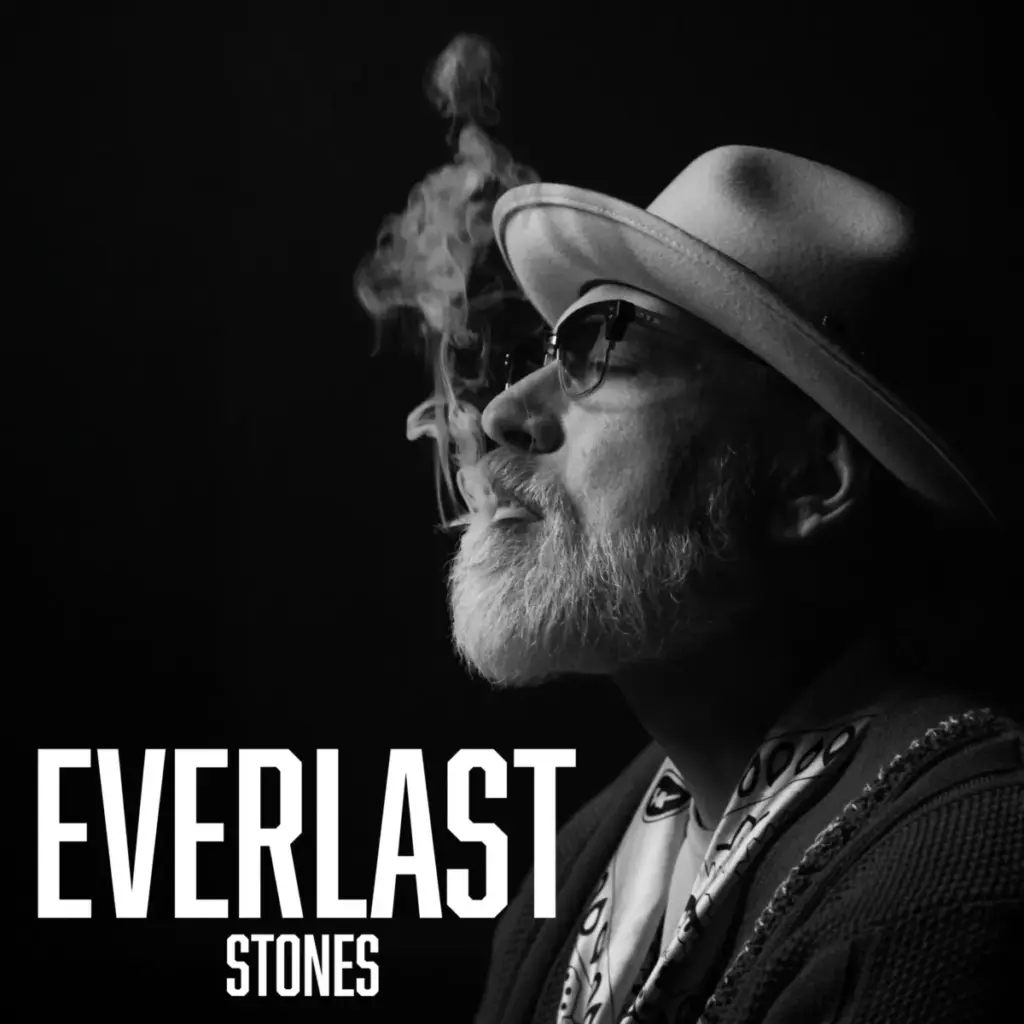
It has been nearly a decade since the musical landscape last heard a full-length studio offering from Erik Schrody—globally recognized by his moniker, Everlast. Following the 2018 release of his eighth solo album, Whitey Ford’s House of Pain, the pioneering fusion artist retreated from the relentless cycle of the music industry. For the past eight years, his priorities shifted away from the recording booth, centering instead on the quiet, grounding responsibilities of raising his daughters and navigating life away from the spotlight.
Now, the iconic genre-blender has returned with Embers to Ashes, a stark, organic, and deeply reflective record entirely produced by genre-crossing artist and entrepreneur Yelawolf. Released to critical intrigue, the album captures the enduring essence of the "Whitey Ford" persona while showcasing a remarkable artistic evolution. Blending the acoustic grit of Americana with the foundational sensibilities of hip-hop, Embers to Ashes is not merely a comeback; it is a masterclass in artistic synergy.
In an exclusive, in-depth conversation, Everlast opened up about the serendipitous roots of this collaboration, the Nashville writing sessions that redefined his creative process, and how he views his monumental career through the lens of a maturing perspective. Far from treating music as a factory line of disposable content, Everlast’s deliberate pacing has once again yielded a body of work that bridges worlds, defying genre boundaries just as he has done for over thirty years.
Detailed Chronology: From House of Pain to Nashville Embers
To understand the weight of Embers to Ashes, one must trace the winding, unorthodox trajectory of Everlast’s career. Emerging in the late 1980s as a member of Ice-T’s Rhyme Syndicate, Schrody cut his teeth in the hyper-competitive world of West Coast hip-hop under the mentorship of early producers like Bilal Bashir. In 1992, he co-founded House of Pain, the Irish-American hip-hop group whose explosive anthem "Jump Around" became an immutable cultural touchstone of the decade.
When House of Pain disbanded, Everlast pivoted toward a territory that few hip-hop artists dared to tread. His 1998 sophomore solo effort, Whitey Ford Sings the Blues, was a watershed moment. Seamlessly marrying acoustic blues, folk-rock, and hip-hop cadences, the album earned multi-platinum success and a Grammy nomination for the haunting single "What It’s Like." Throughout the 2000s and 2010s, he continued to refine this hybrid approach across solo records and as a core member of the rap-rock supergroup La Coka Nostra, working alongside legendary producers like DJ Muggs and Dante Ross.
By 2018, following the release of Whitey Ford’s House of Pain, the creative well went dormant. "I started writing some songs," Everlast recalls of his hiatus, "after sitting at home for the last whatever eight years, not really having much to say, raising some daughters and whatnot."
The catalyst for his return came from an unexpected quarter—a close friend observing modern musical trends. "My best buddy was like, ‘Man, when I listen to country music these days, I hear a lot of Whitey Ford in it,’" Everlast shares. "’Maybe you should go out to Nashville. Not to make a country record per se, but just take in the vibes and see what happens.’"
That casual observation sparked a chain reaction. Everlast immediately thought of Yelawolf, an artist known for tearing down the artificial walls separating hip-hop and country-folk. What began as a distant memory of a conversation in Berlin a decade prior quickly materialized into a full-scale collaborative partnership, pulling Everlast out of his self-imposed exile and directly into the heart of Music City.
Supporting Context & Metrics: Bridging Hip-Hop and Americana
The cultural significance of Embers to Ashes lies heavily in its production lineage and its structural adherence to genre-fluidity. While modern commercial music frequently chases algorithmic trends by sticking rigidly to established formats, Everlast and Yelawolf have carved out a space where artistic ancestry matters more than genre categorization.
The Architect of Sound: Yelawolf as Producer
Though widely celebrated for his rapid-fire rap delivery and genre-bending solo albums, Yelawolf’s emergence as a visionary producer marks a fascinating new chapter in his career. According to Everlast, the foundation for Embers to Ashes was laid years prior during a late-night tour stop in Berlin.
"He’s got a long career ahead of him as a producer, as far as I’m concerned," Everlast says. "It’s something that he had mentioned to me years ago, like 10 years before… We were hanging around afterwards, and drinking and all this. He kind of just mentioned to me at some point, ‘I’d love to make a record with you.’ Now, at first, I thought we meant like a feature; we’d do a song together or something. I was starting to produce my own records, so at that moment, I didn’t even think in those terms."
When Everlast finally took his friend’s advice and reached out to Yelawolf about a Nashville excursion, the response was instantaneous. "I hit him up; I was like, ‘Hey, you interested in doing this?’ And he was gung-ho. I got a call back an hour later that he called everybody in town, and everybody he wanted to be involved was going to be involved. We just connected from there. I truly let him steer the ship."
Dual-Parentage Musical Roots
To dismiss Everlast’s acoustic pivot as an aberration is to misunderstand his upbringing. Far from being a traditional hip-hop purist who merely picked up a guitar on a whim, Schrody’s musical identity was forged at the intersection of starkly contrasting working-class traditions.
"Even if it’s subconsciously, everything I do is hip hop to me," he explains. "That’s the only way I learned how to make music: in the studio with drum machines. I just happened to pick up some guitar along the way."
This synthesis was deeply rooted in his childhood household:
- Paternal Influence: His father worked in construction, a blue-collar environment where he drank beer and immersed himself in the classic country and western storytelling of Hank Williams and Willie Nelson.
- Maternal Influence: His mother leaned toward the polished vocal harmony arrangements of 1960s doo-wop and Motown girl groups like The Supremes.
"That’s what I grew up listening to," Everlast reflects, "so hip hop made a lot of sense to me."
Official Statements & Direct Insights
The making of Embers to Ashes represented a departure from Everlast’s usual solitary recording habits. Having spent years producing his own material—learning the ropes from early pioneers like Bilal Bashir, DJ Muggs, and Dante Ross—he was accustomed to maintaining total control over the studio environment. Working with Yelawolf and a curated circle of Nashville songwriters required a massive shift in trust.
Redefining the Writing Process
"I wrote songs with a bunch of guys [in Nashville] that [Yelawolf] brought in to vibe with me," Everlast notes. "All were good calls, like all the right people. It’s one of the easiest records I’ve ever made. I sat in this room, and I performed, and I played some guitar, wrote some songs with some guys, and kind of let him produce and paint the painting with me. Oddly enough, I expected there to be clashes over some choices. There wasn’t one."
This collaborative ease opened his eyes to a different way of working—one that contrasted sharply with the insular, pressure-cooker mentality of traditional rap writing.
"Living with this MC kind of mentality most of my life, writing’s always been: I only feel what I feel. It’s not like rap. I can sit down and write a rap in a room with guys. Songs are very specific to an emotion or a moment or a message… It’s a different kind of thing."
Meeting kindred spirits in Nashville who spoke his exact emotional language made him momentarily question his notorious gaps between releases. "I met two or three really cool guys that can write in the same language that I feel like I’m comfortable with. That’s the only part where I was like, ‘I could have been doing like a record every year.’"
Rejecting the Music Factory
Despite realizing he could increase his output, Everlast remains fiercely protective of the integrity of his craft. He views his deliberate spacing not as a lack of inspiration, but as a necessary guardrail against artistic dilution.
"Then again, I think that’s why what I do is special to me," he muses. "I don’t do it every year. It’s not a product; it’s not just some factory of making music for me. It’s been eight years, man. That’s crazy to me. It’s been eight years."
A Legacy of Genre-Bending Pioneers
Reflecting on his place in music history, Everlast acknowledges that his mid-career transition from hardcore rap to acoustic-driven blues-rock helped pave the way for a generation of artists who refused to be boxed into a single category.
"My friend in the beginning, who mentioned country music and Whitey Ford, he and Wolf were like, ‘Yo, that changed a lot for cats like us, because you rapped and you were doing this other thing that wasn’t country, but it opened a door that says it’s all okay,’" he recalls. Comparing his trajectory to contemporaries like Wyclef Jean, he views his entire catalog through the lens of a turntable selector: "You’re writing it from scratch, but you’re mixing styles in that same way."
Future Outlook: What Embers to Ashes Means for the Road Ahead
As Embers to Ashes makes its way into the hands of longtime devotees and new listeners alike, the question naturally arises: what comes next?
For Everlast, the anxiety of chasing commercial relevance has long since faded, replaced by a quiet confidence in his artistic identity. The record proves that authentic songcraft, unburdened by the frantic pace of the modern streaming economy, still commands attention. By allowing Yelawolf to steer the production ship, Schrody successfully revitalized his creative engine without compromising the world-weary wisdom that defined classics like Whitey Ford Sings the Blues.
Whether it will take another eight years for the next chapter to unfold remains to be seen. But for now, Embers to Ashes stands as a triumphant testament to artistic reinvention. It demonstrates that when true musical kindred spirits meet in a room with acoustic guitars and drum machine philosophies, the resulting fire is well worth the wait.
Photo credit: Lisa Franchot