Executive Overview
For decades, the standard bathroom scale offered a singular, often unforgiving piece of data: your raw gravitational pull against the earth. Stepping onto a traditional dial or digital display meant reducing your complex physical form—comprising muscle, bone, water, and fat—into a single, stress-inducing number. Today, the landscape of personal health technology has fundamentally shifted. Modern smart scales have evolved into sophisticated biometrical hubs, capable of performing advanced body composition analyses, monitoring cardiovascular health, and syncing seamlessly with a suite of wearable tech ecosystems.
As preventative healthcare takes center stage and consumers become increasingly data-driven, the demand for clinical-grade health insights at home has skyrocketed. Whether you are an endurance athlete tracking recovery metrics, a bodybuilder meticulously monitoring lean mass, or an individual simply trying to get ahead of hereditary health risks, the modern smart scale acts as your primary domestic diagnostic tool.
In this comprehensive review, we examine the current market leaders, dissecting their hardware precision, software ecosystems, tracking capabilities, and overall value propositions to help you choose the ultimate biometrical companion for your wellness journey.

Detailed Chronology: How the Bathroom Scale Got Smart
To understand where personal biometrics are today, it helps to look at how far the technology has traveled over the last twenty years.
- The Early 2000s (The Digital Shift): The initial evolution away from mechanical springs saw the rise of digital scales. While easier to read, they still provided only gross weight metrics and occasionally relied on rudimentary hand-grip impedance meters that were bulky and unreliable.
- The Early 2010s (Bluetooth and Bioelectrical Impedance): Brands like Withings introduced the concept of Wi-Fi-connected scales that utilized Bioelectrical Impedance Analysis (BIA)—sending a safe, low-level electrical current through the lower body to estimate body fat percentage. These devices began communicating with early smartphone apps, laying the groundwork for continuous health tracking.
- The Mid-to-Late 2010s (Ecosystem Integration): The market flooded with budget and mid-tier competitors. Integration with Apple Health, Google Fit, and third-party fitness apps became standard. Multi-user recognition software allowed scales to automatically identify different family members based on weight profiles.
- The 2020s and Beyond (Clinical-Grade Biometrics): Today’s flagship smart scales blur the line between consumer gadgetry and medical devices. With the inclusion of multi-frequency sensors, handles for upper-body segmental analysis, electrocardiogram (ECG) capabilities, and vascular health scoring, the modern smart scale is no longer just a weight tracker—it is a preventative healthcare monitor.
Supporting Context & Metrics: What Are You Actually Measuring?
When shopping for a high-end smart scale, you will encounter a barrage of acronyms and physiological metrics. Understanding what these metrics mean—and how accurately scales measure them—is vital for making an informed investment.
Core Metrics Explained
- Body Fat Percentage & Muscle Mass: Measured via BIA. Water conducts electricity well, while fat tissue resists it. Advanced scales use multiple frequencies to differentiate between extracellular and intracellular water, providing a clearer picture of true muscle mass versus water retention.
- Visceral Fat Index: Unlike subcutaneous fat (the pinchable fat just beneath the skin), visceral fat wraps around internal organs deep inside the abdominal cavity. High levels are strongly correlated with metabolic syndrome and cardiovascular disease, making this one of the most critical health metrics a scale can track.
- Basal Metabolic Rate (BMR): The number of calories your body burns at rest to maintain basic life functions. This is essential for dialing in nutritional strategies.
- ECG and Vascular Age: Found in premium models, ECG functionality checks for atrial fibrillation (irregular heart rhythms), while vascular age estimates the elasticity of your arteries, offering critical insights into long-term cardiovascular health.
In-Depth Product Reviews: The Best Smart Scales Available
1. Withings Body Scan: The Flagship Gold Standard
- Price: $399
- Metrics Tracked: Weight, Body Composition (fat and muscle mass), Visceral Fat Index, BMR, ECG, Heart Rate, Vascular Age, Nerve Health Score, Electrodermal Activity, and Daily Weather.
- App Accessibility: Withings Health Mate, Apple Health, Google Fit.
If you want the absolute epitome of data insights when it comes to personal health, no smart scale does it better than the OG pioneer—Withings and its Body Scan smart scale. Serving as the undisputed Rolls-Royce of scales, this premium pick dives exponentially deeper into your physiological data than standard competitors.

One of its standout features is the integrated ECG reading. Given that nearly 48% of American adults will develop some form of cardiovascular disease, getting preventively ahead of heart issues through at-home monitoring can be life-saving. Furthermore, weight readings are accurate down to 50 grams, backed by four precision weight sensors that boast a mere 0.05 percent variance for a 200-pound individual. Body fat percentage accuracy hovers tightly around the 3 to 5 percent variance mark.
Constructed with a stunning, high-end design, the Body Scan syncs effortlessly with Apple Health and Google Fit. While the price tag represents a significant investment, it is an unmatched tool for those treating health as true wealth.
2. Hume Body Pod: The Precision Athlete’s Choice
- Price: $229
- Metrics Tracked: 45 metrics including Weight, BMI, Body Fat Percentage, Muscle Mass, Bone Mass, Protein Mass, Body Water Percentage, Visceral Fat, BMR, Metabolic Age, Subcutaneous Fat, Skeletal Muscle, Lean Body Mass, and Segmental Fat/Muscle Analysis (arms, legs, torso).
- App Accessibility: Hume+ App, Apple Health, Google Fit, Samsung Health, Fitbit.
Backed by notable endorsements from athletes and celebrities, the Hume Body Pod wows users with its staggering output of 45 distinct body metrics. Equipped with eight high-precision sensors, this scale is built specifically for data-obsessed users who want an exhaustive breakdown of their physical composition.

What truly sets the Body Pod apart is its segmental fat and muscle analysis. Instead of treating your body as a single mass, it isolates your torso, arms, and legs to show you precisely where you are holding fat or building muscle. According to brand studies, it achieves an astounding 98 percent accuracy rating when compared against clinical DEXA scans. Additionally, its native integration with elite wearables like the Apple Watch, Oura Ring, and Fitbit makes it a seamless addition to any existing fitness tracking ecosystem.
3. Renpho Smart Scale: The Best Budget-Friendly Workhorse
- Price: $24.99
- Metrics Tracked: 13 metrics including Weight, Muscle Mass, Body Fat, Subcutaneous Fat, BMR, Body Water, Visceral Fat, Skeletal Muscle, Bone Mass, Protein, Fat-Free Body Weight, BMI, and Metabolic Age.
- App Accessibility: Renpho App, Apple Health, Samsung Health, MyFitnessPal, Fitbit.
When consumers think of smart technology, triple-digit price tags usually come to mind. Renpho shatters this expectation with a wildly affordable smart scale that delivers all the essential metrics the vast majority of users require, all for under $25.
Despite its entry-level price, the Renpho scale doesn’t skimp on connectivity. It syncs smoothly with universal health apps like Apple Health, Samsung Health, MyFitnessPal, and Fitbit, monitoring 13 core metrics with impressive consistency. For users who eventually want to upgrade, Renpho also offers a premium lineup, such as the MorphoScan Nova Body Composition Scale, while keeping prices fiercely competitive against industry giants.

4. Wyze Smart Scale: Best Value with Ecosystem Synergy
- Price: $38
- Metrics Tracked: Weight, Body Fat Percentage, Heart Rate, Muscle Mass, BMI, Body Water Percentage, Lean Body Mass, Bone Mass, Protein Percentage, Visceral Fat, BMR, and Metabolic Age.
- App Accessibility: Wyze App, Apple Health, Google Fit, Fitbit.
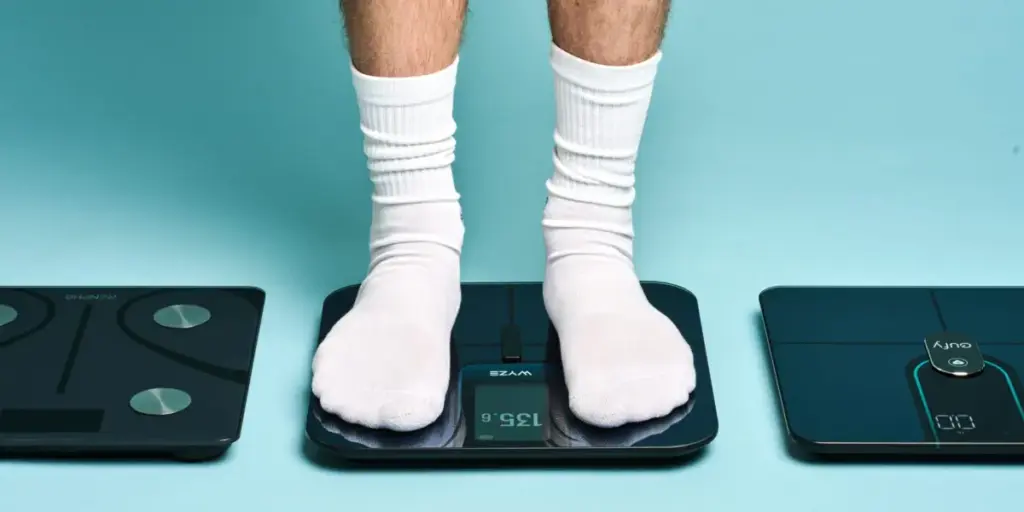
Known primarily for revolutionizing the smart home security and pet camera market, Wyze has successfully brought its ethos of high-value consumer tech to the bathroom. The Wyze Smart Scale competes directly with market leaders at a fraction of the cost.
Its primary differentiator is the user-friendly Wyze app, which acts as a centralized dashboard for all Wyze hardware—from home security cameras to smart vacuums. The scale tracks 12 comprehensive metrics, supports up to eight distinct user profiles, and features a guest mode. Its clean, intuitive interface ensures that even the least tech-savvy users can track detailed health trends over time without friction.
5. Garmin Index S2: Best for Existing Garmin Power Users
- Price: $199.99
- Metrics Tracked: Weight, BMI, Body Fat Percentage, Skeletal Muscle Mass, Bone Mass, Body Water Percentage.
- App Accessibility: Garmin Connect App, Apple Health, Google Fit, MyFitnessPal.
For endurance athletes, runners, and triathletes plugged into the Garmin ecosystem, the Index S2 Smart Scale is an indispensable addition to the locker room. Featuring Garmin’s signature sleek aesthetic, the Index S2 tracks six core metrics with absolute reliability.

However, the real magic of the Index S2 lies in its deep integration with the Garmin Connect app. If you already wear a Garmin smartwatch or cycling computer, this scale aggregates your sleep, stress, training load, and weight data into a single, cohesive dashboard. Furthermore, the Garmin social community allows users to share goals and milestones with friends and family, providing a layer of accountability that keeps training programs on track.
6. Homedics Smart Glo Scale: Simplest User Experience
- Price: $55.99
- Metrics Tracked: Weight, BMI, Body Fat Percentage, Skeletal Muscle Mass, Bone Mass, Body Water Percentage, Metabolic Age.
- App Accessibility: Homedics Scales App, Apple Health, Google Fit, Fitbit.
For anyone intimidated by complex menus, multi-step account setups, and overwhelming data dashboards, the Homedics Smart Glo Scale offers a breath of fresh air. Arriving out of the box with batteries included and taped securely inside, setup requires little more than popping the batteries in and stepping onto the glass platform.
As noted by Men’s Health Senior Gear and Commerce Editor Ryan Brower, who tested the unit during a muscle-building phase: "This scale has helped me keep tabs on my key metrics, from body fat to skeletal muscle… and the tracking graph has been exceptionally helpful in monitoring fluctuations over time." With an intuitive guest mode and straightforward app integration, it is the ideal scale for low-stress, high-efficiency progress tracking.

Expert Insights and Official Perspectives
Industry experts and fitness professionals increasingly view smart scales not as vanity tools, but as vital preventative health monitors.
According to sports physiologists, the true value of a smart scale does not lie in the absolute perfection of a single day’s body fat reading, but rather in the trend line over weeks and months. Because BIA can be influenced by hydration levels, sodium intake, and recent exercise, looking at rolling averages provides a much truer reflection of body recomposition.
Cardiologists have similarly praised the integration of ECG technology into consumer scales like the Withings Body Scan. Early detection of asymptomatic arrhythmias, such as atrial fibrillation, gives patients a critical window to consult medical professionals before acute cardiovascular events occur.

Future Outlook: Where Are Smart Scales Headed?
As sensor technology continues to miniaturize and machine learning algorithms become more sophisticated, the next generation of smart scales will likely bridge the gap between consumer fitness tech and clinical diagnostics even further.
- Non-Invasive Biomarker Tracking: Future iterations may incorporate optical sensors or advanced sweat analysis to track hydration quality, electrolyte balance, and metabolic markers transdermally.
- AI-Driven Health Coaching: Rather than simply presenting raw data tables, future smart scale apps will leverage localized AI to automatically adjust daily caloric recommendations, macronutrient splits, and workout intensity based on real-time muscle recovery and weight fluctuations.
- Enhanced Clinical Sharing: Seamless, secure data-sharing protocols will allow users to transmit comprehensive biometric reports directly to their primary care physicians ahead of annual physicals, transforming routine check-ups into data-backed preventative interventions.
Ultimately, investing in a smart scale is an investment in self-awareness. By moving beyond the archaic single-digit weight scale and embracing multidimensional biometrics, you gain the clarity, motivation, and actionable data needed to take absolute control of your health trajectory.