Executive Overview
As adults cross the threshold into their fourth decade, the conversation around physical fitness frequently shifts. While the physical culture of one’s twenties and thirties is often dominated by aesthetics, endurance milestones, and heavy lifting, the objectives of health past 40 undergo a profound evolution. Maintaining autonomy, ensuring joint longevity, and bulletproofing the body against the inevitable degradations of aging become the new, non-negotiable metrics of wellness.
Yet, traditional fitness regimens—heavily saturated with forward-and-backward linear movements like running, cycling, and standard squats—often leave a critical blind spot in human biomechanics: the frontal plane.
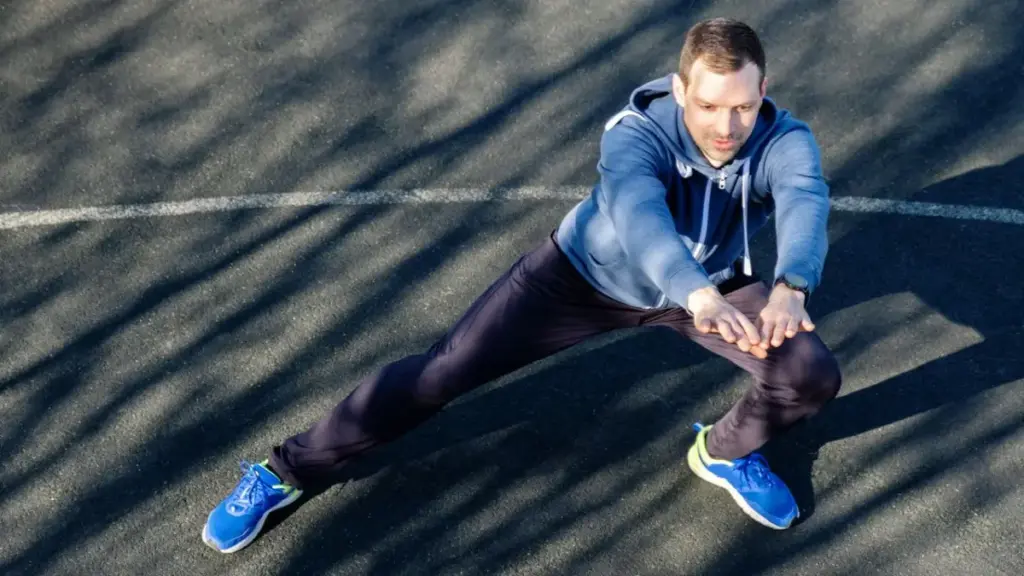
Enter the lateral lunge to balance, a dynamic, multi-planar exercise that physical therapists and longevity experts are increasingly prescribing to clients over 40. According to Kandis Daroski, a physical therapist and clinical program manager at Medbridge, cultivating side-to-side strength and neuromuscular stability before age-related deficits manifest is paramount.
This comprehensive report explores the physiological rationale behind the lateral lunge to balance, provides an authoritative, step-by-step masterclass on execution, outlines tailored progressions and regressions for all fitness levels, and contextualizes the exercise within the broader landscape of functional aging.
Detailed Chronology and the Shift in Mid-Life Biomechanics
To understand why the lateral lunge to balance is essential for those over 40, one must first examine the natural trajectory of human neuromuscular decline. Sarcopenia—the gradual loss of muscle mass and function—typically begins to quietly accelerate in a person’s late 30s to early 40s. Concurrently, proprioception (the body’s ability to sense its position in space) and vestibular function begin to dull if they are not actively stimulated.
The Linear Trap of Modern Fitness
For decades, contemporary exercise science prioritized sagittal plane movements. Walking, running, lunging forward, and squatting all occur in this front-to-back plane of motion. While essential, living a dynamic, vibrant life requires far more diverse physical choreography.
"In life, we move side to side, we go up and down curbs, we turn and twist," Daroski notes. "This exercise builds resilience, so your body is ready for whatever real life throws at it."
When an individual slips on an icy patch, steps awkwardly off an uneven sidewalk, or has to catch their balance after tripping over a stray object on the floor, the challenge almost never occurs in a straight line. It happens laterally, rotationally, and unpredictably. Without deliberate training in the frontal plane (side-to-side), adults over 40 leave themselves vulnerable to acute soft-tissue injuries, hip impingements, and balance-related falls later in life.
The Proactive Paradigm Shift in the 40s
Historically, physical therapy and corrective exercise were reactive—prescribed after an injury occurred, a joint degraded, or a fall resulted in a fracture. The modern longevity movement, however, champions a proactive paradigm.
Your 40s represent a critical biological window. During this decade, foundational strength and stability reserves can be intentionally banked. Implementing movements like the lateral lunge to balance acts as an insurance policy. It recalibrates the neuromuscular system, forces the brain and stabilizing muscles to communicate more efficiently, and preserves functional independence long before age-related frailty has a chance to take root.
Supporting Context & Metrics: The Science of Side-to-Side Strength
To appreciate the mechanical brilliance of the lateral lunge to balance, one must break down the physiological demands it places on the human body.
Muscular Architecture and Joint Health
Unlike a standard stationary lunge, the lateral lunge requires simultaneous ankle dorsiflexion, knee flexion, hip flexion, and deep hip internal/external rotation under a load vector that shifts off-center. This targets several key muscle groups:
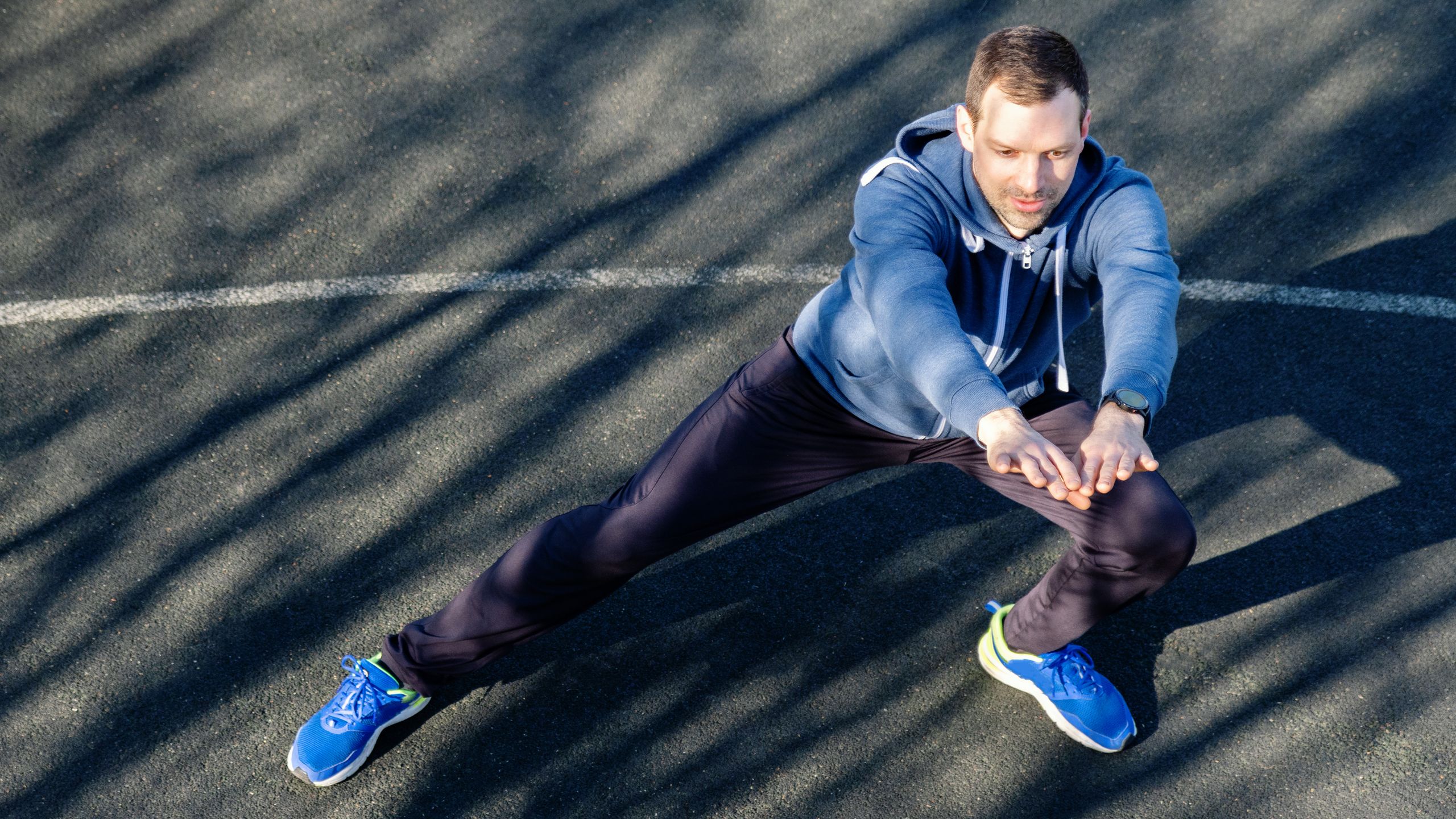
- Gluteus Medius and Minimus: The primary lateral stabilizers of the hip, responsible for preventing the pelvis from dropping during single-leg stances.
- Adductors (Groin Complex): Often neglected in traditional gym routines, these muscles act as powerful decelerators and stabilizers when moving laterally.
- Quadriceps and Hamstrings: Engaged dynamically to absorb force on the descent and drive the body upward on the ascent.
- Core Stabilizers (Transverse Abdominis and Obliques): Recruited heavily to maintain an upright, proud chest while resisting lateral flexion or spinal rotation.
The Balance Component: Closing the Loop
What elevates this movement from a standard strength builder to a longevity masterclass is the transition to a single-leg balance at the apex of the rep.
When a person moves from a wide, stable base (the bottom of the lateral lunge) and forcefully drives up into a narrow, unstable base (standing on one leg with the opposite knee raised), the central nervous system must rapidly recalculate center-of-gravity parameters. This taxes the proprioceptive pathways in the ankles, knees, and hips, stimulating neuroplastic adaptations that directly reduce fall risk in older adults.
Official Expert Insights: Form, Prescription, and Execution
Executing the lateral lunge to balance requires strict adherence to biomechanical integrity. According to Kandis Daroski, rushing through repetitions or sacrificing form for speed completely negates the therapeutic and strength-building benefits of the movement.
Masterclass: How to Perform the Lateral Lunge to Balance
- Starting Position: Stand tall with your feet together, core engaged, and shoulders relaxed.
- The Lateral Step: Take a wide, deliberate step out to the right side with your right foot. Keep your toes pointing strictly forward—avoid letting the foot flare outward, which compromises knee tracking.
- The Hinge and Descent: As your right foot contacts the floor, immediately push your hips back and bend your right knee, sinking your hips downward and backward. Keep your left leg straight (though not locked out at the knee) and your chest up tall. Avoid rounding your upper back forward.
- The Drive: Exhale powerfully as you push through your entire right foot (heel and midfoot) to drive your body back up to the starting position.
- The Balance: Instead of placing your right foot back down beside your left, fluidly draw your moving knee upward toward your chest into a single-leg balance position. Hold this stability for one to two seconds.
- Tempo and Volume: Start with a bodyweight version. Perform one set of eight to 10 slow, controlled repetitions per side. Over time, build up to 12 repetitions for two to three sets, practiced two to three times per week.
“By slowing down and controlling the movement, you’ll challenge the muscles more than moving quickly through 20 reps,” Daroski advises.
Critical Form Tips
- Chest Elevation: Maintain a proud, upright chest throughout the descent. Looking slightly forward rather than straight down at the floor prevents the spine from flexing.
- Breathing Mechanics: Inhale on the eccentric phase (lowering down into the lunge) to brace your intra-abdominal pressure, and exhale on the concentric phase (pushing up and stabilizing).
- Knee Tracking: Ensure your working knee tracks directly over your second and third toes, preventing it from caving inward (valgus collapse).
Scalability: Regressions and Progressions
One of the greatest strengths of the lateral lunge to balance is its infinite adaptability. Whether you are recovering from a minor joint niggle or are an advanced athlete looking to challenge your stability limits, the movement scales seamlessly.
How to Make it Easier (Regressions)
If you are a beginner, have compromised balance, or are rebuilding strength after a hiatus, simplify the movement using these modifications:
- Remove the Balance Element: Perform a standard lateral lunge by returning your stepping foot fully to the floor instead of driving the knee up into a single-leg balance. This halves the stabilization demand while still building frontal plane strength.
- Reduce the Range of Motion: Limit how deep you sink into the lunge. A shallow lateral lunge still activates the target musculature without placing excessive shear stress on unaccustomed joints.
- Build Foundational Strength: If your legs are not yet strong enough to support your body weight through a lateral trajectory, practice step-ups and lateral step-ups on a low platform to systematically build lower-body resilience.
How to Make it Harder (Progressions)
Once you can comfortably execute 12 pristine, unweighted repetitions per side without balance lapses or fatigue, it is time to progressively overload the movement:
- Add Resistance (Goblet Style): Hold a single dumbbell, kettlebell, or weight plate tightly against your chest. Start light; once that feels manageable, transition to holding a weight in each hand by your sides.
- Advanced Upper-Body Integration: Introduce an overhead press. Hold a dumbbell in the hand opposite your side-lunging leg. As you drive up from the bottom of the lunge into the single-leg balance, press the dumbbell overhead simultaneously. This challenges cross-body kinetic linking, core stability, and unilateral balance to an elite degree.
Future Outlook: The Role of Functional Longevity in Healthcare
As global life expectancies rise, public health messaging is undergoing a paradigm shift: the goal is no longer merely to increase lifespan (the number of years lived), but to dramatically extend healthspan (the number of years lived free from debilitating chronic disease, disability, and loss of independence).
Exercises like the lateral lunge to balance sit at the very intersection of physical therapy and preventative medicine. Programs designed by experts like Kandis Daroski at Medbridge highlight a growing digital and clinical emphasis on patient empowerment—giving individuals the tools to manage their musculoskeletal health between formal clinical appointments.
By investing just 10 to 15 minutes a week into multi-planar strength and balance training during your 40s, you are actively rewriting your physical future. You are training your nervous system to react to the unpredictable hazards of daily life, protecting your joints from premature wear, and cementing your right to long-term physical autonomy.
Medical Disclaimer: If you are currently recovering from a severe acute injury, dealing with chronic joint pathology, or managing complex health conditions, always secure medical clearance from your physician or physical therapy team before introducing new multi-planar strengthening routines.