Executive Overview
Two decades after premiering as a mid-season replacement on ABC, Grey’s Anatomy continues to defy the gravity of television lifespans. As the groundbreaking medical drama marches toward its historic 23rd season, renewed by the network in March, its cultural footprint remains as formidable as ever. Yet, the ecosystem surrounding the beloved series has transformed dramatically.
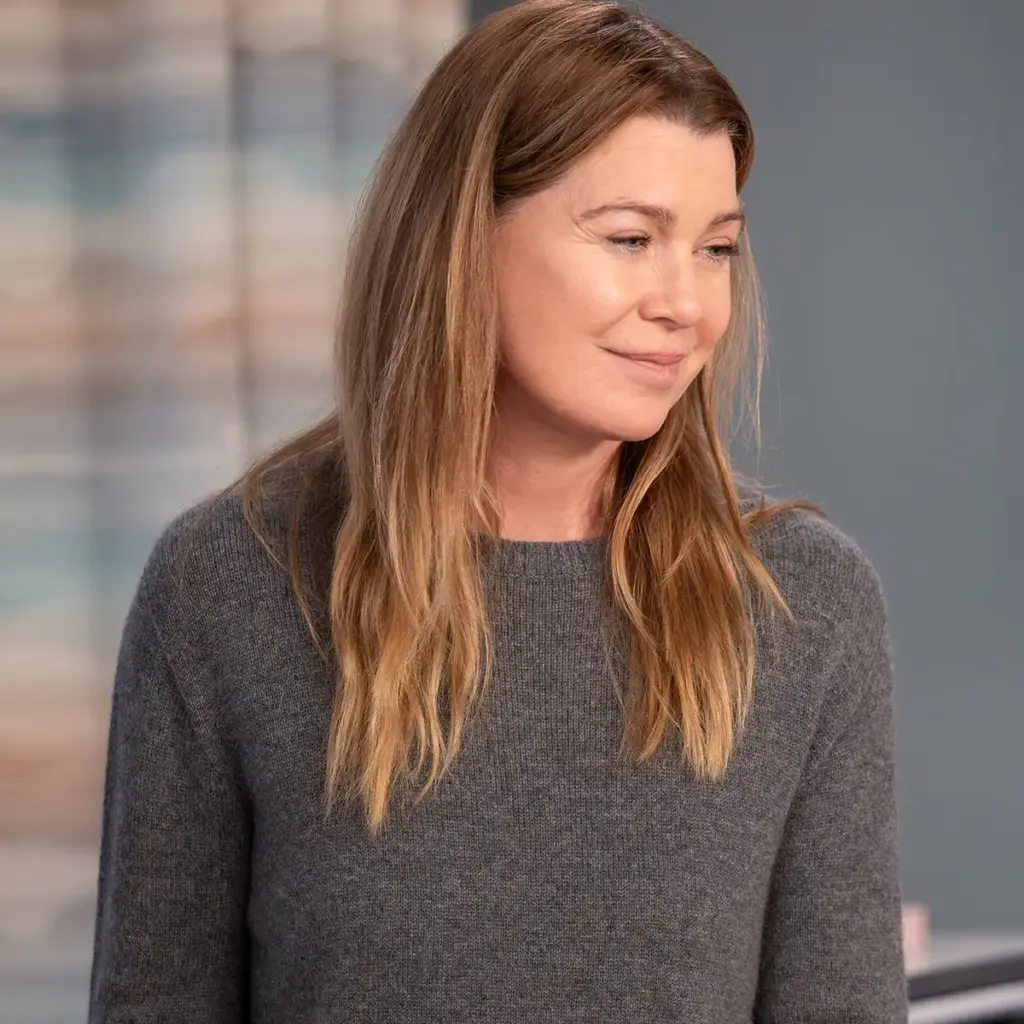
At the center of this ongoing television phenomenon is Ellen Pompeo, who has portrayed Dr. Meredith Grey for 22 seasons. Far from walking away from the show that made her a household name, Pompeo is charting a multi-faceted career path that balances her foundational roots at Grey Sloan Memorial with ambitious new streaming ventures.
While Pompeo scales back her physical presence on Grey’s Anatomy to prioritize family life with her husband, Chris Ivery, and their three children—Stella, Sienna, and Eli—she remains deeply invested in the show’s legacy, both creatively as a narrator and financially as a producer. Concurrently, Pompeo is expanding her television footprint. She is set to star in Hulu’s upcoming murder mystery adaptation Not A Sound, produced by David E. Kelley Productions, and is returning for a second season of her true-crime drama Good American Family, co-starring Christina Hendricks.
To understand Pompeo’s enduring tenure—and the turbulent, fascinating history of Grey’s Anatomy—is to explore an intricate narrative of casting near-misses, fierce behind-the-scenes contract negotiations, cultural controversies, and the relentless evolution of a television titan.
Detailed Chronology: From Risky Mid-Season Replacement to Historic Milestone
The genesis of Grey’s Anatomy reads like a masterclass in high-stakes television development, fraught with executive friction, conceptual restructuring, and unprecedented breakthroughs.
The Birth of Seattle Grace
When creator Shonda Rhimes first envisioned an ambitious, endearing surgical intern modeled after "a girl like the girl from Moonlight Mile", she pictured Ellen Pompeo for the part. Pompeo, who had recently played Jake Gyllenhaal’s love interest in the 2002 film, already maintained a holding deal with ABC. However, Pompeo was initially reluctant to sign on. Unlike Rhimes, who was a self-professed scripted-surgery addict, Pompeo harbored an aversion to medical dramas, admitting she had never watched a single episode of the era-defining ER and feared being trapped on a medical procedural for five years. It was only after meeting Rhimes that her perspective shifted entirely: "It was like, ‘I want to do the show.’"
The road to the airwaves was far from smooth. ABC Entertainment President Steve McPherson initially despised the original title, Grey’s Anatomy, prompting studio executives to briefly experiment with alternative working titles such as Complications, Surgeons, and Miss Diagnosis. McPherson was reportedly so unimpressed with the initial rough cuts of the pilot that production was temporarily halted, and he demanded heavy creative overhauls. To Rhimes’ credit, the notes were executed, the title reverted to Grey’s Anatomy, and the medical drama premiered on March 27, 2005.
Behind-the-Scenes Turmoil and Shifting Casts
Despite its immediate ratings triumph, Grey’s Anatomy faced monumental early turbulence. In October 2006, an on-set argument resulted in Isaiah Washington (Dr. Preston Burke) using a homophobic slur directed at T.R. Knight (Dr. George O’Malley). The ensuing scandal led to Washington’s firing in 2007. Reflecting on the incident, Rhimes noted that the controversy shattered the early joy of production and left an enduring trauma among the cast and crew.
Further casting tremors followed. Katherine Heigl, who won an Emmy Award in 2007 for her portrayal of Dr. Izzie Stevens, exited the series at the end of season six amid high-profile public controversies regarding her creative frustrations and demanding production schedules. Similarly, Patrick Dempsey’s departure as Dr. Derek Shepherd ("McDreamy") in season 11 sent shockwaves through the fandom, born out of mounting behind-the-scenes friction and creative exhaustion. Despite these exits—and the subsequent returns of various legacy characters for special guest appearances—the core foundation of the series weathered every storm.
The Modern Era: Scaling Back and Streaming Dominance
By 2022, Pompeo made the calculated decision to step back from her full-time, every-episode presence on the series. Citing a desire to focus on her growing children, she transitioned to a recurring on-screen role while continuing to serve as the show’s narrator.
Despite scaling back her physical time on set, Pompeo’s financial and emotional ties to Grey’s Anatomy remain robust. In an interview with El País, she noted the financial absurdity of walking away entirely from a series that was streamed more than a billion times in 2024. Protecting her stake in a corporate asset that has generated billions of dollars for Disney cemented her status not just as an actress, but as a savvy industry mogul.
Supporting Context & Metrics: The Business and Production of Grey’s Anatomy
The monumental success of Grey’s Anatomy is supported by meticulous production choices, rigorous cost-benefit analyses, and industry-defining compensation negotiations.
Crafting the Aesthetic
Costume designer Mimi Melgaard faced the unique challenge of outfitting a massive ensemble in scrubs without letting the wardrobe overshadow the narrative. Recognizing that standard scrubs were entirely ill-fitting, Melgaard tailored the garments to look authentic and flattering within the heightened reality of the show. Simultaneously, makeup director Norman Leavitt balanced executive demands for glamour with a realistic, "rough-and-ready" aesthetic that honored the grueling environment of a trauma center.
Production itself relied on striking physical locations. The pilot episode was shot inside an abandoned veterans hospital in Northridge, California—complete with psychiatric ward windows nailed shut—while exterior establishing shots utilized Seattle’s KOMO Plaza to mimic the real-world Harborview Medical Center.
Redefining Compensation: The $20 Million Woman
Pompeo’s tenure fundamentally shifted industry standards for female television leads. In 2017, following Patrick Dempsey’s departure—which removed a co-star whose presence could previously be leveraged against her contract negotiations—Pompeo secured a landmark deal worth more than $20 million annually. This package included $575,000 per episode, a seven-figure signing bonus, backend equity points, and an executive producer office on the Disney lot for her production company, Calamity Jane.
Pompeo’s transparent advocacy for fair compensation laid bare the systemic wage disparities in Hollywood, empowering a new generation of actors to demand equity commensurate with the billions of dollars their work generates for global conglomerates.
Official Statements and Industry Insights
Key creative figures have consistently reflected on the triumphs and tribulations that shaped the series over its remarkable two-decade run:
- Shonda Rhimes on the Isaiah Washington Scandal: Reflecting in March 2025 on the early years of the show, Rhimes remarked, "I think the thorn was having the bubble of joy burst so early on Grey’s… and not having anybody interested in helping us deal with it, because that really shaped a lot of how we looked at the world going forward."
- Ellen Pompeo on Financial and Emotional Investment: Explaining her ongoing commitment to the series in an interview with El País, Pompeo stated: "The show was streamed more than a billion times in 2024. The companies that own the show and stream the show make a lot of money from our images and our voices and our faces. If I were to walk away completely, everybody gets to make money from my hard work for 20 years and I wouldn’t make any money… And emotionally, the show means a lot to people. I want to have an attitude of gratitude toward the show."
- Showrunner Meg Marinis on Ripped-from-the-Headlines Storytelling: Discussing the integration of real-world medical crises into the narrative, Marinis told the Los Angeles Times, "We always take the stance of ‘What are doctors going through these days?’ When we did the COVID season, we told that story completely from a doctor’s point of view… We’ll do the same thing if we see headlines we want to explore."
Future Outlook: Expansion, Renewal, and Evolution
As the television landscape pivots heavily toward streaming flexibility and limited-series event programming, Ellen Pompeo and the Grey’s Anatomy universe are uniquely positioned to dominate both traditional network television and premium digital platforms.
With ABC formally renewing Grey’s Anatomy for its 23rd season, the series continues to evolve. While veteran co-stars like Kevin McKidd and Kim Raver depart, foundational anchors Chandra Wilson (Dr. Miranda Bailey) and James Pickens Jr. (Dr. Richard Webber) remain alongside Pompeo, ensuring a seamless bridge between the past and the future of Grey Sloan Memorial.
Simultaneously, Pompeo’s diversification into gripping psychological thrillers and true-crime prestige television signals a thrilling new chapter in her career. Her upcoming starring role in Hulu’s Not A Sound—where she portrays an audiologically impaired former ER nurse investigating a murder—showcases her dramatic range far beyond the sterile corridors of a fictional hospital. Furthermore, the season two renewal of Good American Family solidifies her partnership with Hulu as both a premier dramatic lead and a bankable producer.
Ultimately, Ellen Pompeo’s journey reflects the modern evolution of television stardom: a masterclass in leveraging historical success to build creative independence, balancing familial priorities with artistic ambition, and proving that some stories—and some stars—truly refuse to slow down.