Executive Overview
Television narratives often stretch suspense across agonizingly slow burns, but FX’s adaptation of Bret Easton Ellis’s The Shards has discarded conventional pacing in favor of relentless psychological compression. In Episode 7, titled "Homecoming (Part Two)," the series delivers a breathtakingly brisk narrative that clocks in at under 25 minutes (excluding credits). Yet, within this compressed runtime, the show manages to execute a staggering structural collapse of its central social hierarchy, capped off by a horrific escalation in the ongoing mystery plaguing the adolescent cast.
The episode centers on the tragic, parabolic downfall of Susan Reynolds, whose meticulously orchestrated immunity is shattered during a chaotic homecoming parade. What begins as a satirical display of high school pageantry swiftly transforms into a crime scene, exposing the venomous undercurrents of teenage rivalry, psychological manipulation, and deeply repressed trauma. Central to this sequence of events is the convergence of signature scents—specifically Armani’s newly introduced unisex fragrance, Giorgio—which acts as an olfactory tripwire, unearthing dark memories of abduction and captivity.
However, Susan’s sudden arrest for kidnapping is merely the appetizer for a much darker main course. As protagonist-detective Bret navigates a volatile locker-room confrontation with the enigmatic Robert Mallory, the structural integrity of the town’s youth culture completely fractures. The episode culminates in a shocking discovery inside the school trophy case: the severed head and hands of Matt Kellner, plunging the narrative into unapologetic grand guignol terror. This report breaks down the minute-by-minute escalation of Episode 7, examining the thematic underpinnings, character psychology, and the escalating terror that threatens to consume the entire community.
Detailed Chronology of Events
The Homecoming Parade and the Fall of Susan Reynolds
The episode opens with the irony of Susan Reynolds’s wish to experience what it "feels like to lose." True to form, Susan manages to compress a lifetime of catastrophic failures into a single afternoon homecoming parade. Perched atop a brilliantly designed float—a visual triumph praised by Steven—Susan waves to her peers, unaware that her social armor is about to completely disintegrate.
The catalyst for her ruin arrives via Robert Mallory, who provides Susan with a bottle of Giorgio, the freshly launched unisex cologne by Armani. The fragrance, instantly recognizable by its heavy commercial omnipresence, plays a pivotal role in the unfolding tragedy. Earlier in the narrative cycle, "Really Rhonda"—recently rescued from a harrowing ordeal—identified this exact "girly smell" as the signature scent of her abductor.
The trap springs shut during a pre-parade gathering where Liz Schaffer sprays the fragrance around the room while her daughter, Debbie, and Susan assist Rhonda with a stunning, transformative makeover. While Rhonda harbors no apparent suspicion toward Liz—who helped orchestrate the beautification process—the sensory trigger of the Giorgio cologne instantly links Susan to the trauma of the kidnapping.
The Accusation and Arrest
Standing before her peers, Rhonda experiences a profound psychological jolt upon catching the scent. Pointing directly at Susan, Rhonda utters the chilling accusation: "Susan Reynolds kidnapped me."
The irony of the moment cuts deep. Even though Susan had actively attempted to sabotage her own campaign to avoid the spotlight, the student body still voted her Homecoming Queen. In a darkly comedic yet tragic twist, Susan’s desperate efforts to hand her tiara and title over to Rhonda are instantly reinterpreted by the traumatized crowd as a guilty conscience attempting to cover its tracks.
Before she can properly process the accusation, Susan is swarmed. Stripped of her honorary tiara, she is led away from the float in handcuffs, sobbing inconsolably as police bundle her into the back of a cruiser. The image of the sobbing Homecoming Queen framed against the festive parade floats stands as one of the most striking visual indictments of the series to date.
The Locker Room Confrontation: Bret vs. Robert
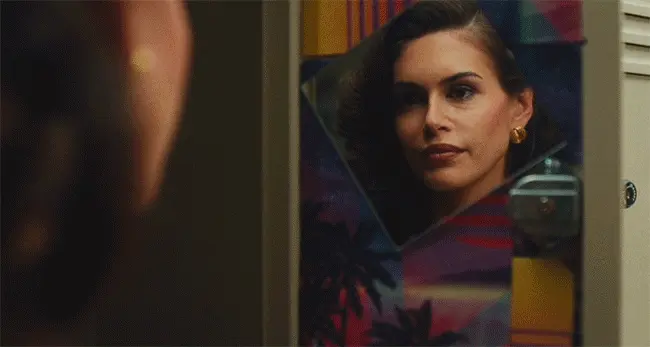
Following the chaos of the parade, the narrative shifts to the tense, pressurized atmosphere of the high school hallways, where Bret and Robert face off at their lockers.
Robert is furious, and for good reason. Under Bret’s advice, Robert previously endured a punishing six-hour police interrogation regarding the abductions of Rhonda and Matt. Robert confronts Bret, aggressively reminding him of his cast-iron alibi: he was physically with Susan at the exact time Rhonda and Matt were abducted.
True to his unsettling nature, Robert weaponizes this confrontation by leaning in close and whispering explicit, sexually charged come-ons directly into Bret’s ear. It is a signature intimidation tactic—a psychological blurring of boundaries designed to disorient and dominate his amateur-detective rival.
Bret fires back with venomous intent: "You’re just a sick little rich kid who killed his own mommy."
Unfazed by the heavy psychological blow, Robert coolly shifts the pressure back onto Bret, noting that Bret’s own parents have been vacationing in Europe "for a suspiciously long time." With a raised eyebrow, Robert dangles the threat of calling the authorities on Bret’s absent guardians before delivering a chilling parting maxim:
"Don’t fuck with the King."
Bret is left standing alone by his locker, visibly shaken, experiencing a complex, deeply conflicted cocktail of unadulterated rage and involuntary arousal.
The Power Outage and the Trophy Case Horror
The psychological tension peaks when the school experiences a sudden, ominous power blackout. Plunged into semi-darkness, Bret investigates the corridors, leading him to the school’s central trophy case.
There, illuminated by emergency lighting or the eerie glow of the failing grid, the true horror of the episode is revealed. Inside the trophy case, resting among athletic plaques and school memorabilia, are the severed head and hands of Matt Kellner. The discovery confirms the community’s worst fears: whoever is orchestrating these atrocities is no longer merely toying with psychological games—they are escalating into a theater of pure, unmitigated carnage.
Tender Moments Amidst the Carnage
Despite the overwhelming cruelty and horrific violence that punctuates Episode 7—ranging from the dark comedy of Susan’s arrest to the sheer macabre terror of Matt Kellner’s remains—the episode surprisingly finds space for genuine acts of human tenderness and empathy.
Rhonda’s Transformation
Susan’s motivation behind giving Rhonda a makeover is depicted not merely as a manipulative gesture, but as a genuine labor of love. Susan appears to deeply treasure the opportunity to restore the drab, dour Rhonda to a state where she once again commands attention and projects confidence. The transformation is so striking that Debbie exclaims, "You’re gonna be able to have sex with anyone you want! Anyone in the band, at least!" For a moment, the trauma of the abduction recedes, replaced by authentic teenage solidarity.
Bret’s Secret Election Rigging
In a parallel subplot, Bret covertly manipulates the school election results to ensure Debbie secures a respectable vote count. Fully aware of how deeply the appreciation of her peers means to her—especially now that her social reputation has been branded as that of a "frivolous and spiteful clown"—Bret steps in. He does not rig the election so that she wins outright, but rather ensures she is spared the public humiliation of total electoral defeat.
This act reveals a crucial layer of Bret’s character: beneath his delusions of grandeur, paranoia, and obsessive amateur sleuthing, his heart remains fundamentally in the right place. As the narrative progresses, the central question shifts from whether Bret can solve the mystery to whether his intellect and emotional stability can survive the horrors closing in around him.
Supporting Context & Metrics
To fully appreciate the narrative weight of Episode 7, it is essential to examine the structural mechanics of The Shards adaptation:
- Runtime Compression: At under 25 minutes of narrative content (excluding credits), Episode 7 represents one of the tightest edited sequences in modern prestige television, mirroring the frantic, breathless paranoia of Bret Easton Ellis’s source material.
- The Olfactory Motif (Giorgio by Armani): The introduction of Giorgio as a plot device underscores the era-specific world-building of the early 1980s. The fragrance serves as an inescapable cultural touchstone that weaponizes consumer ubiquity against the characters.
- Character Archetypes:
- Susan Reynolds: The embodiment of elite social privilege corrupted by dark secrets.
- Robert Mallory: The predatory sociopath who manipulates boundaries through psychological dominance and sexualized intimidation.
- Bret: The flawed, empathetic investigator whose emotional resilience is being systematically tested to its absolute breaking point.
Official Statements and Creative Vision
While formal press releases from FX regarding individual episode plot twists remain tightly controlled to preserve viewing suspense, creative personnel associated with the adaptation have repeatedly emphasized the importance of capturing the visceral alienation of 1980s Southern California.
The integration of period-accurate details—such as high-end designer fragrances, homecoming floats, and the stark architecture of suburban high schools—is designed to create a false sense of security before pulling the rug out from under the audience. The brutal transition from the comedic absurdity of a homecoming queen in handcuffs to the horrific discovery of Matt Kellner’s remains in the trophy case is a deliberate creative choice designed to disorient the viewer, mirroring the psychological fragmentation experienced by Bret and his peers.
Future Outlook
As The Shards marches toward its dramatic conclusion, Episode 7 has fundamentally altered the playing field. With Susan Reynolds imprisoned under suspicion of kidnapping, Robert Mallory asserting an intimidating dominance over Bret, and the killer escalating to overt, physical mutilation, the safety net of suburban denial has been utterly shredded.
Moving forward, several critical narrative threads demand resolution:
- The Validity of Susan’s Arrest: Did Susan genuinely orchestrate the abductions, or is she being framed by a more sophisticated predator within the inner circle?
- Robert’s Alibi: While Robert claims he was with Susan during the abductions, his psychopathic demeanor and intimate knowledge of Bret’s vulnerabilities suggest he is playing a much deeper, more dangerous game.
- Bret’s Mental Fortitude: With his parents absent in Europe and the psychological warfare closing in, can Bret maintain his sanity long enough to connect the remaining pieces of the puzzle before he becomes the killer’s next exhibit?
What remains certain is that the idyllic facade of Southern California youth culture has been permanently shattered, and the remaining episodes will demand every ounce of courage from those trying to survive the wreckage.