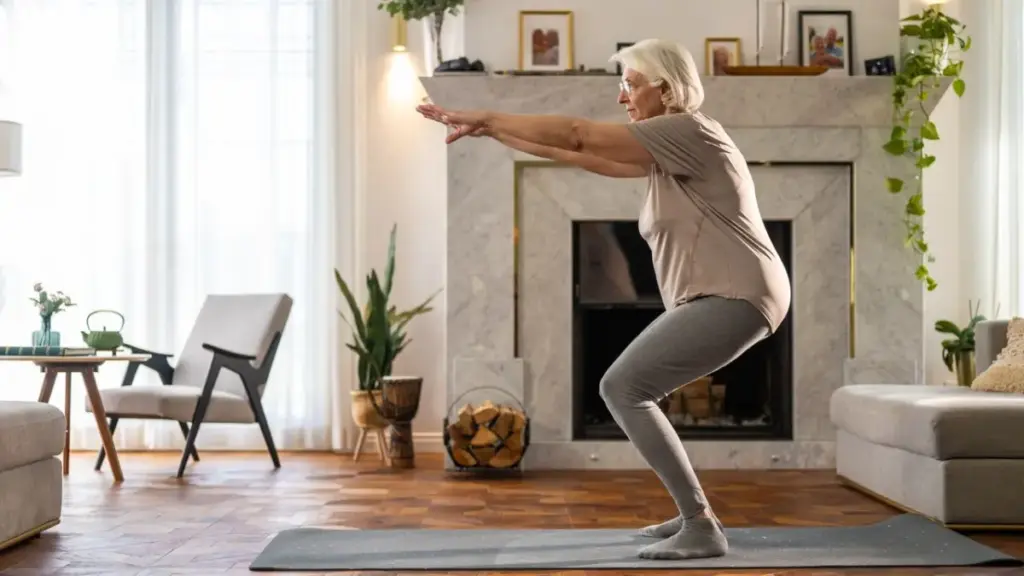
As human beings age, everyday physical milestones that were once taken for granted—such as rising effortlessly from a deep sofa, stepping out of a low-slung car, or recovering after sitting on the floor to play with grandchildren—can slowly transform into formidable physical challenges. While age-related changes in muscle mass, joint flexibility, and neuromuscular coordination are natural, losing the ability to stand up from the floor unassisted should not be accepted as an inevitable consequence of growing older. According to movement and orthopedic experts, this crucial functional capability can be systematically preserved and even reclaimed through targeted, intentional practice.
Dr. Christynne Helfrich, a board-certified doctor of physical therapy and orthopedic specialist at Hinge Health, emphasizes that the secret to maintaining this vital autonomy lies in a foundational exercise science principle: specificity of training. Rather than relying on generic workout routines that fail to mirror real-world biomechanics, older adults can future-proof their mobility by directly practicing the exact movement patterns required to transition safely from the ground to a standing position.
To bridge the gap between frailty and functional freedom, Dr. Helfrich has outlined a trio of accessible, highly effective home exercises. Designed to build comprehensive lower-body strength, upper-body stability, and core engagement, these movements can be seamlessly integrated into daily routines to restore confidence and physical independence.
Executive Overview: The Hidden Cost of Floor-Rise Mobility Loss
The ability to get up and down from the floor is far more than a party trick or a casual convenience; it is a profound clinical indicator of overall longevity, functional independence, and physiological resilience. In functional movement screening, floor-rise tests are frequently utilized by clinicians to assess a patient’s balance, muscular strength, flexibility, and motor control. When these physical domains begin to degrade, individuals often unconsciously alter their behavior, avoiding floor-based activities altogether. This avoidance triggers a vicious cycle: diminished usage accelerates muscle atrophy, which further degrades joint mobility and balance, ultimately magnifying the risk of catastrophic falls.
When an older adult experiences a fall at home, their ability to rise independently determines whether the incident remains a minor, manageable setback or spirals into a dangerous medical emergency involving prolonged immobilization and hypothermia. By prioritizing targeted strengthening exercises, individuals can break this cycle. The strategy does not require heavy gym equipment or grueling, high-impact routines. Instead, it relies on consistency, controlled execution, and progressive overload using bodyweight movements that mirror daily life.
Detailed Chronology: Understanding the Biomechanics of Getting Off the Floor
To understand why getting up from the floor becomes increasingly difficult over time, one must examine the complex kinetic chain required to execute the movement. The process is not merely a test of quadriceps strength; it is a multi-phase physical puzzle that demands cooperation between the ankles, knees, hips, core, and upper extremities.
Phase 1: The Descent and Weight Shift
The journey begins long before the body touches the ground. Controlled lowering requires eccentric leg strength—meaning the muscles lengthen under tension—to prevent a sudden, ungraceful drop. As the individual transitions to a seated or kneeling position on the floor, core stability is instantly engaged to maintain the center of gravity over the base of support.
Phase 2: The Repositioning
Once on the floor, getting back up requires transitioning from a seated or lying posture to a half-kneeling or quadrupedal position. This demands exceptional hip mobility, internal and external rotation of the lower extremities, and sufficient ankle dorsiflexion to bring one foot firmly underneath the body’s center of mass. For many aging adults, joint stiffness and tightness in the hip flexors and calves create an immediate roadblock during this phase.
Phase 3: The Ascent and Drive
In the final and most demanding phase, the individual must press forcefully through the lead foot and working legs, extending the hips and knees simultaneously to bring the torso upright. This explosive yet controlled burst requires powerful glutes, robust quadriceps, and a stabilized core to prevent lateral swaying or loss of balance.
If any single link in this kinetic chain—whether it is ankle flexibility, core bracing, or gluteal strength—is compromised, the entire movement breaks down, resulting in the inability to rise without external assistance.
Supporting Context & Metrics: Why Specificity of Training Matters
In physical therapy, general fitness is rarely enough to solve specific functional deficits. A person can possess strong biceps or a robust cardiovascular system from walking, yet still struggle profoundly to rise from a low surface if their movement patterns do not address the specific biomechanics of the task. This is where specificity of training becomes paramount.
Dr. Helfrich defines specificity simply: "Practicing exactly the skill that you need to do." If the objective is to improve one’s capacity to rise from the floor, the body must repeatedly experience the mechanical loading, joint angles, and balance demands associated with that exact movement.
Clinical observations consistently show that older adults who engage in multi-planar, functional strengthening exercises experience significant improvements in dynamic balance and reaction time. According to guidelines from leading orthopedic and geriatric health organizations, incorporating targeted strength work two to four times per week can dramatically mitigate age-related muscle loss (sarcopenia) and preserve bone mineral density.
Furthermore, these exercises do not need to be intimidating or overly time-consuming. Dr. Helfrich advocates for the concept of "exercise snacks"—short, manageable bursts of movement integrated throughout the day to break up prolonged sedentary behavior. Performing a few repetitions of a targeted exercise while waiting for coffee to brew or during a television commercial break accumulates significant volume over the course of a week without causing undue physical fatigue.
Official Expert Recommendations: The Three Essential Exercises for Floor-Rise Mobility
To safely rebuild the physical foundation required for floor-to-stand transitions, Dr. Helfrich recommends mastering three fundamental bodyweight movements. To ensure safety, she advises performing these exercises in a controlled environment, such as near a sturdy couch or wall, and practicing them consistently three to four times per week.
1. The Sit-to-Stand
The sit-to-stand is widely considered a gold-standard functional exercise for adults of all ages, serving as a direct rehearsal for getting out of chairs, car seats, and off the floor.
- Prescription: 2 to 3 sets of 8 to 12 repetitions.
- Rest Period: 30 to 60 seconds between sets.
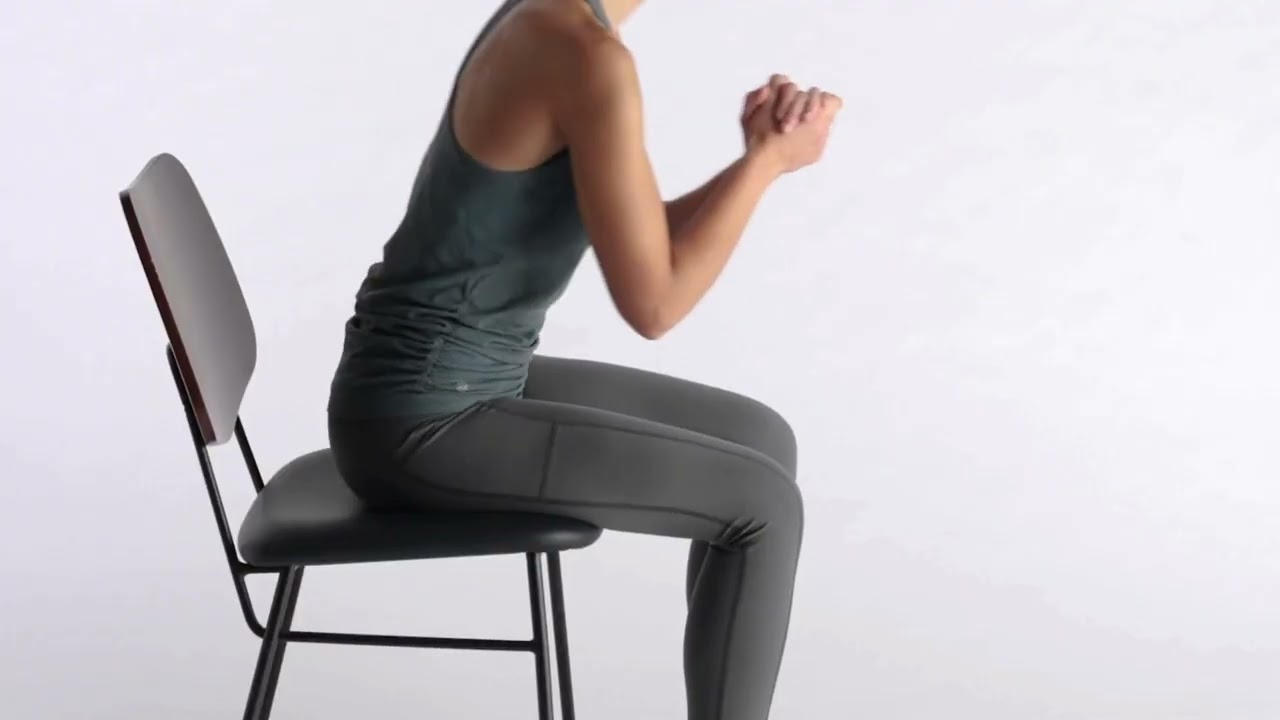
- How to Perform: Sit near the front edge of a sturdy, non-sliding chair with your feet flat on the floor, spaced roughly hip-width apart. Lean your torso slightly forward from the hips (hinging at the waist), engage your core, and press firmly down through your heels. Drive your body upward into a full standing position, fully extending your hips and knees. To return to the seated position, slowly push your hips back, control your descent with your leg muscles, and lower yourself gently back onto the chair without collapsing.
- Expert Insight: "Sit-to-stands are one of my favorite exercises for older adults because you’re practicing something you do daily—getting yourself from a seated position to standing," notes Dr. Helfrich. "You’re strengthening your glutes and legs and practicing pressing through your feet to bring your body upright. It’s also easy to practice at home with a sturdy chair, and you can focus on moving slowly and with control rather than worrying about speed or intensity."
2. The Wall Push-Up
While leg strength is vital for rising from the floor, the upper body and core play an equally critical supporting role by helping stabilize the torso and push off supportive surfaces during transitions.
- Prescription: 2 to 3 sets of 8 to 12 repetitions.
- Rest Period: 30 to 60 seconds between sets.
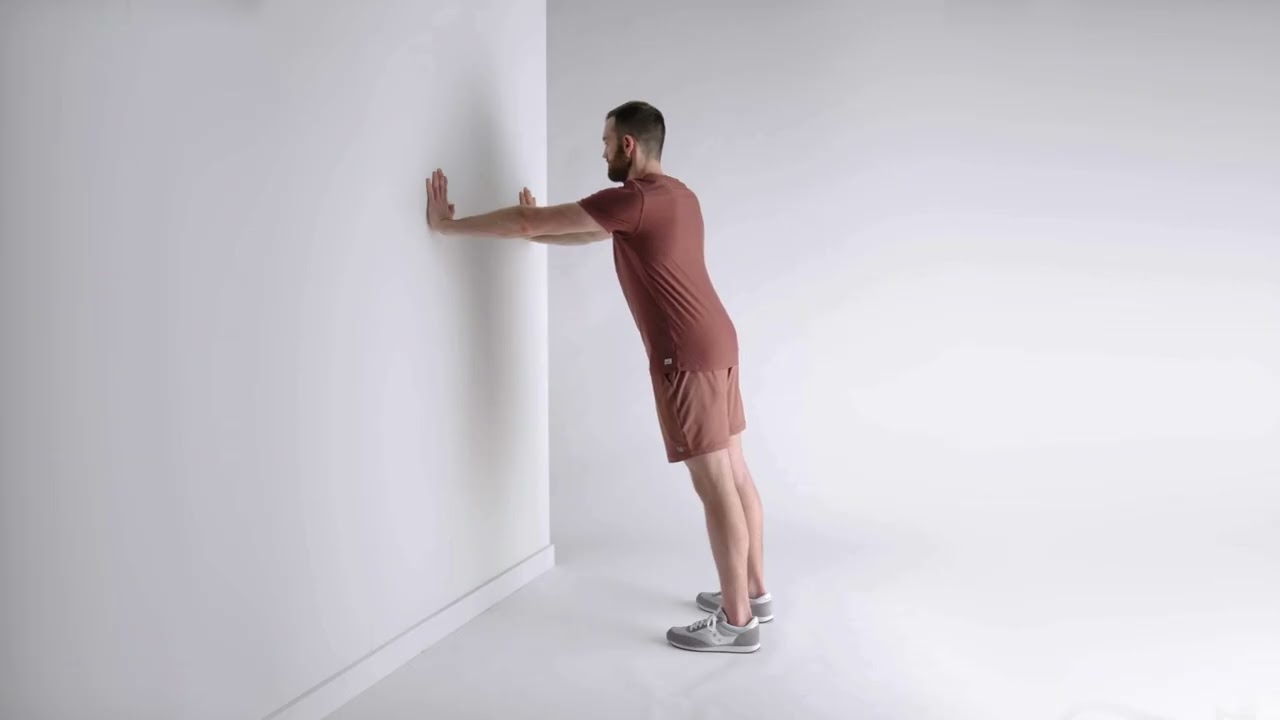
- How to Perform: Stand facing a blank, sturdy wall at arm’s length. Place your palms flat against the wall at shoulder height, with your fingers pointing upward and your feet positioned a comfortable distance back to create a slight forward lean. Slowly bend your elbows to lower your upper body toward the wall, keeping your core engaged and your body rigidly aligned. Press firmly through your palms to return to the starting position.
- Form Tip: Keep your body strictly aligned throughout the movement, avoiding common mistakes such as letting your hips dip toward the wall or pushing your lower back backward.
- Expert Insight: "You might think getting up from the floor is all about leg strength, but your upper body and core are important, too," explains Dr. Helfrich. "I recommend wall push-ups because they strengthen your arms, chest, shoulders, and core. The wall takes some pressure off your upper body and joints, making this an accessible starting point for those who lack the strength to do a traditional push-up. As you get stronger, you can progress to using a sturdy table or countertop for added challenge."
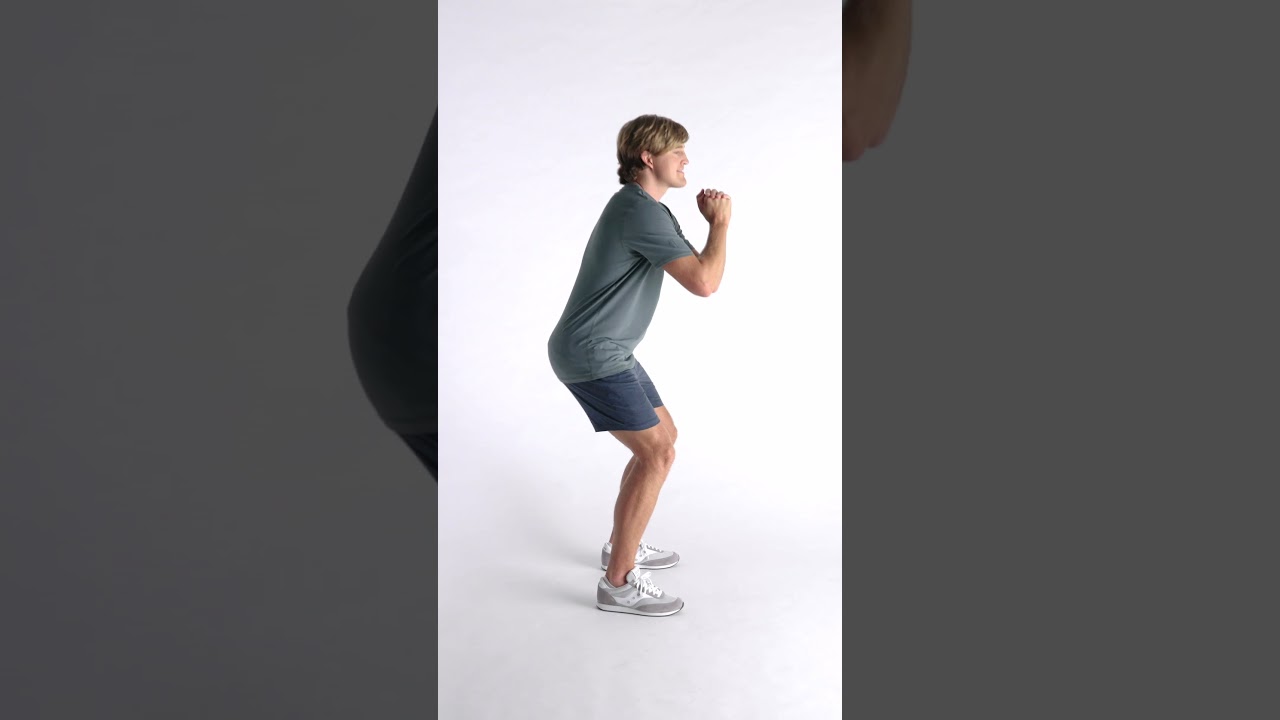
3. The Bodyweight Squat
When an individual is rising from the floor, a critical mechanical tipping point arrives when they bring one foot underneath their center of mass and require profound lower-body drive to propel the torso upward. The bodyweight squat trains this exact leg and hip extension capability.
- Prescription: 2 to 3 sets of 8 to 12 repetitions.
- Rest Period: 30 to 60 seconds between sets.
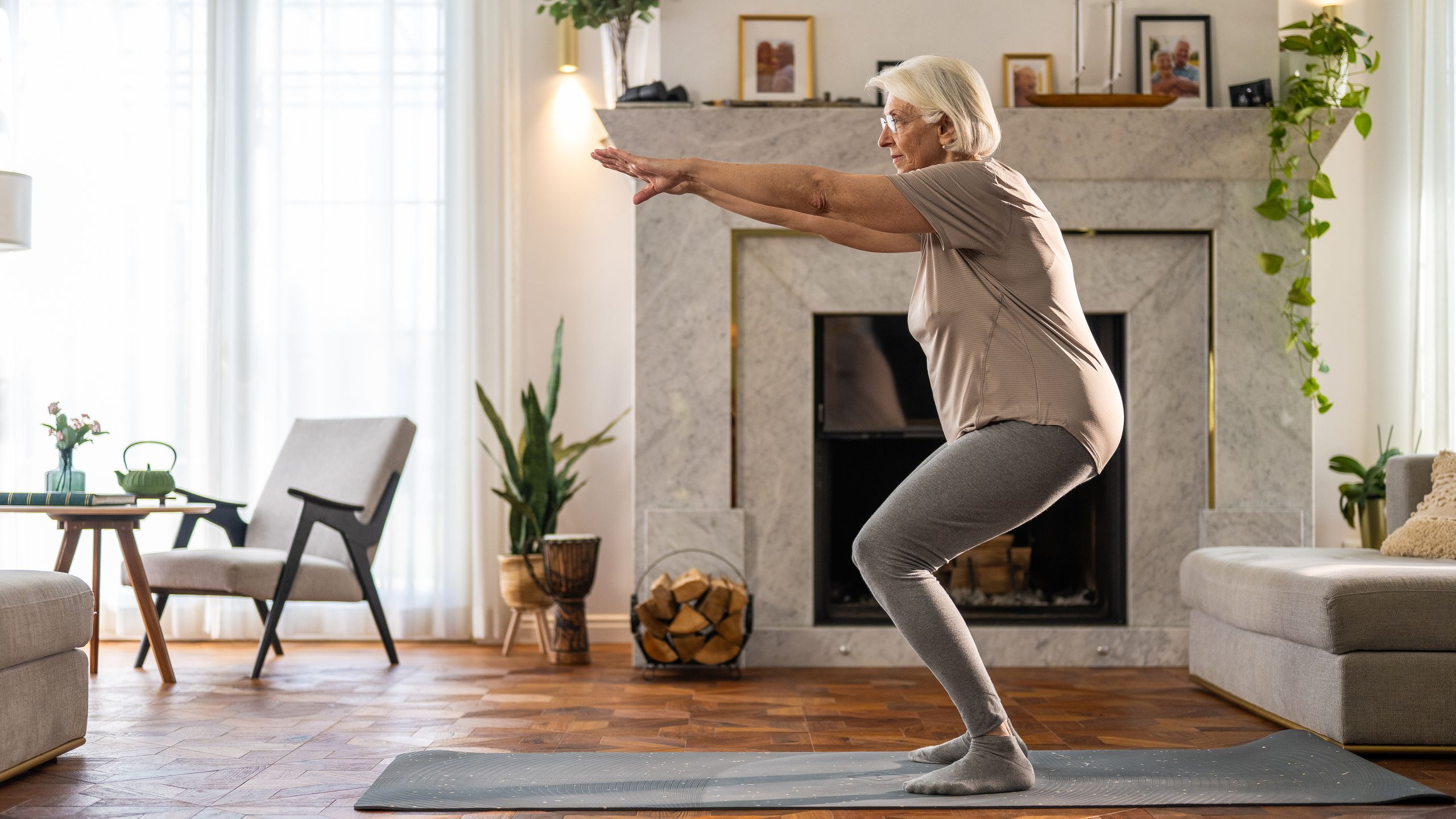
- How to Perform: Stand with your feet slightly wider than shoulder-width apart, toes pointing slightly outward for comfort and stability. Keep your chest proud and your gaze forward. Initiate the movement by hinging your hips backward as if sitting down into an imaginary chair, bending your knees while keeping your heels firmly planted on the floor. Lower yourself only to a depth that feels comfortable and fully controllable, then press through your mid-foot to return to a tall standing position.
- Expert Insight: "If you’re getting yourself up from the floor, there comes a point when you’ve brought a foot underneath you and need your legs to help push you upright. That’s where this type of lower-body strength becomes particularly important," says Dr. Helfrich. "For older adults, the goal isn’t to see how deeply you can squat, but to move through a comfortable range of motion with control. Squats can strengthen the hip and thigh muscles you rely on to stand, helping build the lower-body strength needed to push yourself upright from the floor."
Future Outlook: Embracing Lifelong Mobility and Fall Prevention
As global populations age, shifting the healthcare paradigm from reactive treatment to proactive movement preservation has never been more urgent. Falls among older adults represent a staggering public health challenge, frequently resulting in loss of independence, institutionalization, and immense emotional and financial strain on families and healthcare systems alike.
The message from modern physical therapy is clear: physical decline in later life is not a predetermined destiny. By embracing simple, evidence-based movement strategies—such as practicing sit-to-stands, wall push-ups, and controlled bodyweight squats—older adults can proactively bulletproof their bodies against the hazards of everyday life.
Reclaiming the ability to get up from the floor is ultimately about reclaiming freedom. It means maintaining the confidence to play on the rug with grandchildren, garden in the yard, travel independently, and live life on one’s own terms. Through consistent practice, expert guidance, and a commitment to functional fitness, the floor ceases to be a barrier and once again becomes just another surface to move across with ease.
About Our Expert
Dr. Christynne Helfrich, PT, DPT, OCS is a doctor of physical therapy at Hinge Health. She has been a practicing clinician since graduating from The Graduate Center, City University of New York, in 2010. She is a board-certified orthopedic specialist and an active member of the American Physical Therapy Association. Before joining Hinge Health, she honed her extensive clinical expertise across a diverse range of outpatient settings, including direct collaborations with collegiate sports teams to optimize athletic performance and injury rehabilitation.