Executive Overview
The glittering world of American pageantry has long projected an image of flawless poise, high-fashion glamour, and life-changing upward mobility. Yet, beneath the heavily lacquered curls, designer evening gowns, and glittering tiaras lies an institution currently navigating profound operational volatility.
Just six days before 51 hopeful contestants were scheduled to take center stage at Miami’s prestigious Adrienne Arsht Center for the Performing Arts, The CW network abruptly pulled the live broadcasts of both the Miss USA and Miss Teen USA pageants. The sudden cancellation sent shockwaves through the pageant community, forcing organizers into an eleventh-hour scramble to secure alternative distribution.
This unexpected television blackout is merely the latest in a cascade of high-profile challenges plaguing the organization. In recent years, the Miss USA Organization has found itself grappling with a toxic public relations narrative, marked by high-profile resignations, allegations of institutional toxicity, and intense scrutiny over the immense financial burdens placed on contestants.
Simultaneously, the organization has undergone a progressive modernization of its eligibility criteria, attempting to broaden its appeal in an era of shifting cultural norms. By dismantling archaic age ceilings, welcoming mothers and divorced women, and cementing inclusivity for transgender competitors, the pageant has positioned itself as a champion of modern womanhood.
However, this progressive ethos stands in stark contrast to the grueling administrative realities, steep out-of-pocket expenses, and systemic pressures reported by insiders. This report investigates the timeline of The CW’s eleventh-hour cancellation, examines the turbulent backdrop of recent organizational scandals, analyzes the rigorous rules governing modern contestants, and assesses what the future holds for America’s most iconic beauty competition.
Detailed Chronology: The CW Pulls the Plug
The countdown to the 2025 Miss USA pageant was ticking away in mid-August when the entire production apparatus was thrown into chaos. Fifty-one contestants from across the nation had spent months preparing for the live national broadcast, which was set to offer the winner a life-changing, six-figure contract and the ultimate honor of representing the United States at the Miss Universe pageant in Puerto Rico.
However, on August 20—a mere six days before the scheduled August 27 airing—The CW network announced that it would no longer broadcast the annual event.
The Official Explanation and Fallout
Miss USA organizers took to Instagram Stories to address the abrupt departure, citing an unresolved "contractual issue with our production arrangements that could not be resolved within the necessary time frame." The statement tersely noted that the organization and the network "were unable to reach mutually agreeable terms for this year’s event."
With mainstream television distribution vanishing overnight, the show’s producers were forced to pivot rapidly. Maintaining the mantra that "the show must go on," organizers relied on a digital alternative: the Queen Beauty Network. The subscription-based streaming platform, which caters specifically to enthusiasts of beauty, fashion, and pageantry, stepped in to air the competition for the second consecutive year. Miss Teen USA similarly streamed on the platform on August 26, ensuring that the competitions reached their dedicated niche audiences, albeit without the massive household visibility a national broadcast network provides.
A History of Broadcast Instability
The sudden parting of ways with The CW highlights the precarious nature of pageant television rights in the modern media landscape. Once staple programming for major broadcast networks drawing tens of millions of viewers, beauty pageants have steadily lost linear television footing as audiences migrate to streaming platforms and fragmented digital media. For Miss USA, losing a broadcast partner days before the event not only disrupts commercial revenue streams and sponsorship activations but also diminishes the cultural footprint of the newly crowned titleholders, making it increasingly difficult to launch them into mainstream stardom.
Supporting Context & Metrics: The 2023–2024 Crisis
The CW cancellation did not occur in a vacuum. It follows a tumultuous multi-year period that severely tested public trust in the Miss USA brand and exposed deep rifts between titleholders and national leadership.
The Resignation Shockwave
The internal friction of the organization burst into the public consciousness two years ago, when reigning Miss USA Noelia Voigt and Miss Teen USA UmaSofia Srivastava announced their decisions to step down from their respective roles within days of each other. The dual resignation of the reigning national queens was unprecedented in modern pageant history.
While Voigt cited severe mental health challenges stemming from her tenure, Srivastava issued a poignant statement noting that her personal values were no longer aligned with those of the organization. Because airtight non-disclosure agreements initially barred the young women from speaking candidly about the specifics of their departures, public speculation mounted.
The Good Morning America Revelations
The silence was decisively broken in May when the mothers of the former titleholders—Jackeline Voigt and Rosot Srivastava—appeared on Good Morning America. In a candid and damning joint interview, Jackeline Voigt summarized the sentiment of the displaced queens: "The job of their dreams turned out to be a nightmare."
The public outcry forced the Miss USA Organization to issue a defensive statement to ABC News, asserting: "We are committed to fostering a healthy, communicative and supportive environment for all contestants, state titleholders, national titleholders and staff." Despite these assurances, the reputational damage had been done, painting a picture of an organization struggling to balance the glamorous veneer of its public-facing events with the internal welfare of its participants.
The Modern Rules of Engagement: Who Can Wear the Crown?
Amidst operational hurdles and corporate shakeups, the fundamental rules governing who can compete for the title have undergone a sweeping evolution. In an effort to reflect contemporary society, the Miss USA Organization has systematically dismantled many of the traditional restrictions that defined pageantry for decades.
1. No More Age Limits
For generations, an unyielding age ceiling dictated that contestants must be between the ages of 18 and 28. That barrier has officially been dismantled. While contestants must still be at least 18 years old to vie for Miss USA (with younger hopefuls competing in Miss Teen USA), the upper age limit has been eliminated entirely.
This historic policy shift made global headlines in 2024 when Marissa Teijo, then 71 years old, shattered records by competing for the title of Miss Texas USA, proving that grace, ambition, and poise are not bound by chronological age.
2. Inclusion of Mothers and Divorced Women
Historically, entry requirements explicitly barred married women, divorcees, and mothers from participating—a relic of mid-20th-century sensibilities that viewed marriage and motherhood as incompatible with the role of a single cultural ambassador. Today, those archaic rules have been discarded.
Miss USA 2023 Savannah Gankiewicz championed this progressive leap, explaining to People magazine:
"You can be married, divorced, a mom, and you can compete at Miss USA and Miss Universe. When they see a woman that looks like them or speaks like them, they’ll feel inspired to do this as well."
3. Citizenship and Residency Mandates
While contestants do not strictly need to be born on American soil, strict legal and geographic criteria apply. Aspirants must be United States citizens possessing a valid passport—or the immediate ability to acquire one.
Furthermore, state-level representation requires deep ties to the local community. To compete in a specific state pageant, a contestant must meet at least one of three criteria:
- Have been a permanent resident of the state for the preceding three months.
- Be a full-time student who has completed at least one academic semester in the state.
- Be employed full-time within the state’s borders.
4. Full Inclusion of Transgender Contestants
In a milestone for inclusivity, the organization permits both cisgender and transgender women to compete. This policy paved the way for history in 2021 when Kataluna Enriquez, crowned Miss Nevada USA, became the first openly transgender woman to compete on the national Miss USA stage.
Though Enriquez did not advance to the top 16, her historic run left an indelible mark. Reflecting on her journey to Yahoo Life, she noted:
"It was an honor just to be able to represent my community and be an example for young queer children who now know they don’t need to be limited by society’s standards. Even though I was shocked not to move on, it’s OK because we made an impact—and I received a lot of support and love on social media."
5. Strict Wardrobe and Financial Realities
Despite the progressive expansion of who can wear the crown, the financial barriers to entry remain exceptionally high, transforming the journey into an elite test of personal resourcefulness.
- Wardrobe Restrictions: Contestants are strictly limited to just two evening gown looks throughout the official competition—one for the preliminary rounds and one for the grand finale.
- The Cost of Beauty: Beneath the shimmering gowns lies a staggering price tag. Contestants must largely fund their own campaigns, securing sponsorships, utilizing personal savings, and relying on family donations. Savannah Gankiewicz revealed to People that the average high-end evening gown can cost upwards of $12,000. Even securing a gown internationally for a discounted $6,000 proved financially punishing. When factoring in professional hair, makeup, nails, travel, and pre-pageant appearances, the financial investment required to be competitive runs into the tens of thousands of dollars.
- The "One and Shot" Rule: Unlike international systems where contestants can repeatedly vie for national titles across multiple years or different jurisdictions, Miss USA enforces a strict single-opportunity policy. As Gankiewicz noted, echoing Eminem’s famous lyric: "Once you compete in one state and win that title, you can’t compete again… So once you hit that Miss USA stage, this will be your last time." While dual citizens can travel abroad to compete multiple times for international crowns like Miss Universe Philippines, American contestants are given only one definitive shot at the national spotlight.
Future Outlook
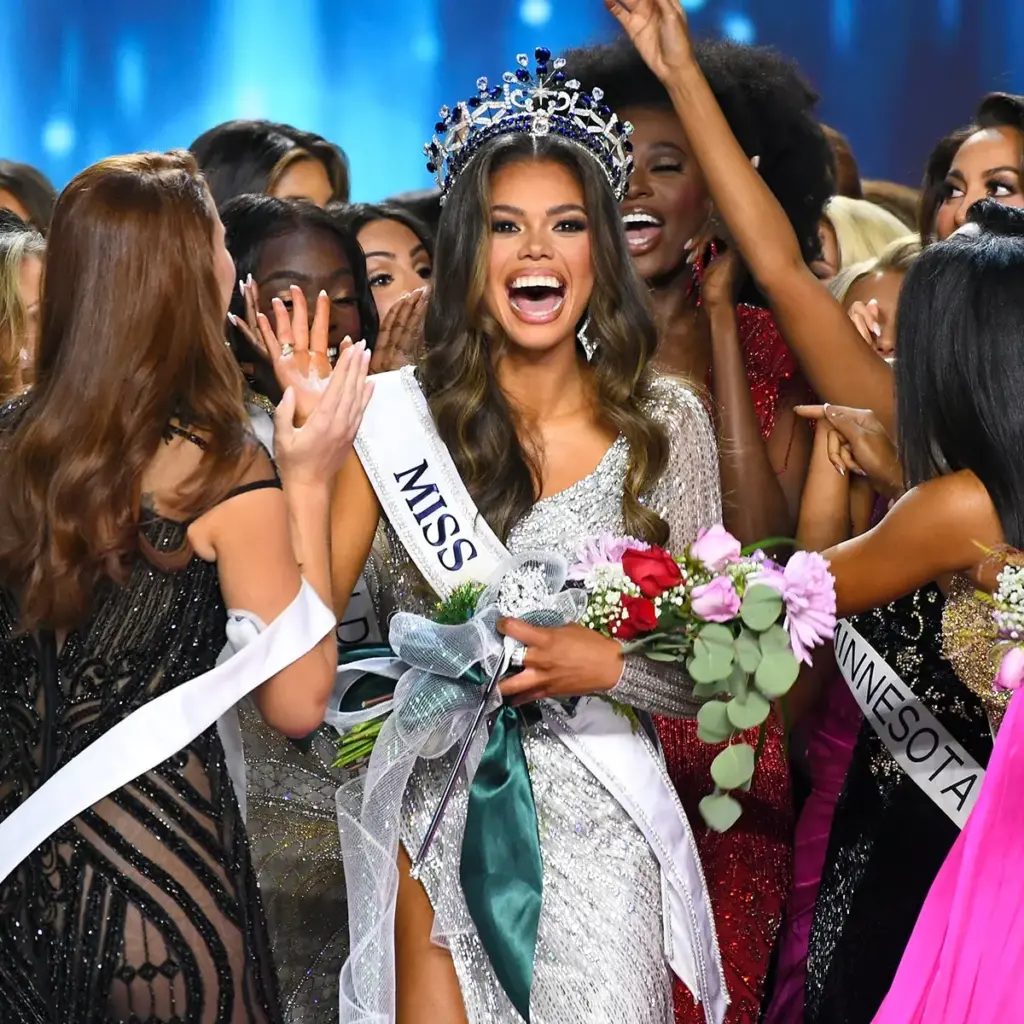
As the dust settles on the 2025 competition—successfully executed via the Queen Beauty Network following The CW’s abrupt withdrawal—the Miss USA Organization stands at a critical crossroads.
On one hand, the organization has successfully adapted to the cultural demands of the 21st century. By tearing down age limits, embracing mothers and divorcees, and welcoming transgender competitors, Miss USA has redefined what a modern queen looks like. Nebraska’s Audrey Eckert and her successors inherit a platform that is demonstrably more diverse, inclusive, and reflective of the American mosaic than at any point in its history.
On the other hand, the structural and operational challenges are impossible to ignore. The eleventh-hour loss of a linear television partner underscores the urgent need for a stable, forward-thinking media distribution strategy. In an era where linear television audiences continue to erode, management must successfully pivot to digital-first ecosystems without losing the mainstream cultural cachet that makes the national title coveted in the first place.
Compounding this is the ongoing imperative to restore institutional trust. The fallout from the 2023 resignations and the persistent criticisms regarding the crushing financial burdens placed on contestants signal that inclusivity must extend beyond eligibility rules to encompass the physical, financial, and mental well-being of the participants.
For the dreamers willing to invest their savings, endure rigorous rules, and brave the unpredictable tides of pageant politics, the crown remains a powerful symbol of ambition and achievement. Whether the organization can steady its administrative ship and secure a sustainable broadcast future will determine if that crown retains its legendary luster for generations to come.