Executive Overview
In the sprawling landscape of 21st-century fashion, the traditional boundaries defining alternative subcultures have dissolved. What was once forged in the fires of socio-political alienation—stitched together by hand in suburban bedrooms or underground clubs—has been systematically dismantled, commodified, and algorithmically processed into frictionless digital aesthetics.
Consider the trajectory of the safety pin: once a vital instrument of structural triage for torn garments, it evolved into an aggressive decorative statement of punk nihilism, only to settle comfortably into the mainstream as a ubiquitous lifestyle motif. Similarly, Dr. Martens transitioned from an explicit territorial signal of queer and countercultural alignment to standard corporate casual wear. Thrifting, upcycling, and DIY customization have ceased to be radical acts of anti-capitalist defiance; they are now mainstream rites of passage available at the click of a button on livestreams, proxy services, and online marketplaces.
This widespread accessibility has fundamentally altered the semiotic weight of clothing. As physical symbols of nonconformity are absorbed into the machinery of mass consumption, style has shifted from a badge of collective resistance to a fragmented language of hyper-personalized aesthetic taste. Yet, this very saturation has sparked a new counter-movement. Faced with the commodification of dissent, contemporary creators and youth groups are deploying irony, absurdity, and radical juxtaposition.
By turning the mainstream inside out—using found objects, chaotic mash-ups, and a deliberate refusal to make logical sense—today’s style pioneers are proving that while the visual markers of rebellion change, the impulse to dissent through dress remains entirely unshakeable.
Detailed Chronology: A Century of Style, Dissent, and Subculture
To understand where modern fashion finds itself, one must trace the evolutionary lineage of youth-driven subcultures through the 20th and 21st centuries. While fringe groups have always existed, the modern architecture of subculture crystallized during the 1900s, turning dress into a weapon of social demarcation.
The Early 20th Century: Foundations of Rebellion
- The Fin-de-Siècle Bohemians: Emerging at the turn of the century, these artists and intellectuals rejected Victorian rigidity, favoring loose garments and unconventional silhouettes that prioritized creative freedom over bourgeois respectability.
- The 1920s Swing Kids (Germany): In defiance of the Hitler Youth, jazz-loving German youths adopted Anglo-American fashion—long hair, checked jackets, and umbrellas—transforming clothing into a quiet, dangerous form of anti-fascist resistance.
- The 1930s Zoot Suitors (Harlem): Characterized by draped jackets, high-waisted peg-top trousers, and wide-brimmed hats, African-American and Latino youths in Harlem and Los Angeles used excess fabric to claim space and dignity in a deeply segregated society.
- The 1940s Zazous (France): Operating under Nazi occupation, French youths adopted exaggerated drape coats and sunglasses, mocking wartime austerity through flamboyant, jazz-infused aesthetics.
The Post-War Explosion: Beatniks, Hippies, and Punks
- The 1950s: The advent of the "American teenager" gave birth to the Beatnik aesthetic—black turtlenecks, berets, and minimalist palettes—signifying intellectual alienation and a rejection of suburban consumerism.
- The 1960s: Countercultural hippies embraced tie-dye, bell-bottoms, and military surplus, utilizing clothing to protest the Vietnam War and advocate for peace and communal living.
- The 1970s: Punk arrived as a violent rejection of hippie idealism. Driven by economic strife and political disillusionment, youths like Bud Thomas—then a teenager in suburban Virginia—pioneered a homespun aesthetic. Unable to buy leather pants locally, they took zippers, D-rings, and sewing machines to old denim, channeling Vivienne Westwood’s London-born anarchism. As Thomas notes, "When the reality you’re living in is so horrible, you have to go into your own head and create your own… because where else can you go?"
The Digital Acceleration: From MTV to the Internet Age
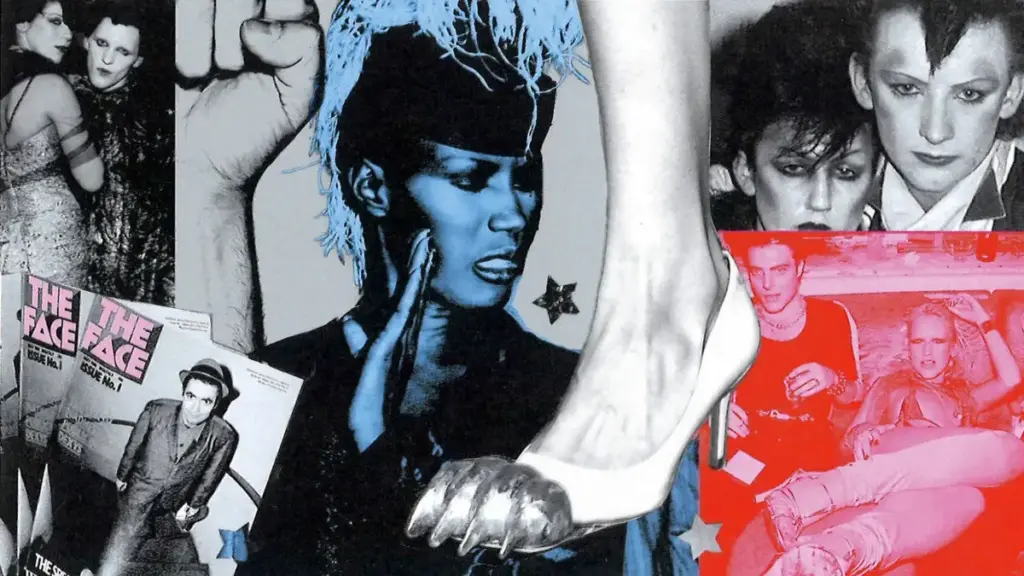
- The 1980s: The premiere of MTV in 1981 fractured local scenes into global phenomena. Blitz Kids, goths, New Romantics, and yuppies populated the cultural landscape, cross-pollinating international trends at an unprecedented velocity.
- The 1990s: Alternative styles converged in the mainstream through club kids, grunge, mall goths, and what early participants affectionately termed "JCPenney punks."
- The 21st Century: The internet dismantled geographic barriers entirely. Emos, scenesters, and analog hipsters spilled onto early digital forums, creating ultra-niche communities fueled by digital moodboards and online subcultural archives.
Supporting Context & Metrics: The Commodification of the "Core"
The shift from tight-knit subcultural communities to fragmented digital aesthetics has fundamentally altered the relationship between identity and apparel. In decades past, adopting a subcultural uniform required physical immersion—finding the right record store, trading zines, or altering garments by hand out of sheer necessity.
Today, data from trend-forecasting agencies like WGSN highlights the rapid rise of "core" aesthetics—cottagecore, gothcore, blokecore, and balletcore—which package complex historical movements into digestible, searchable micro-trends.
The Anatomy of Modern Access
The mechanisms for acquiring alternative fashion have undergone a digital revolution:
- Live-Stream Commerce: Platforms like Whatnot allow consumers to purchase vintage Tripp NYC bondage pants in real time via live auctions.
- International Proxy Sites: Shoppers can peruse Japanese fashion markets on Mercari through proxy services, acquiring hyper-specific regional aesthetics from thousands of miles away.
- Peer-to-Peer Closets: Social media friend-to-friend sales circulate worn-in Harley-Davidson boots bearing scuffs that serve as digital proof of mosh-pit participation.
While this democratization allows greater access to self-expression, it strips garments of their original protective and political contexts. When safety pins, studded belts, and distressed leather are mass-produced and sold stripped of ideological roots, they transition from symbols of dissent to generic aesthetic markers.
As Bud Thomas observes, wardrobe has long functioned as a non-verbal declaration: "How do you say ‘fck you’ without saying ‘fck you?’ Wardrobe and costume are part of that." However, when the establishment embraces and monetizes that very expression, the rebellious spirit risks dilution, turning counterculture into corporate content.
Official Perspectives and Expert Insights
To gain a deeper understanding of how creators are navigating this post-subcultural landscape, industry historians, archivists, and avant-garde designers have weighed in on the current state of style.
Bud Thomas (Library Supervisor and Operations Manager, USC ONE Archives):
"When the reality you’re living in is so horrible, you have to go into your own head and create your own. It’s that homespun kind of thing, because where else can you go? … It’s turning things sideways. It’s looking at things backwards. Not the absence, but the excess and pushing the boundaries of all of it."
Thomas emphasizes that while historical subcultures relied on clear-cut enemy lines and strict visual codes, today’s creators are operating in an era of aesthetic abundance. Rather than seeking refuge in rigid definitions, modern designers are leaning into chaotic recontextualization.
Art collectives and independent designers are leading this charge by rejecting clean, algorithmic categorization:
- Women’s History Museum (New York): This collective reimagines clothing as found-object art, constructing claw-footed pumps and salvaged armor made from coins, injecting a deeply human, tactile element back into design.
- Dollar Store Couture: Transforming items found exclusively in 99-cent shops into charmingly grotesque, high-concept garments that mock the luxury fashion cycle.
- CFGNY: The self-described "vaguely Asian" art collective uses garments to interrogate the nature of production, cultural identity, and the politics of being perceived as "other."
- Matty Bovan and John Alexander Skelton: These designers utilize anachronistic amalgams of old and new textiles, reviving the gritty, scrappy inventiveness of late-20th-century DIY culture.
These initiatives point to a broader industry realization: when everything is available, meaning is no longer derived from what brand or subculture you belong to, but how you assemble disparate, contradictory references.
Future Outlook: Playlist Culture and the Era of Aesthetic Chaos
As we look toward the future of fashion, the rigid "uniform" is dead. In its place stands playlist culture—a fluid approach to dress that mirrors how we consume music on shuffle.
Today’s sartorial landscape encourages radical juxtapositions that would have been considered stylistic treason in previous decades:
- A student of underground bass music attends a warehouse rave in Brooklyn wearing a 100-year-old Victorian nightgown.
- Office-ready architectural flats are paired with DIY crust-punk jackets at underground noise shows.
- High-performance technical ravewear is worn alongside thrifted vintage tailoring for a casual afternoon coffee run.
This chaotic cross-pollination offers a powerful psychological remedy for an era defined by political, economic, and digital fatigue. When the algorithms attempt to predict, categorize, and sell every possible iteration of human taste, the ultimate act of rebellion is refusing to make sense at all.
The satisfaction derived from pulling a look entirely from personal imagination—patched together through flea markets, clothing swaps, and hand-stitched alterations—remains unmatched. As grassroots clothing swap communities continue to surge in metropolitan hubs worldwide, they reinforce a timeless truth: the wearer is the look.
The uniform of rebellion has never been fixed, and in that permanent state of flux lies the true power of modern style. As long as individuals feel the need to retreat into their own minds when reality proves too rigid, fashion will continue to twist, turn, and reinvent itself from the ground up.