Executive Overview
The modern fitness landscape presents a stark dichotomy. On one side, the commercial weight room reigns supreme, characterized by the rhythmic clanging of iron, the hum of heavy-duty machinery, and the communal grit of barbell culture. To the uninitiated, however, this environment can feel intensely intimidating. Between the social pressure of crowded spaces, the auditory onslaught of grunting athletes, and the looming psychological barrier of heavy equipment perceived as a direct pipeline to injury, many fitness seekers opt to look elsewhere.
Enter the alternative: strength training stripped of external loads, relying exclusively on the body’s own mass through foundational movements like air squats, push-ups, and planks. Formally classified as calisthenics or bodyweight training, this discipline offers undeniable appeal. It is democratic, accessible, and entirely liberated from gym memberships, scheduling constraints, or logistical hurdles. Whether you are weathering a blizzard indoors, navigating a cramped hotel room on a business trip, or simply trying to squeeze in a functional sweat session during a busy workday, bodyweight exercises demand nothing more than gravity and floor space.
Yet, a persistent, foundational question lingers among both novices and seasoned athletes: Can you genuinely build muscle and cultivate raw strength using bodyweight workouts alone, or are dumbbells, barbells, and resistance machines an absolute non-negotiable requirement for physical transformation?
To answer this complex question, we must look past internet fitness fads and examine the biomechanics of load, the physiological triggers of muscle hypertrophy, and the insights of leading kinesiologists and strength coaches. While bodyweight training is a powerful tool for beginners, rehabilitation, and functional longevity, it operates under distinct physiological laws that eventually demand external progression—unless your goals are strictly tailored toward maintenance rather than growth.
Detailed Chronology: The Evolution of Bodyweight Fitness vs. Iron Training
To understand where bodyweight training fits into contemporary fitness, it is helpful to trace the historical pendulum swing between calisthenics and external loading.
Ancient Origins and the Calisthenics Era
Long before the invention of the cast-iron dumbbell or the Olympic barbell, human strength was forged entirely through bodyweight manipulation. Ancient Greek wrestlers, Spartan warriors, and Roman gladiators built legendary physiques using calisthenics—a term derived from the Greek words kalos (beauty) and sthenos (strength). Push-ups, pull-ups, primitive lunges, and gymnastics-style holds were the standard metrics of physical prowess.
The Industrial Revolution of Iron
As industrial manufacturing advanced in the 19th and 20th centuries, the gym culture shifted toward external resistance. Dumbbells, barbells, and pulley systems allowed fitness enthusiasts to isolate muscles and precisely manipulate the amount of weight lifted. This era birthed modern bodybuilding, powerlifting, and Olympic weightlifting, establishing the barbell as the undisputed gold standard for building dense, powerful muscle mass.
The Modern Re-Emergence of Bodyweight Training
In recent years, the pendulum has swung back toward accessibility. The rise of functional fitness movements, the global disruption of home-bound routines during the COVID-19 pandemic, and the viral popularity of street workout communities have thrust bodyweight training back into the global spotlight. Today, digital platforms and specialized studios are re-evaluating how far a practitioner can go without ever touching a metal plate.
Supporting Context & Metrics: How Bodyweight Load Actually Works
Not all bodyweight exercises are created equal. The human body is not a uniform block; it is a complex kinetic chain of levers, joints, and muscle groups. Consequently, the actual load experienced by a target muscle during a calisthenics movement depends heavily on biomechanical leverage.
The Myth of the Bodyweight Bicep Curl
Consider the biomechanics of movement. As Meredith Witte, MS, CSCS, founder of the functional strength training platform The Playground, notes, "You’re not going to get benefit out of doing bodyweight biceps curls." Because the only resistance being moved is the mass of your forearm and hand against gravity, the mechanical stress placed on the bicep brachii is virtually zero. Without significant resistance, the muscle has no physiological incentive to adapt, grow, or strengthen.
The Physics of the Push-Up
Conversely, compound movements alter the equation dramatically. A landmark study published in the Journal of Strength and Conditioning Research investigated the percentage of total body mass supported during a standard push-up. Researchers discovered that a traditional push-up requires the upper body to support up to 75% of an individual’s total body weight.
To contextualize this metric: for a 150-pound person, a standard push-up requires pressing approximately 112.5 pounds of resistance. This heavy mechanical load explains precisely why push-ups remain notoriously difficult for beginners, even without stacking additional weight plates onto the upper back.
The Lower-Body Dilemma: Squats and Lunges
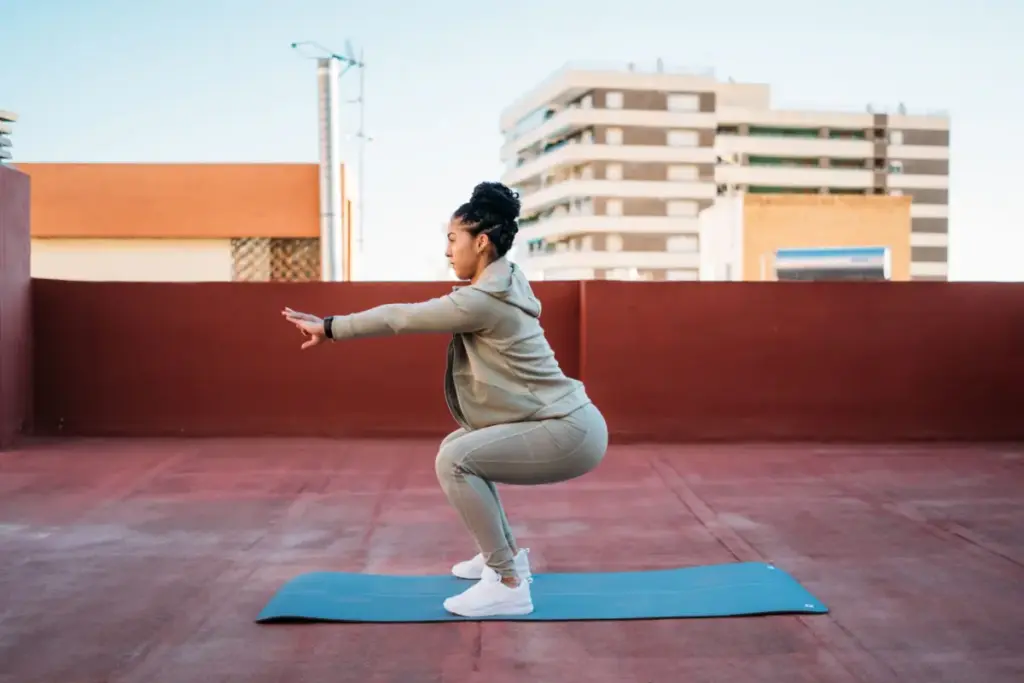
Lower-body movements like air squats and lunges also engage a massive percentage of body weight, deploying some of the largest, most powerful muscle groups in the human body, such as the quadriceps and glutes. However, because our legs are naturally designed to carry our body weight all day long, unweighted movements present a unique hurdle.
"For the average person, bodyweight squats are not going to be enough," Witte explains. "Our legs are very strong, and so they’re going to feel challenged by body weight, but it’s still really not going to be enough to sufficiently build muscle, unless you truly have not worked out before, or you are an older adult who has not been working out."
Official Statements & Expert Insights: The Science of Muscle Hypertrophy
To determine whether calisthenics can trigger true muscle growth—scientifically known as muscle hypertrophy—we must examine the cellular triggers required to change tissue architecture.
The Role of Muscular Failure
According to Dr. Stuart Phillips, a prominent kinesiology professor at McMaster University in Ontario whose research frequently explores human muscle protein synthesis, the mechanism of muscle growth is indifferent to the source of the resistance. Whether you are lifting a heavy barbell, a light dumbbell, or zero weights at all, hypertrophy is triggered when you push the target muscle close to the point of "failure"—the physiological state where performing another concentric repetition becomes impossible.
"It doesn’t matter whether you’re lifting heavy or light, or with no weights at all, as long as you generate enough tension in the muscles that get within a couple reps of that muscular failure," Dr. Phillips explains.
Describing this sensation, Witte compares it to "trudging through mud"—your final repetitions should feel arduous, sluggish, and nearly impossible to complete cleanly.
Who Benefits Most?
While elite gymnasts achieve staggering levels of muscle mass and relative strength primarily through advanced bodyweight movements (such as iron crosses and handstand push-ups), the everyday practitioner experiences a different curve of diminishing returns.
Dr. Phillips emphasizes that the individuals who stand to gain the most from simple bodyweight exercises—such as basic arm circles, glute bridges, or wall sits—are absolute beginners or those returning from a prolonged sedentary period.
"The biggest improvements in strength and muscle are going to happen in people who are pretty inactive to start with," says Dr. Phillips. For an untrained individual, or someone recovering from an injury or orthopedic surgery, even low-intensity bodyweight exercises provide sufficient mechanical stress to cause muscle fibers to adapt.
Furthermore, these foundational movements facilitate crucial neurological adaptations. Kristie Larson, CSCS, founder of Tension, a strength-training studio for women in Brooklyn, highlights the brain-body connection: "You can teach your brain to recruit the muscle fibers that you maybe aren’t utilizing."
Future Outlook: Progressive Overload and the Limits of Calisthenics
The fundamental law of strength development is progressive overload—the systematic increase of stress placed on the body during exercise over time to prompt continuous adaptation. Traditionally, this is achieved by adding heavier free weights to the bar week after week. However, Dr. Phillips notes that external weight is merely one vehicle for progressive overload. Any variable that increases muscular tension can yield results.
How to Progress Without Weights
If you choose to bypass the dumbbell rack entirely, you must manipulate other training variables to continue seeing gains:
- Advanced Variations: Transitioning from a bilateral (double-leg) bodyweight squat to a unilateral (single-leg) pistol squat drastically increases the load placed on the working leg.
- Tempo Manipulation: Slowing down the eccentric (lowering) phase of a push-up or holding an isometric pause at the bottom of a lunge increases time-under-tension, creating micro-tears in the muscle tissue without adding external weight.
- Form Refinement: Utilizing strict, flawless technique eliminates momentum and prevents stronger, compensatory muscle groups from hijacking the movement, ensuring the targeted muscle bears the full brunt of the load.
- Volume Scaling: Increasing the number of repetitions and sets can drive progress—up to a point.
The Endurance Threshold
There is a hard ceiling to volume-based progression. Once an individual can comfortably complete 30 or more consecutive repetitions of a bodyweight exercise without hitting muscular failure, the physiological adaptation shifts.
"At that point, that’s not really resistance training—it’s much closer to endurance training," Dr. Phillips warns.
The Ultimate Verdict: What Happens If You Never Lift Weights?
If you completely forgo external weights, you will eventually hit a plateau. "Bodyweight exercises just can’t provide enough stimulus for the average person for very long," Witte notes. "Pretty quickly, your body is simply going to need more to build muscle."
Yet, not every fitness enthusiast is striving to break personal records in powerlifting or pack on massive amounts of hypertrophy. For the individual whose primary life goal is to maintain robust health, functional mobility, and physical independence well into old age, bodyweight training can be a lifelong solution.
"If someone wants to just maintain muscle, then bodyweight could be appropriate indefinitely," Larson concludes. While you may never secure a trophy in a bench-press competition, committing to a consistent bodyweight routine will still yield powerful bone-building, balance-boosting, and longevity-enhancing benefits—proving that sometimes, the best piece of equipment you can use is the one you were born with.