Executive Overview
In the public eye, television personalities often appear invincible—projecting an aura of unwavering confidence, sharp wit, and robust health from our living room screens five days a week. Yet, beneath the polished veneer of daytime television lies human vulnerability. Recently, Loose Women anchor Kaye Adams shattered that illusion of untouchability, opening up about a deeply personal and terrifying health ordeal that culminated in major surgery and an agonizing wait for cancer results.
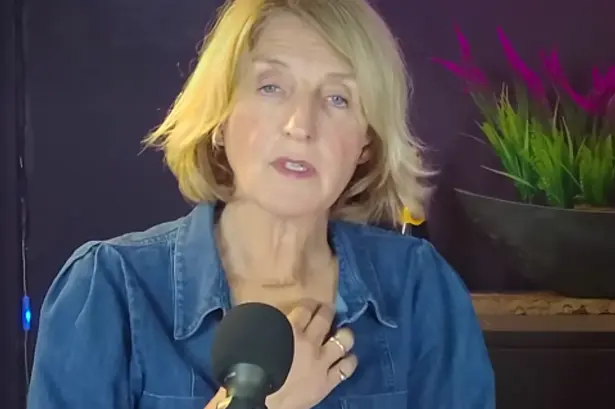
Speaking candidly on the latest episode of her acclaimed podcast, How To Be 60, the 63-year-old broadcaster detailed her journey through a hemithyroidectomy—a surgical procedure to remove one half of her thyroid gland for biopsy. What began as an innocuous post-interview habit snowballed into an 18-month medical saga fraught with anxiety, existential dread, and the terrifying prospect of losing not only her health, but the very instrument of her livelihood: her voice.
This comprehensive report examines the timeline of Adams’ medical journey, the pivotal moments that catalyzed her diagnosis, and the broader societal conversations surrounding health advocacy, midlife wellness, and the psychological toll of public scrutiny. Through an authoritative journalistic lens, we explore the nuances of thyroid health, the psychological weight of medical uncertainty, and how Adams ultimately emerged from the shadows of a "hellish year" with a renewed appreciation for life.
Detailed Chronology: From a Routine Interview to the Operating Theatre
The Catalyst: An Unlikely Awakening
The genesis of Adams’ health scare dates back roughly a year and a half, sparked not by routine medical screening or overt symptoms, but by the power of media consumption and bodily hyper-awareness. While conducting an interview with comedian and writer Mark Steel—who had been candidly discussing his personal experiences with throat cancer—Adams experienced a psychological shift common among journalists and interviewers alike: empathetic reflection.
Listening to Steel recount his battle with the disease, Adams instinctively reached up to touch her own neck. As she began absentmindedly prodding the area, she noticed what felt like an unfamiliar lump.
"And as is typical, once you’ve done that kind of interview, you go away and you start prodding about," Adams explained to her co-star, Karen MacKenzie, on How To Be 60.
Sensing a need for a second opinion, she turned to a trusted friend who happened to be a registered nurse. Expecting dismissal—a reassurance that she was simply being neurotic or overreacting to a harrowing interview topic—Adams was instead met with a sobering assessment. Her friend urged her to seek professional medical evaluation immediately.
The Medical Maze: GPs, Scans, and Hesitation
Following her friend’s advice, Adams scheduled an appointment with her general practitioner. What followed was a familiar yet daunting passage through the labyrinth of the National Health Service (NHS) and private diagnostics. Her GP examined the area and referred her to a hospital specialist, where subsequent imaging scans confirmed the presence of an abnormality.
For months, medical professionals kept a close eye on the growth, categorizing it as something to monitor rather than aggressively treat. However, as routine check-ups continued, the ambiguity surrounding the mass persisted. Medics ultimately advised that a biopsy was necessary to determine the exact cellular composition of the tissue.
Faced with the reality of an invasive procedure, Adams admitted to experiencing profound reluctance. When doctors suggested a biopsy, her initial instinct was avoidance. "They took a biopsy and said they didn’t know what was in there, and I said, ‘Just leave it,’ because I couldn’t face it," she confessed.
The psychological barrier to seeking treatment is a well-documented phenomenon in medicine, often referred to as "diagnostic avoidance." For Adams, the fear was twofold: the looming shadow of a potential cancer diagnosis, and the very real physical risks associated with neck surgery. Because the thyroid gland sits intimately close to the recurrent laryngeal nerves—which control the vocal cords—any surgical intervention in this region carries an inherent risk of vocal cord paralysis or chronic hoarseness. For a woman whose entire career depends upon her ability to articulate, debate, and project her voice on live television, the stakes could scarcely have been higher.
"They always give you the risks, don’t they, with these procedures?" Adams reflected. "So apart from the fact that you might have cancer, which is obviously not good, the risk is to your voice box. So I was really nervous about that, which is, I think, probably why I delayed it for so long."
The Hemithyroidectomy and the Agonizing Wait
Ultimately, medical advice prevailed over fear. Adams consented to a hemithyroidectomy, a surgical procedure designed to excise the affected half of the thyroid gland, allowing pathologists to perform a comprehensive examination of the tissue in a laboratory setting.
The surgery itself was successful, but the conclusion of the operation marked the beginning of a psychological crucible: the waiting period for histological results.
Upon discharge, her surgeon provided a standard timeline. "As I was leaving, he said, ‘It will be about three weeks before you get the results,’" Adams recalled. Anticipating the worst-case scenario, she probed further: "’Oh, unless it’s something really terrible?’ And he said, ‘Yes, you’ll be told right away.’"
True to that ominous protocol, Adams did not have to wait three weeks. Just a few days post-discharge, her phone rang. Paralyzed by the dread that the early call signified malignant pathology, Adams engaged in a classic psychological defense mechanism: avoidance. She let the phone ring, ignoring the first call, and the second. It wasn’t until the third insistent ring that she summoned the courage to lift the receiver.
The Verdict: Relief and Release
The voice on the other end of the line delivered the news Adams had spent months praying for: the growth was entirely benign. There was no cancer.
The emotional whiplash from profound dread to unadulterated relief was instantaneous. Describing the moment to her listeners, Adams painted a vivid picture of ecstatic joy: "I was jumping up and down like a kid at Christmas who’d just been given six ponies and a bike. What a relief."
Supporting Context & Metrics: Understanding Thyroid Health and Midlife Anxiety
The Thyroid: A Small Gland with a Massive Role
To fully appreciate the gravity of Adams’ ordeal, it is essential to understand the physiological function of the thyroid. Shaped like a small butterfly and situated at the base of the neck just below Adam’s apple, the thyroid gland plays a master regulatory role in the human body. It produces hormones that govern metabolic rate, heart function, digestive health, muscle control, brain development, and bone maintenance.
Thyroid abnormalities—including nodules, goiters, and benign or malignant tumors—are remarkably common, particularly as individuals age. According to clinical data from endocrinology associations:
- Prevalence: Thyroid nodules can be detected via ultrasound in up to 50% of people over the age of 60, though the vast majority (approximately 90% to 95%) are benign.
- Demographics: Thyroid conditions disproportionately affect women compared to men, with autoimmune thyroid diseases and nodules appearing at rates up to eight times higher in females.
- Surgical Interventions: A hemithyroidectomy is frequently performed both as a diagnostic tool and a curative treatment when nodules display indeterminate features on fine-needle aspiration biopsies.
Navigating the Psychological Landscape of Midlife
Adams’ openness on How To Be 60 extends far beyond physical health; her podcast serves as an audio diary exploring the realities, anxieties, and triumphs of aging. Entering one’s sixties often brings a confluence of life stressors: changing family dynamics, career shifts, physiological transformations, and the unavoidable reality of mortality.
In the wake of her health scare, Adams admitted that her psychological resilience had already been severely tested over the preceding year. Referencing what she termed "a hellish year"—which publicly included navigating intense media scrutiny surrounding workplace bullying allegations, all of which she firmly denied—Adams described sliding into a dark mental headspace.
"You get yourself into a headspace that nothing is ever going to be good again. That everything is going to be bad," she confessed.
This profound pessimism is a textbook symptom of chronic stress and anticipatory grief. When high-stress professional environments collide with personal health crises, the human nervous system can enter a state of functional exhaustion. Adams humorously yet touchingly illustrated the physical manifestation of her stress-induced depression: a total loss of appetite for normal foods, leaving her subsisting almost exclusively on mangoes.
Nutritional psychologists note that severe emotional distress frequently disrupts gastrointestinal function and appetite regulation, making comfort foods—or in Adams’ case, specific fruits rich in natural sugars and hydration—a rare beacon of sensory pleasure during dark psychological periods.
Official Statements and Media Reactions
The reaction to Adams’ revelation has been overwhelmingly supportive, highlighting the deep bond she shares with her audience and fellow broadcasters. As a veteran fixture of British television—known for her sharp journalistic interviewing style on Loose Women and her extensive tenure across BBC and ITV broadcasting networks—Adams commands a loyal following that values her trademark candor.
Co-host Karen MacKenzie, participating in the How To Be 60 episode, provided a grounding and empathetic sounding board, allowing Adams to process the trauma of the past year in a safe, conversational space.
Media commentators and health advocates have similarly praised the presenter for breaking the taboo surrounding medical fear. By openly discussing her initial reluctance to undergo the biopsy and her dread of vocal cord damage, Adams has provided a vital service: validating the very real psychological barriers that prevent many individuals—particularly women over 50—from seeking timely medical investigations.
Charities specializing in head and neck cancers, as well as thyroid foundations, have noted a measurable spike in public health inquiries whenever high-profile figures discuss diagnostic procedures. Adams’ story underscores a vital medical maxim: bodily anomalies should never be ignored, and proactive screening remains the single most effective tool in mitigating long-term health risks.
Future Outlook: A Renewed Perspective on Life After 60
As Kaye Adams moves past the physical recovery of her hemithyroidectomy and the emotional turbulence of her recent past, her journey serves as a powerful reminder of resilience in midlife.
The experience has fundamentally altered her perspective on wellness, anxiety, and the importance of self-advocacy. Where she once found herself trapped in a cycle of catastrophic thinking—fearing that "nothing is ever going to be good again"—she has emerged with a renewed sense of gratitude. The joy of receiving a benign diagnosis acted as a powerful psychological reset, piercing through the gloom of a difficult twelve months.
For her listeners and fans, Adams continues to be a pioneering voice in normalizing the complexities of aging. Through How To Be 60, she refuses to sugarcoat the realities of growing older, choosing instead to lean into vulnerability, humor, and shared human experience.
As she returns to our television screens with her characteristic vigor and unmistakable voice intact, Kaye Adams stands not just as a resilient broadcaster, but as a testament to the fact that confronting our deepest fears—whether in a doctor’s office or on the airwaves—is ultimately the only way to reclaim our peace of mind.