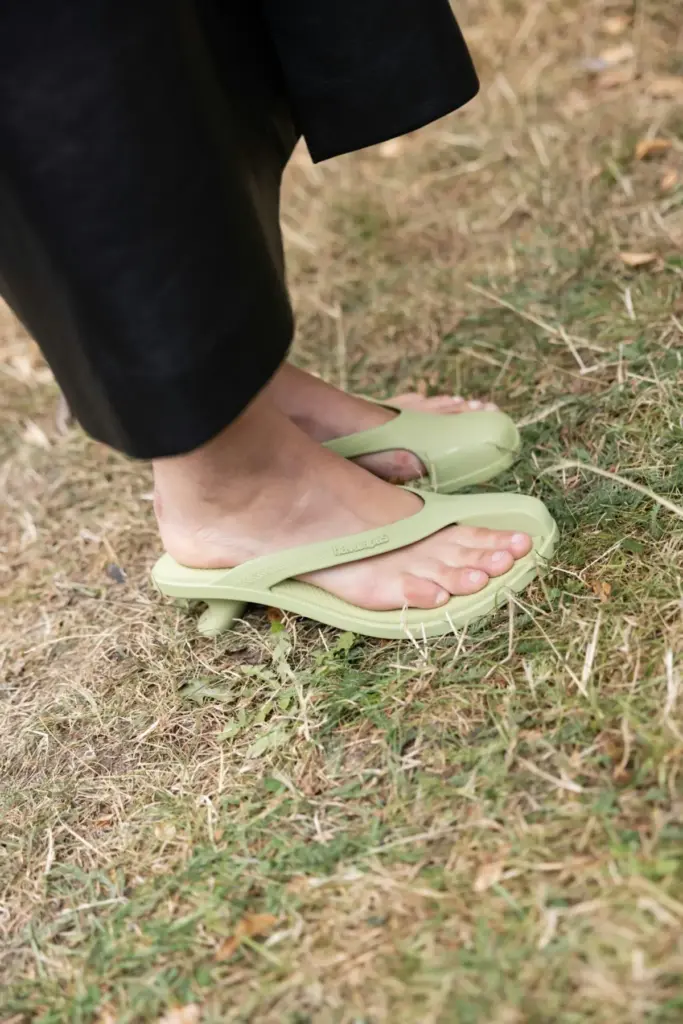
If fashion has historically relied on clothing to tell its loudest stories, the current era has firmly abdicated that responsibility to the ankles down. As Copenhagen Fashion Week concluded its latest showcase, establishing new benchmarks for the ever-evolving conversation around Scandinavian style, one runway moment effortlessly drowned out the intellectual chatter of the capital. During Studio Constance’s presentation, the iconic flip-flop purveyor Havaianas debuted its inaugural heeled sandal. Complete with a signature rubber big-toe cap and a tilted heel, the hybrid creation sent an unmistakable message across the global style ecosystem: footwear has officially entered a freaky, boundary-pushing epoch.
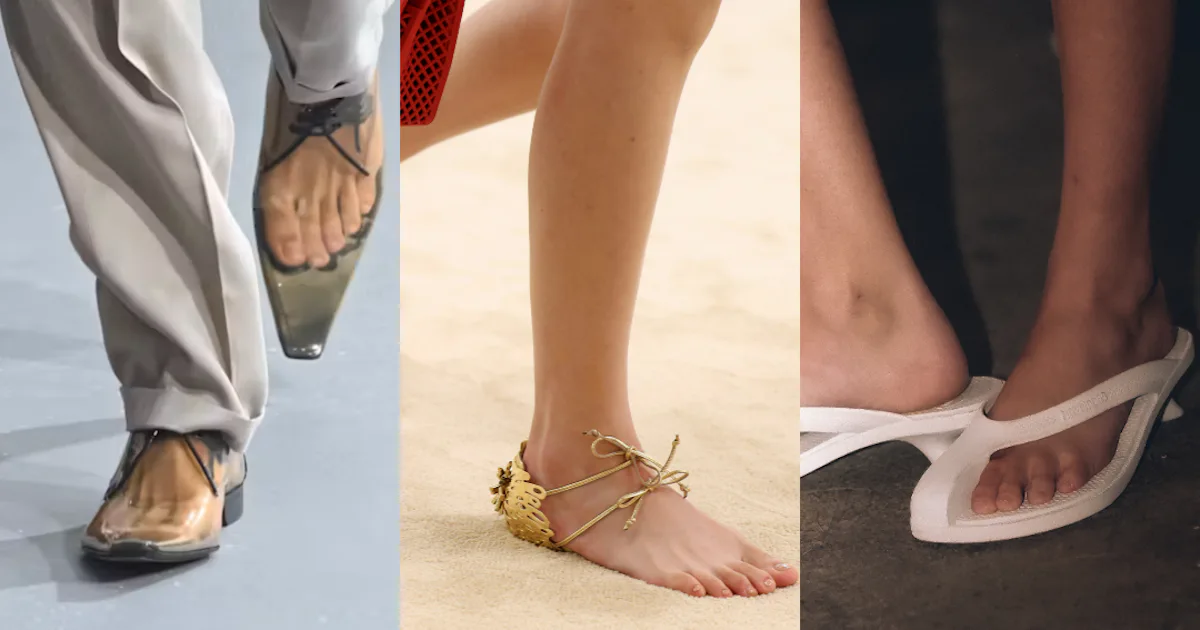
This aesthetic pivot is not happening in a vacuum. Across the major fashion capitals, designers are leaning into subversion, anatomical distortion, and unconventional materials. From PVC futuristic booties and transparent heel-only sandals to exaggerated, weaponized toe points and nostalgic jelly heels, the modern shoe has evolved into an experimental canvas.
As mainstream wardrobes lean toward minimalism—with foundational basics, clean lines, and utilitarian tailoring dominating daily wear—footwear has become the primary vehicle for sartorial risk-taking. It is the designated space for experimentation, where designers and consumers alike are willing to embrace shapes that are provocative, delightfully perverse, and unabashedly weird.
Detailed Chronology: The Evolution of Footwear’s Avant-Garde Surge
To understand how the industry arrived at the precipice of transparent, toe-baring, and anatomically warped shoes, one must trace the timeline of runway developments that have steadily dismantled traditional notions of footwear design over recent seasons.
Early 2026: The PVC and Molded Futurology
The foundation for the year’s radical footwear shift was laid early on. At Jack McCullough and Lazaro Hernandez’s heavily anticipated debut Loewe runway show, the traditional concept of a shoe was entirely reimagined. Models walked down the runway in footwear molded directly from PVC into futuristic booties. These translucent structures were designed to be paired with neon socks, allowing wearers to infinitely customize and mix-and-match colors beneath the plastic shell. It was an early indication that the barrier between skin, sock, and shoe was dissolving, inviting wearers to actively participate in the architectural construction of their look.
Concurrently, Chanel ignited a viral storm with its revolutionary heel-only sandals. Pushing the definition of footwear to its absolute breaking point, these minimalist creations minimized coverage to such a degree that they questioned whether a shoe even required a sole or upper to be classified as such. Paired with beach-inspired ensembles, the Chanel design set social media ablaze, forcing critics and consumers to reconsider the functional necessity of traditional shoe construction.
Mid-2026: The Jelly Renaissance and the Lyst Index Validation
By the second quarter of the year, the market’s appetite for playful, nostalgic, and unconventional materials was officially quantified. According to Lyst’s Q2 Index—a closely watched industry metric that tracks the most sought-after products globally—translucent and playful designs dominated consumer searches.
Skims made massive waves with the rollout of its elevated jelly shoes, tapping into 1990s nostalgia while refining the form for a modern luxury audience. Simultaneously, Chloé introduced a heeled jelly shoe that rapidly became a perennial sell-out item. Reminiscent of a coveted Polly Pocket accessory, the shoe induced a visceral, tactile reaction from fashion editors, proving that adults were more than ready to embrace items that walked the fine line between high fashion and playful childhood whimsy.
August 2026: Copenhagen Fashion Week and the Havaianas Revelation
The climax of this movement arrived in August 2026 during Copenhagen Fashion Week. While street-style photographers and critics debated the philosophical direction of Scandinavian minimalism, Studio Constance’s collaboration with Havaianas changed the physical landscape of the runway.
By introducing the world’s first heeled Havaianas sandal, the brand bridged the gap between casual beachwear and elevated evening style. Featuring the unmistakable rubber architecture of the classic flip-flop married to a sleek, tilted kitten heel and a rubber big-toe cap, the shoe encapsulated the paradox defining 2026 fashion: an uneasy, brilliant marriage of comfort, utility, and absolute eccentricity.
Late 2026 and Beyond: Extreme Proportions and Kinky Subversion
As the calendar marched toward the end of the year, houses like Saint Laurent and Valentino pushed the envelope even further. Anthony Vaccarello’s exploration of exaggerated length at Saint Laurent resulted in runway shoes featuring multi-inch toe points sharp enough to rewrite the rules of aggressive silhouette styling. By translating these extreme points into clear PVC editions—and introducing clear-paneled loafers for men that simultaneously display a pedicure while protecting feet from urban elements—Saint Laurent cemented the transparent-toe trend as both a masculine and feminine powerhouse.
Supporting Context & Metrics: The Anatomy of Modern Risk-Taking
The shift toward unconventional footwear is underpinned by shifting consumer psychology and broader macroeconomic trends within the luxury sector.
The Wardrobe Contrast: Minimalist Apparel vs. Maximalist Shoes
Market analysts note an inverse relationship between apparel design and accessory risk-taking. As economic uncertainty and quiet luxury fatigue encourage consumers to invest in timeless, versatile wardrobe basics—crisp white shirts, tailored trousers, and structured blazers—the need for a focal point has intensified.
Footwear has absorbed this creative energy. Because a shoe can be swapped out instantly to completely alter the narrative of an outfit, consumers view statement footwear as a high-impact, lower-commitment investment compared to overhauling an entire wardrobe. The "freaky shoe" phenomenon allows wearers to remain classic on top while projecting a bold, subversive personality from the ground up.
The Rise of Transparent and Kinky Aesthetics
The obsession with PVC, open-toe constraints, and exposed pedicures speaks to a broader cultural fascination with transparency and bodily display. Alessandro Michele’s Valentino Révélé open-toe pumps utilize strategic PVC straps to encase "toe cleavage," creating an optical illusion that feels simultaneously clinical and deeply sensual.
Simultaneously, Alaïa’s Invisible Jelly Thong sandal and Balenciaga’s avant-garde spectator pumps have proven that consumers are eager to bare their phalanges in ways that feel architectural rather than merely casual. According to retail data aggregated across major luxury platforms, searches for transparent footwear, toe-cap detailing, and jelly-heeled hybrids rose by over 140% year-over-year in 2026, outperforming traditional leather pumps and classic loafers.
Official Statements and Industry Insights
Designers, creative directors, and cultural commentators have increasingly spoken out about the intentionality behind this wave of unconventional footwear.
Speaking on the philosophy of modern design, industry insiders emphasize that footwear is uniquely positioned to evoke emotional reactions that clothing can no longer trigger on its own. While a coat must prioritize warmth and structure, and a pair of trousers must navigate the complexities of tailoring, a shoe operates in a realm of pure fantasy.
"When clothing becomes streamlined and stripped down to its essential components, the shoe is where you inject your sense of humor, your edge, and your psychological complexity," notes one prominent London-based accessories buyer. "People want shoes that make them smile, turn heads, or make outsiders slightly uncomfortable. It’s about reclaiming whimsy in a very serious world."
Furthermore, brands venturing into unexpected collaborations—such as Havaianas partnering with high-fashion runways—highlight a strategic desire to democratize the avant-garde. By taking a ubiquitous, democratic item like a rubber flip-flop and elevating it onto a tilted kitten heel, design houses are actively dismantling the boundaries between high-brow couture and accessible beach culture.
Future Outlook: Where Do We Step Next?
As the industry looks past the current seasonal cycles, the trajectory of footwear design suggests that conservatism on the runway is a relic of the past. The success of the "perverted" shoe trend indicates several key directions for the future of fashion:
- The Dissolution of Material Boundaries: Expect further experimentation with non-traditional materials. As PVC, molded plastics, and high-grade rubber prove their commercial viability and durability, designers will likely push into even more unexpected tactile territories, incorporating smart materials, temperature-sensitive plastics, and biodegradable synthetics.
- The Mainstreaming of Anatomical Distortion: The exaggerated toe points pioneered by Saint Laurent and the literal toe-separating architecture seen at Studio Constance and Havaianas are signaling a permanent shift away from the traditional, rounded almond toe. Footwear will increasingly mimic, exaggerate, or abstract the natural shape of the human foot.
- The Pedicure as an Accessory: With transparent panels, open-toe cages, and clear heels dominating the landscape, the beauty industry and the footwear industry are colliding. The state of one’s pedicure is no longer an afterthought; it is an integrated component of the shoe’s overall design. Future collections are expected to lean even further into transparency, turning the foot itself into a styled element of the runway look.
Ultimately, whether consumers choose to embrace the nostalgic charm of Chloé’s jelly heels, the industrial edge of Loewe’s PVC boots, or the breezy audacity of Havaianas’ heeled flip-flops, one reality remains indisputable. The era of the boring shoe is dead. As fashion navigates the remainder of the decade, the mantra for style enthusiasts is clear: pick your poison, keep your toes down, and embrace the freaky side of footwear.