Executive Overview
In the fast-paced ecosystem of contemporary luxury fragrance, few launches carry the historical weight, emotional resonance, and commercial endurance of Miss Dior. Originally unveiled to the world in 1947 by founding couturier Christian Dior as a tribute to his beloved sister, Catherine Dior, the fragrance served as an olfactory emblem of post-war rebirth, unbridled romance, and timeless femininity. For over three-quarters of a century, the chypre masterpiece has anchored the House of Dior’s beauty portfolio, weathering shifting cultural tides, changing consumer demographics, and radical evolutions in perfumery chemistry.
Today, the storied scent enters its latest chapter. Under the visionary direction of Francis Kurkdjian, Dior’s perfume-creation director, Miss Dior Eau de Parfum has undergone a sophisticated, highly calculated reinvention. While preserving the core floral-chypre DNA that made the original formulation a global phenomenon, Kurkdjian has streamlined the composition, accentuating a luminous Centifolia rose absolute harvested in Grasse and deepening the fragrance’s comforting vanilla base notes.
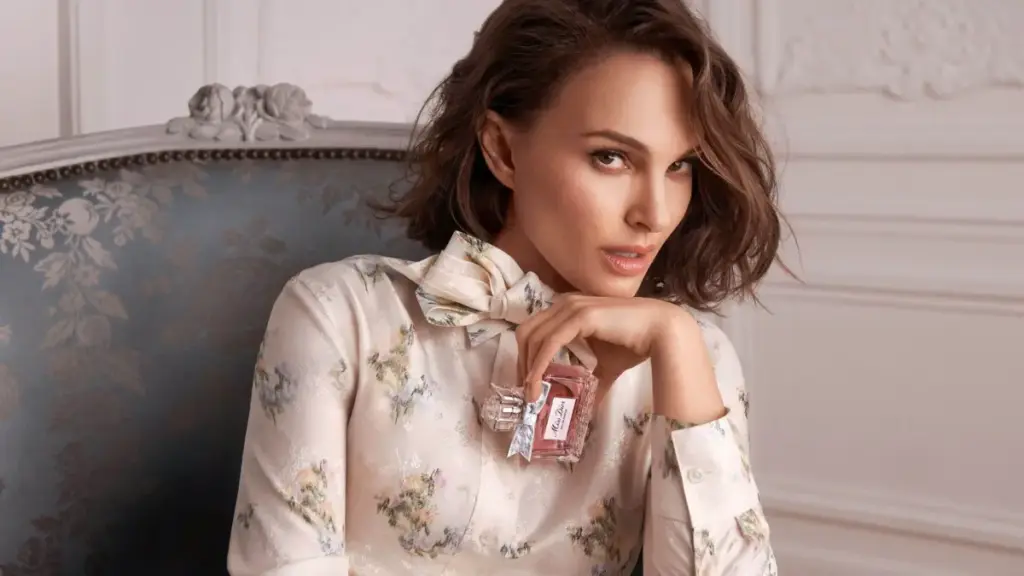
Beyond the juice itself, the modern iteration arrives packaged in a newly reimagined bottle featuring customizable couture bows and personalized engraving options. This bespoke approach mirrors the high-fashion atelier roots of the brand. Compounding the cultural impact of this relaunch is a high-profile multi-channel advertising campaign starring longtime house muse Natalie Portman. Set against a surrealist Parisian landscape overrun with wildflowers—and underscored by the infectious hooks of Chappell Roan’s breakout hit "Good Luck, Babe!"—alongside an enchanting Studio Ghibli-esque animated companion piece by studio Remembers, the new Miss Dior campaign firmly bridges heritage craftsmanship with contemporary pop-culture relevance.
This comprehensive report examines the technical, historical, and marketing facets of the new Miss Dior Eau de Parfum, tracing its lineage from post-WWII Paris to the modern vanity table.
Detailed Chronology: From Post-War Paris to Kurkdjian’s Modern Masterpiece
To understand the gravity of the latest Miss Dior reformulation, one must trace the timeline of its creation and evolution across decades of changing fragrance landscapes.
1947: The Birth of a New Look and a New Scent
In the winter of 1947, Christian Dior revolutionized the fashion world with his debut Haute Couture collection, universally dubbed the "New Look" by the press. Characterized by cinched waists, voluminous skirts, and an unabashed celebration of feminine luxury, the collection swept away the austere, utilitarian silhouettes of wartime fashion.
To accompany this olfactory revolution, Dior partnered with perfumers Paul Vacher and Jean Carles to create a signature scent that would bottle the spirit of this joyful renaissance. Named after his sister Catherine—who walked into the room during the perfume’s development, prompting Dior’s muse, Mitzah Bricard, to exclaim, "Ah, voici Miss Dior!"—the resulting fragrance was a daring, complex floral chypre. Blending notes of galbanum, jasmine, patchouli, and oakmoss, it was an immediate sensation that cemented the House of Dior not merely as a fashion destination, but as a premier force in global perfumery.
The Mid-to-Late 20th Century: Reformulations and Adaptations
As regulatory bodies tightened restrictions on raw materials—most notably natural oakmoss and animalic fixatives—and as consumer preferences drifted away from heavy, mossy chypres toward lighter, fruitier, and cleaner profiles, Miss Dior underwent several subtle adaptations. Throughout the decades, the fragrance was rebalanced to comply with International Fragrance Association (IFRA) standards while attempting to remain true to Christian Dior’s original vision. Flankers and alternate concentrations, such as Miss Dior Chérie in 2005 (which leaned heavily into a sweet, popcorn-and-strawberry profile before being phased out and re-monikered), demonstrated the house’s willingness to experiment with the brand equity of the original name.
2021: The Demachy Revamp
Before the current era, master perfumer François Demachy took the reins of Miss Dior Eau de Parfum in 2021. Demachy sought to pivot the fragrance away from the fruitier, patchouli-heavy iterations of the 2010s and return it closer to its couture floral roots. His formulation introduced a rich bouquet centered around Grasse rose, iris, peony, and lily-of-the-valley, anchored by a softer, more rounded woody base. It successfully modernized the scent for a generation of consumers who favored lush, romantic bouquets.
The Present Day: Francis Kurkdjian’s Refinement
Enter Francis Kurkdjian, one of the most celebrated and commercially successful perfumers of the 21st century, who assumed the role of Dior Perfume Creation Director. Tasked with ushering Miss Dior into its next evolutionary stage, Kurkdjian did not discard Demachy’s foundation; rather, he distilled, refined, and intensified it. By spotlighting a hyper-luxurious Centifolia rose absolute at its heart and dialing up the creamy, enveloping vanilla in the base, Kurkdjian crafted a cleaner, sharper, yet deeply sensual floral chypre. This update honors the historical architecture of the 1947 original while satisfying the modern consumer’s demand for longevity, clarity, and emotional resonance.
Supporting Context & Metrics: The Anatomy of a Modern Chypre
The relaunch of Miss Dior Eau de Parfum arrives at a fascinating crossroads in the global fragrance market. According to recent market research data from firms such as Circana and Euromonitor International, prestige fragrance continues to outperform nearly every other category within the beauty and personal care sector, driven largely by "self-treating" behaviors among Gen Z and millennial consumers, as well as a growing appetite for luxury investments.
Dissecting the Notes: What Makes the New Miss Dior Work?
A chypre fragrance is traditionally defined by a specific structural contrast: a fresh, citrus or bright opening, a rich floral heart, and a deep, earthy, mossy base. Kurkdjian’s contemporary take on this classical genre manipulates these parameters to suit modern palates:
- The Top Notes: The fragrance opens with a sharp, invigorating splash of bright florals and sparkling citrus nuances. This instant gratification captures attention without being overwhelmingly cloying, offering an uplifting introduction that translates exceptionally well on digital media and in-store sampling.
- The Heart Notes: At the core lies the undisputed queen of the composition: Centifolia rose absolute, cultivated exclusively in the fields of Grasse, France, under long-standing exclusive partnerships with Dior. This rose is complemented by powdery iris and velvety peony notes, providing a multidimensional floral facet that feels both traditional and hyper-contemporary.
- The Base Notes: Traditionally, chypres rely heavily on oakmoss and patchouli for their earthy gravity. In the modern formula, Kurkdjian leans into a sophisticated, comforting veil of high-grade vanilla, subtly counterbalanced by warm woods and clean musks. This adjustment increases the fragrance’s longevity on skin and fabric while rounding out the sharp edges of the traditional chypre structure, making it softer, cozier, and profoundly wearable for daily life.
The Rise of Bespoke Retail and Customization
One of the most noteworthy commercial strategies underpinning the Miss Dior relaunch is the introduction of customizable packaging and experiential retail elements. Luxury consumers no longer merely want to buy a finished product off a shelf; they crave a personal connection to the objects they own.

Dior has capitalized on this psychological shift by offering customizable "dagger bows" (known in French as the nœud "queue d’aronde") attached to the neck of the bottle. Available in a curated selection of materials and colorways—including classic black-and-white, vibrant pink, soft pale pink, and casual-luxe denim—these bows transform the perfume bottle from a static vanity object into a bespoke couture accessory. Combined with the option for bespoke glass engraving—a service frequently utilized for milestone celebrations such as weddings and anniversaries—Dior is positioning the fragrance bottle as a keepsake, substantially increasing its emotional and perceived value.
Official Statements and Creative Vision
The conceptual weight of the new Miss Dior campaign is anchored by the deep, long-standing relationship between the House of Dior and Academy Award-winning actress Natalie Portman, who has served as the face of the fragrance for over a decade.
Natalie Portman: A Decade-Long Partnership
Portman’s enduring tenure as the embodiment of Miss Dior has created a powerful visual continuity for the brand. Speaking on the evolution of the campaign and her personal relationship with the scent, Portman notes how the fragrance has matured alongside her own life and career:
"Miss Dior has been a constant companion for over ten years. What is extraordinary about this fragrance, and what draws me to it continually, is its refusal to remain static. It evolves as women evolve—retaining its core strength and romanticism while continuously discovering new ways to feel utterly modern, free, and unapologetically joyful."
Francis Kurkdjian on Modernizing an Icon
In discussions regarding his architectural approach to the formula, Francis Kurkdjian emphasized the delicate balance required when touching a historic benchmark:
"When you work with a legend like Miss Dior, you are not simply mixing ingredients; you are curating a piece of cultural history. My goal was not to erase what came before, but to clarify the melody. By amplifying the Centifolia rose and introducing a rounder, more enveloping vanilla base, we stripped away the unnecessary noise, allowing the true, timeless elegance of the floral chypre to sing with absolute modern clarity."
The Creative Campaign: Bridging Paris and Pop Culture
The visual storytelling accompanying the launch breaks new ground for the brand. Directed by Emmanuel Cossu, the live-action campaign film transports Portman into the heart of Paris, where the urban concrete has miraculously transformed into a vibrant, sprawling sea of wildflowers. The visual metaphor is unmistakable: Miss Dior represents a radical injection of natural beauty, freedom, and romanticism into the rigid structures of modern life.
Adding a brilliant stroke of contemporary cultural curation, the commercial is set to the infectious, exuberant indie-pop anthem "Good Luck, Babe!" by Chappell Roan. The inclusion of Roan—one of music’s most disruptive and rapidly ascending breakout stars—signals a decisive pivot by Dior to capture the hearts, minds, and wallets of younger demographic cohorts without alienating its loyal, heritage-driven consumer base.
Further expanding the narrative universe of the launch, Dior commissioned a secondary campaign video: a breathtaking, Studio Ghibli-esque animated short produced by Remembers, the acclaimed animation studio behind the celebrated film Arco. This whimsical, hand-drawn cinematic piece translates the scent’s emotional landscape into a dreamlike fairytale, further proving Dior’s mastery of multi-format, high-art storytelling in the digital age.
Future Outlook: The Trajectory of Prestige Fragrance
As the beauty industry navigates an increasingly crowded marketplace saturated by celebrity brands, niche artisanal houses, and direct-to-consumer disruptors, heritage luxury houses face a distinct challenge: how to remain relevant to digital-native consumers while protecting the sacred aura of their historical archives.
The relaunch of Miss Dior Eau de Parfum offers a masterclass in how this delicate equilibrium can be achieved. By pairing an uncompromised commitment to exceptional raw materials (such as Grasse-grown roses) with modern supply-chain agility (such as bespoke, customizable bow options at point-of-sale), Dior has successfully bridged the gap between traditional French Haute Parfumerie and contemporary experiential retail.
Looking ahead, industry analysts project that hyper-personalization, artisanal transparency, and cross-media cultural collaborations will serve as the primary growth drivers for prestige beauty over the next decade. Dior’s strategy with Miss Dior—blending Kurkdjian’s technical brilliance, Portman’s enduring star power, Chappell Roan’s boundary-pushing musical energy, and artisanal customization—sets a rigorous new benchmark for the industry.
For consumers searching for a signature scent that bridges decades of French elegance with the vibrant, self-expressive energy of the present moment, the reinvented Miss Dior Eau de Parfum proves that true classics never truly fade; they simply find new ways to fall in love.