Executive Overview
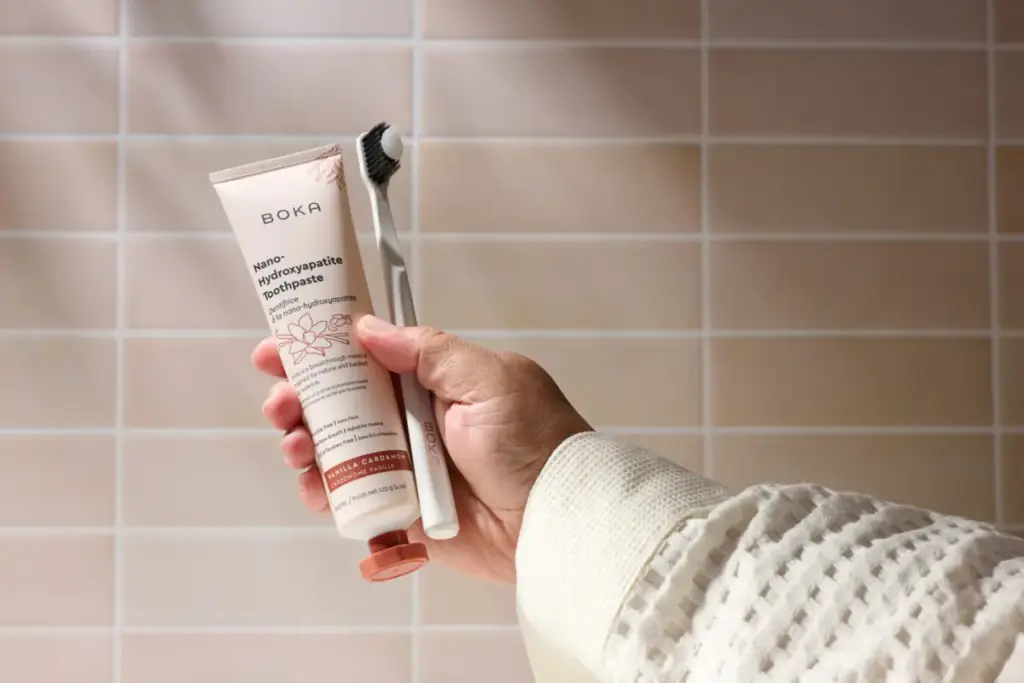
The global consumer packaged goods (CPG) landscape is undergoing a quiet yet seismic revolution. Long dominated by legacy conglomerates and entrenched household names like Crest, Listerine, and Colgate, the oral care aisle is experiencing an unprecedented wave of disruption. At the vanguard of this movement is Boka, a 10-year-old oral care brand that is aggressively redefining what it means to brush, whiten, and protect one’s teeth.
Rather than positioning itself strictly as a utilitarian healthcare necessity, Boka is leaning heavily into the "beautification" of oral care. By importing sophisticated formulations, active ingredients, and sensory experiences typically reserved for prestige skincare, the brand is successfully bridging the gap between clinical efficacy and luxury self-care.
This strategic positioning has yielded explosive commercial results. Following its acquisition by digitally native CPG incubator Essor Group in 2024, Boka has expanded its footprint from direct-to-consumer (DTC) channels and luxury grocers to mass-market giants like Walmart and Target. The brand recorded a staggering 481% year-over-year retail growth in 2025 and currently claims the coveted title of the No. 1 oral care brand on Amazon.
Boka’s trajectory illustrates a broader cultural shift: modern consumers are scrutinizing the ingredient lists of their everyday products with unprecedented rigor. By replacing traditional, controversial chemicals with biocompatible alternatives like NASA-developed hydroxyapatite—and pairing them with gourmand fragrance notes and skincare staples like niacinamide—Boka proves that "everyday luxury" is no longer confined to boutique storefronts. It can thrive just as easily on the shelves of mass retailers alongside legacy giants.
Detailed Chronology: From DTC Startup to Omnichannel Powerhouse
The Formative Years (2016–2023)
Founded in 2016, Boka entered the market during the first wave of digitally native direct-to-consumer (DTC) disruptors. In its early years, the brand operated much like its contemporaries, focusing on clean formulations, sleek minimalist packaging, and alternative active ingredients designed to challenge conventional toothpaste formulations containing sodium lauryl sulfate (SLS) and artificial dyes.
During this foundational era, Boka distinguished itself by adopting hydroxyapatite—a remineralizing agent originally engineered by NASA in the 1960s—as its hero ingredient. While legacy brands leaned heavily on fluoride as the gold standard of dental protection, Boka targeted a niche but growing demographic of consumers seeking biocompatible, fluoride-free alternatives.
However, scaling a premium oral care brand exclusively online proved challenging in a category dominated by impulse purchases at physical brick-and-mortar checkout counters. To build brand equity, Boka adopted an exclusive distribution playbook, securing placement in high-end specialty markets and wellness havens like Erewhon, where its elevated price point aligned seamlessly with the expectations of affluent wellness consumers.
The Essor Group Acquisition and Mass Expansion (2024–2025)
A major inflection point arrived in 2024 when Boka was acquired by Essor Group (formerly known as Heyday). Essor, a digitally native CPG accelerator backed by prominent venture capital firms including Khosla Ventures, General Catalyst, and BlackRock, specializes in scaling disruptive wellness and personal care brands such as ZitSticka acne patches, Puracy cleaning products, and FreshCap mushroom supplements.
Under Essor’s stewardship, Boka’s operational capabilities and distribution strategies expanded exponentially. Sarah Mountcastle Mitchell, a CPG veteran with leadership experience across Unilever’s Living Proof, Follain, First Aid Beauty, and PepsiCo, stepped into the role of General Manager at Boka in 2024 after nearly five years within the Essor ecosystem.
Armed with institutional backing and seasoned leadership, Boka orchestrated a massive retail expansion. In 2025, the brand broke out of its boutique confines and secured widespread distribution in retail behemoths Target and Walmart. This dual-pronged availability—spanning from the ultra-exclusive aisles of Erewhon to the massive footprint of Walmart—supercharged the brand’s growth. By the end of 2025, Boka boasted an astonishing 481% year-over-year retail growth rate while simultaneously capturing the top spot for oral care sales on Amazon.
Supporting Context & Metrics: The Science and Strategy of "Skinification"
The Skincare-ification of Personal Care
The concept driving Boka’s recent product launches is rooted in the "beautification" of overlooked CPG categories. Just as the beauty industry successfully premiumized skincare, haircare, and body care through active ingredients and experiential packaging, brands like Boka are applying the same methodology to oral hygiene, allergy care, dandruff treatments, and hearing health.
This phenomenon is evident in Boka’s product formulations. For instance, the brand recently overhauled its Whitening Powder by integrating niacinamide—a vitamin B3 derivative ubiquitous in high-end facial serums known for its barrier-repair and anti-inflammatory properties—because of its proven oral health benefits. Other formulations incorporate vitamin C, hyaluronic acid, and probiotics.
Furthermore, Boka has completely reimagined the sensory profile of brushing. Moving away from harsh, medicinal mint flavors, the brand utilizes complex, gourmand fragrance profiles reminiscent of prestige perfumery. Flavors such as Coco Ginger, Lemon Lavender, and Cherry Blossom feature structured flavor descriptors detailing top and bottom notes on the back of the packaging, turning a mundane twice-daily chore into a sensory ritual.
The Rise of Hydroxyapatite vs. Fluoride
Boka’s formulation philosophy centers on the complete elimination of controversial or potentially irritating ingredients, including sodium lauryl sulfate (SLS), parabens, artificial colorants, and synthetic dyes. Crucially, the brand is also fluoride-free, positioning it to capture demand from consumers avoiding fluoride due to personal preferences, pregnancies, allergies, or emerging public discourse—such as the high-profile anti-fluoride advocacy led by public health figures like Robert F. Kennedy Jr.
To replace the protective benefits of fluoride, Boka champions nano-hydroxyapatite. Developed originally by NASA in the 1960s to combat bone and tooth mineral degradation experienced by astronauts in zero gravity, hydroxyapatite is a biocompatible calcium phosphate that makes up 97% of tooth enamel. While widely adopted in Japan since the 1980s, the ingredient remained largely obscure in the American market until recent years.
Google search trends illustrate this paradigm shift vividly. Between 2004 and 2022, consumer search interest for "hydroxyapatite" languished near zero, never exceeding a rating of 4 out of 100. However, the ingredient experienced exponential, hockey-stick growth between 2022 and 2025, culminating in a historic 100/100 ranking in April 2025—the highest search volume recorded in Google history.
This data underscores how consumer education has evolved. Decades ago, natural brands marketed themselves simply on the absence of fluoride without offering a scientifically validated replacement. Boka’s ability to offer hydroxyapatite as a high-performance alternative has transformed "fluoride-free" from a passive omission into an active, high-value selling proposition.
Official Statements & Industry Insights
Redefining the Category Through a Beauty Lens
Sarah Mountcastle Mitchell, General Manager of Boka, emphasizes that the brand’s success relies on challenging the entrenched playbook of legacy conglomerates.
"Oral care is a category that has a lot of very big legacy players, but there’s an opportunity to think about oral care in more of the beauty sense," Mitchell told Glossy. "For example, we’re relaunching our Whitening Powder. We knew niacinamide was an ingredient that’s very popular and common in skin care, and it also has benefits in oral care. So, [we thought], ‘How do we weave those [skin-care] ingredients into the product?’"
By treating toothpaste and oral powders with the formulation rigor of skincare, Boka appeals directly to consumers who view wellness and personal care as an interconnected ecosystem.
"Consumers are on this health and wellness journey [and] thinking about what ingredients are or are not inside [their everyday products]," Mitchell noted. "It opened up their aperture to different alternatives."
Bridging Luxury and Mass Retail
Achieving ubiquity across vastly different retail environments is a rare feat for a personal care brand. Boka’s ability to resonate equally with luxury shoppers and discount-conscious consumers highlights a fundamental shift in purchasing behavior.
"We’re one of the few personal care brands that are available both at Erewhon and Walmart, so I think that speaks to consumers really looking for that everyday luxury wherever they’re shopping," Mitchell explained.
This cross-demographic appeal has defied traditional retail pricing constraints. While Boka’s price point in mass-market retailers like Walmart can be three to four times higher than legacy competitors, the brand continues to exceed performance benchmarks.
"When we entered Erewhon, the price point was in line with the competitor set. When we entered Walmart, our price point was probably three to four times higher than competitors, and we’re blowing all of our targets out of the water," Mitchell stated. "To me, that says that consumers are looking for an alternative. … I imagine there is a ceiling, but I don’t think we’ve seen it."
Future Outlook: The Runway Ahead for Oral Care Disruptors
The success of Boka and its contemporaries signals permanent structural changes in the CPG landscape. Incumbent parent companies—such as Procter & Gamble (owner of Crest) and Unilever—are facing intense market share erosion as agile, digitally native startups capture the imagination of younger demographics, particularly Gen Z and Millennials who prioritize transparency, aesthetic packaging, and functional ingredients.
As the "beautification" trend bleeds into other sleepy categories, the boundaries between clinical healthcare and luxury self-care will continue to blur. For Boka, the immediate future involves doubling down on omnichannel expansion, deepening consumer education regarding advanced biocompatible ingredients like hydroxyapatite, and continuously innovating at the intersection of cosmetics and wellness.
Ultimately, Boka’s trajectory demonstrates that even the most saturated, legacy-dominated categories remain vulnerable to disruption. By treating oral care not as a medical chore, but as a sensory, design-forward beauty ritual, Boka has secured its position as a formidable market leader—proving that consumers are more than willing to pay a premium for products that elevate their daily routines.