Executive Overview
For generations, the upper echelons of the luxury wristwatch market operated under a rigid, predictable set of assumptions. High-end horology was historically a male-dominated domain, where prestige, collector demand, and secondary-market appreciation were overwhelmingly concentrated in larger, robust timepieces designed explicitly for men’s wrists. The most coveted references—whether a vintage Submariner, a Royal Oak Offshore, or a classic oversized chronograph—commanded the headlines, set auction records, and dictated the rhythm of manufacturing output from Geneva to Tokyo.
Today, that foundational paradigm is undergoing a profound and accelerating shift. Fresh market data released by secondary watch titan Bob’s Watches reveals a striking development: some of the most lucrative, fast-appreciating, and heavily sought-after assets in the secondary luxury market are no longer bulky men’s complications, but rather women’s watches and smaller-format timepieces.
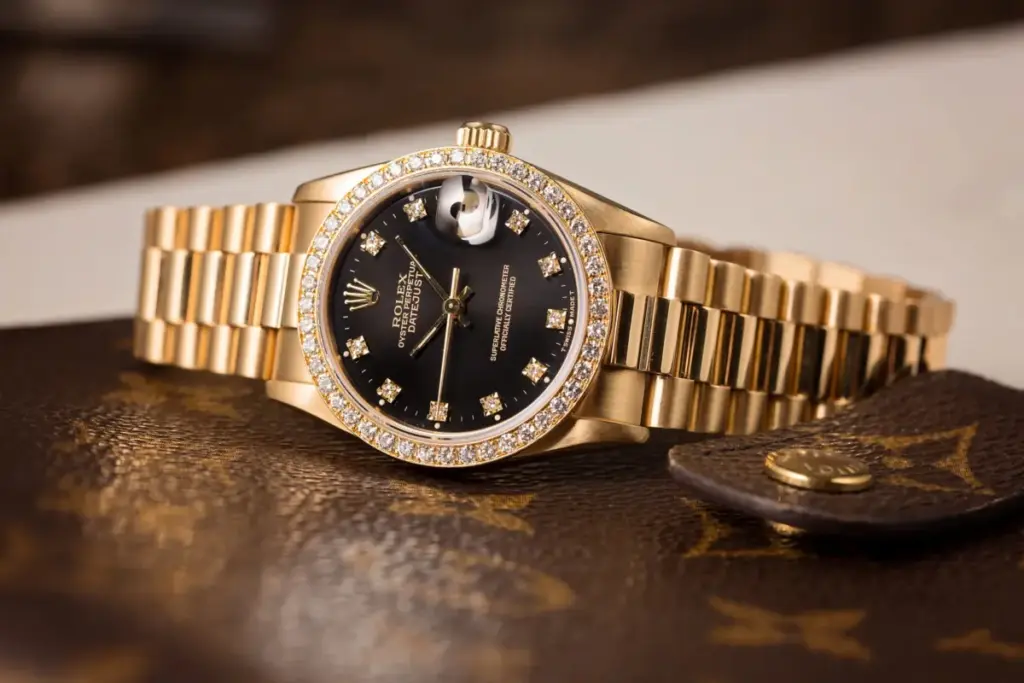
Led by iconic references like the Rolex Lady-Datejust and the versatile Datejust 31, the secondary market is experiencing an unprecedented surge in demand for smaller scales. Resale values for select women’s models have skyrocketed by upward of 30% to nearly 70% over a compressed six-month window, outpacing many traditional male-market heavyweights. Far from being a fleeting celebrity-driven fad, this realignment points to a fundamental structural transformation in how consumers view luxury.
Driven by a confluence of evolving aesthetic preferences, high-profile celebrity endorsements from trendsetting cultural icons, a growing appreciation for "quiet luxury," and a sweeping cultural movement that blurs traditional gender boundaries, the women’s watch sector is poised for historic expansion. Currently valued at $27 billion annually, market projections indicate that this segment could approach $50 billion within the next decade, threatening to close the gap on the historic dominance of the global men’s watch market.
This in-depth investigative report explores the data behind the boom, examines the macroeconomic and cultural catalysts driving the trend, and analyzes what this gender-fluid horological renaissance means for collectors, brands, and the future of luxury retail.
Detailed Chronology: The Rise of the Small-Form Resurgence
To fully understand the current momentum in the women’s and smaller-format watch sectors, one must look at how the secondary market has shifted over the past several years, culminating in a dramatic acceleration between late 2025 and mid-2026.
The Decade of Oversized Dominance
For the better part of twenty years leading up to the 2020s, the luxury watch market was defined by a race for scale. Manufacturers pushed case diameters upward, popularizing 42mm, 44mm, and even 48mm sports watches. Consumers equated physical size with presence, masculinity, and modernity. During this period, women looking for mechanical luxury were often relegated to scaled-down versions of men’s lines—often quartz-driven and lacking the horological integrity of their larger counterparts.
The Inflection Point: Late 2025 to Mid-2026
The worm began to turn decisively in late 2025. According to transaction data compiled by Bob’s Watches, the trailing six-month period leading into mid-2026 exposed a dramatic inversion of traditional market habits. While large men’s watches settled into a stable, single-digit annual growth rate of roughly 5% to 10%, certain women’s references began recording meteoric surges in market valuation.
Half of the top ten fastest-appreciating Rolex references tracked by Bob’s Watches during this window belonged to variants of the Lady-Datejust line. Specific historical and neo-vintage models, such as the Lady-Datejust references 6917 and 179174, experienced staggering valuation jumps well in excess of 30% between December 2025 and May 2026.
Even more remarkable was the performance of the Datejust 31. Formally marketed by Rolex as a unisex piece, the 31mm sizing has historically positioned it as a quintessential women’s watch in retail environments. In the six-month span stretching from late 2025 to mid-2026, the secondary resale price of the Datejust 31 surged by an astonishing 70%.
This rapid appreciation signaled to industry analysts that the market was no longer experiencing isolated anomalies, but rather a synchronized, structural migration of capital toward smaller, more refined timepieces.
Supporting Context & Metrics: The Numbers Behind the Trend
To appreciate the gravity of this market shift, one must examine the macroeconomic numbers, retail pricing dynamics, and demographic trends fueling the current environment.
Valuation and Affordability Metrics
One of the primary drivers behind the democratization and rapid growth of the women’s luxury watch market is accessible entry pricing relative to men’s counterparts.
- The Chrono24 Landscape: Cross-referencing current secondary market platforms like Chrono24 reveals that the average Rolex Lady-Datejust typically commands a retail resale price between $5,000 and $10,000.
- The Men’s Comparison: By contrast, a classic men’s Datejust spans a broader bracket of $5,000 to $16,000 depending on metal composition, dial configuration, and reference age.
This pricing delta offers aspirational luxury buyers—particularly younger female professionals entering the wealth-accumulation phase—an accessible entry point into blue-chip horology without sacrificing mechanical prestige or investment-grade pedigree.
Macro Market Projections
The global women’s watch market is currently a formidable $27 billion annual enterprise. However, industry forecasts—such as data compiled by Future Market Insights—suggest that the sector is on a trajectory to nearly double, reaching close to $50 billion over the next decade.
To put this in perspective, the global men’s watch market currently stands at approximately $52 billion, expanding at a steady 5% to 10% clip annually. Should current growth rates persist, the economic weight of the women’s and unisex-small market will soon rival, or even challenge, the historical titan of men’s luxury timepieces.
The Celebrity Effect vs. Organic Market Demand
High-profile endorsements have undeniably cast a spotlight on women’s high-end watches. A-list celebrities and style icons are frequently captured wearing exquisite, smaller-format pieces:
- Zendaya: The global fashion icon has repeatedly turned heads by sporting a Rolex Lady-Datejust, most notably donning a dazzling diamond-paved iteration during her press tour for "Spider-Man: Brand New Day".
- Victoria Beckham: Often spotted courtside at Los Angeles Lakers games accessorized with high-end vintage and modern luxury watches, sparking immediate spikes in search traffic and secondary-market inquiries.
Yet, industry veterans caution against attributing the entire movement to pop-culture fleetingness. While a celebrity spotting might trigger a temporary, localized demand bump, sustained appreciation rates hovering near 70% point to deep-seated shifts in consumer psychology and lifestyle habits.
Official Statements & Industry Insights
To capture the sentiment of the luxury watch ecosystem, industry leaders, secondary market pioneers, and independent designers offer vital perspective on how this cultural pivot is unfolding on the ground.
Paul Altieri: Decoding the Consumer Shift
Paul Altieri, founder and CEO of Bob’s Watches, emphasizes that the current data reflects a permanent evolution in buyer behavior rather than a temporary marketing wave.
"We do see a pop with some models after, say, Victoria Beckham is wearing it courtside at a Lakers game," Altieri notes. "That kind of thing will translate to a bump in demand and price on the market—but not 68%. That’s a bigger jump and indicative, in my opinion, of a larger trend."
Altieri points to two primary catalysts reshaping the manufacturing and secondary landscapes: the macro-reversal of case sizes and the intentional democratization of sizing across gender lines.
"The trend for the last 10 years was bigger and bigger watches," Altieri explains. "But now, it’s going the other way. A lot of new Rolex watches are going down by 1 millimeter or 2 millimeters in size [due to consumer demand for smaller watches]. The other factor: The industry can be pretty rigid about labeling watches as for men or for ladies, but the consumer is blurring those lines. A man can wear a 31-millimeter watch, and it’s totally fine."
This willingness of male collectors to embrace historically feminine sizing has radically expanded the addressable market for small-format watches. Over the past year, trendsetting male celebrities—including Timothée Chalamet, Jacob Elordi, and fashion influencer Connor Storie—have been routinely photographed adorning themselves with small, delicate women’s and unisex watches from historic houses like Cartier, Tiffany & Co., and Longines.
Martine Ilana: The Rise of Bidirectional Borrowing
Martine Ilana, founder of women-focused watch brand La Lune, observes that the historical dynamics of fashion cross-pollination are no longer running in a single direction.
"Women have long borrowed from traditionally masculine watch styles, but I think we’re now seeing the movement go both ways," Ilana remarks. "Men are increasingly open to smaller, more refined watches that may historically have been marketed toward women. There is something very modern about that shift. A smaller, cleaner watch can have a subtle, quiet-luxury appeal regardless of gender."
This embrace of "quiet luxury"—an aesthetic prioritizing understated elegance, immaculate craftsmanship, and minimalism over flashiness and oversized branding—serves as the philosophical bedrock of the current horological renaissance.
Future Outlook: The New Horological Landscape
As the luxury watch market looks toward the remainder of the decade and beyond, the implications of this shift are profound for every tier of the industry, from legacy conglomerates to independent artisans.
1. Product Development and Case Sizing
Watch manufacturers are already adjusting their product roadmaps. Where new releases once trended toward 41mm and 43mm minimums, brands are quietly trimming case diameters across flagship collections. A 36mm or 38mm dress watch is increasingly viewed as the ideal universal sweet spot, bridging the gap between historical dress codes and modern wearability.
2. Marketing and Merchandising Strategies
The archaic industry practice of segregating retail boutiques into rigid "Men’s" and "Ladies’" salons is rapidly losing relevance. Forward-thinking retailers are reorganizing display cases by collection, complication, or aesthetic family—such as grouping all Datejust variants together—thereby encouraging cross-shopping and stripping away outdated gender marketing.
3. Investment and Collector Diversification
For seasoned and novice collectors alike, the secondary market data serves as a strategic wake-up call. Treating women’s watches and smaller complications merely as peripheral or gifting categories is no longer viable. Savvy investors are actively diversifying their portfolios by acquiring blue-chip vintage and modern women’s Rolex, Cartier, and Patek Philippe references, recognizing their exceptional appreciation potential and liquidity.
Ultimately, the democratization of size and the erosion of gender boundaries in horology represent a liberating moment for the watch world. By stripping away the old dogma that dictated wrist presence by biological sex, the industry has unlocked a vast, dynamic frontier. Whether driven by the understated elegance of a 31mm Datejust on a male wrist or the bold styling of a diamond-encrusted Lady-Datejust on a cultural icon, the future of watchmaking is smaller, more refined, and infinitely more inclusive.