Executive Overview
Long before the algorithmic curation of TikTok feeds, the frictionless streaming of Spotify, or the polished PR training of the modern social media era, pop culture was dictated by a singular, appointment-to-view television phenomenon: MTV’s Total Request Live (TRL). Premiering on September 14, 1998, the afternoon music video countdown show quickly became a cornerstone of millennial adolescence. Millions of teenagers across North America raced home from school, dropping their backpacks to glue themselves to the television screen, eager to see whether their favorite visual artistry had climbed or plummeted on the daily countdown.
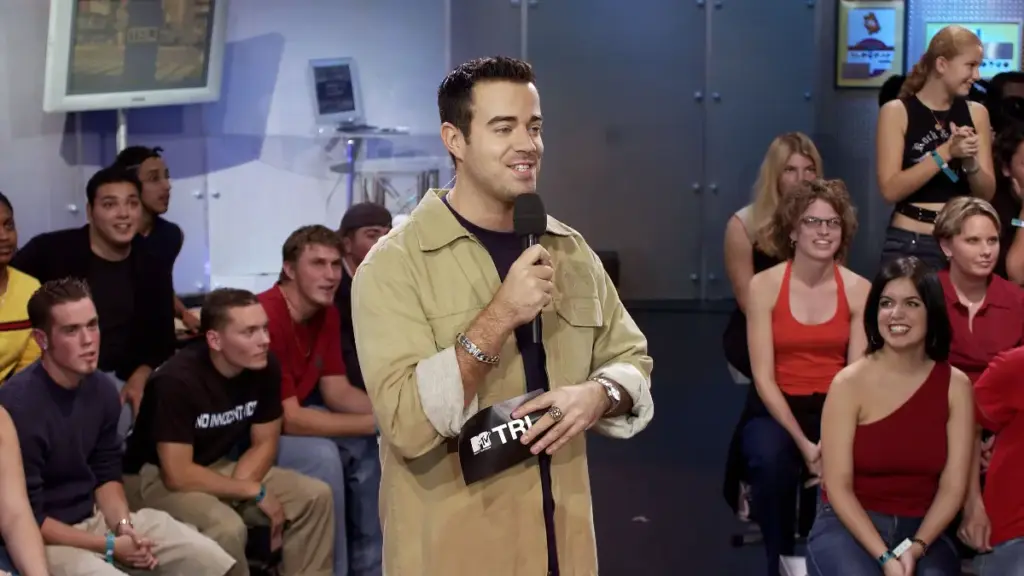
Hosted with a breezy, relatable charisma by Carson Daly from the heart of Times Square at the MTVplex, TRL was far more than a simple video countdown. It was a live, unpredictable cultural nexus where the biggest music icons, film stars, and teen idols of the late 1990s and early 2000s collided in real-time. In an era predating sanitized, crisis-managed celebrity press junkets, TRL functioned without a safety net. The combination of an excitable, screaming live audience packed tightly into the studio, the white-hot pressure of cable television, and unfiltered megastars resulted in moments of pure, unadulterated chaos.
While the show featured countless memorable appearances, a select few interviews stand out as definitive touchstones of late-20th and early-21st-century pop culture history. These segments exposed the underlying friction of the entertainment industry, captured vulnerable human breakdowns, and yielded legendary pop-culture altercations. Examining the archival clashes involving Eminem, Mariah Carey, and Prince offers a fascinating lens into a bygone era of media—one where authenticity, awkwardness, and unscripted drama played out live in front of millions.
Detailed Chronology: Three Defining TRL Incidents
1. Eminem vs. Mark Wahlberg: The "Happy Fun Bunch" Grudge (1999)
The collision of worlds on TRL often produced unintended friction, as artists from completely different musical and cultural lineages found themselves sharing a green room and a stage. Such was the case in 1999, when a brash, underground-bred Detroit rapper named Eminem was rapidly ascending the charts while promoting his major-label debut project, The Slim Shady LP.
Coincidentally booked on the exact same episode was actor Mark Wahlberg. By the turn of the millennium, Wahlberg had successfully shed his 1990s hip-hop persona as "Marky Mark"—frontman of Marky Mark and the Funky Bunch—to carve out a serious, critically acclaimed Hollywood acting career. Eager to distance himself from his bubblegum-rap past, Wahlberg’s camp reportedly made strict requests to the TRL production staff: his musical history was strictly off-limits, and the host was not to dredge up his days of chart-topping dance-pop.
Eminem, ever the observational provocateur, caught wind of Wahlberg’s delicate boundary and immediately recognized an irresistible target. Taking the live broadcast stage, the young rapper couldn’t resist a biting ad-lib. Referencing Wahlberg’s defunct, hyper-commercial musical outfit, Eminem deadpanned to the studio audience that they would "all just stand around together like a ‘happy fun bunch’."
The subterranean jab hit its mark instantly. Cameras captured Wahlberg’s visibly rigid, deeply annoyed posture for the remainder of the broadcast. What seemed like a throwaway insult calcified into a years-long Hollywood cold war. For over a decade and a half, the subtle tension bubbled beneath the surface, referenced in occasional print interviews and subliminal lyrical jabs. It wasn’t until 2017 that the feud was officially laid to rest, when Wahlberg openly admitted in interviews that his initial annoyance stemmed largely from underlying professional envy—conceding that Eminem was simply an immeasurably superior lyricist and rapper.
2. Mariah Carey’s Ice Cream Meltdown and the Anatomy of a Breakdown (2001)
By the summer of 2001, Mariah Carey was indisputable royalty. Having churned out an astonishing 15 Billboard Hot 100 number-one hits throughout the previous decade, she was a global mega-star operating at the absolute peak of her commercial powers. However, immense success came with a punishing, relentless corporate machine. By July 2001, Carey was suffering from acute physical exhaustion, chronic sleep deprivation, and the crushing weight of simultaneous promotional obligations. She was attempting to complete and market her semi-autobiographical musical drama film Glitter and its accompanying soundtrack album—a project that would ultimately face a punishing critical and commercial reception—all while healing from the public collapse of her high-profile romantic relationship with Latin music star Luis Miguel.
When Carey unexpectedly materialized on the TRL set on July 19, 2001, she bypassed standard promotional protocol entirely. To the shock of host Carson Daly and the live studio audience, Carey wheeled an industrial ice cream cart straight onto the broadcast floor. Shedding an oversized, heavy dress shirt live on air, she revealed a form-fitting, casual tank top underneath, turning the pristine broadcast studio into an impromptu variety show.
Looking erratic, disheveled, and visibly overwhelmed, Carey grabbed the microphone and delivered a line that instantly entered television infamy: "You’re my therapy session right now, Carson."
Daly, visibly unnerved and scrambling to maintain control of a live national broadcast, repeatedly asked, "What’s wrong? What is happening?" while attempting to steer the pop diva back toward the scheduled album promotion.
At the time, mainstream media outlets leaped on the footage, painting a sensationalized portrait of a legendary diva experiencing a total psychological collapse. Tabloid headlines relentlessly dissected her mental state for weeks. Years later, however, Carey offered a different perspective, maintaining that her actions were part of an intentionally theatrical, tongue-in-cheek stunt that the humorless press corps and panicked network executives severely misinterpreted. Whether a breakdown or performance art, the segment remains one of the most jarring disruptions in live cable history.
3. Prince and Carson Daly: The "Disposable Music" Ideological Clash (1999)
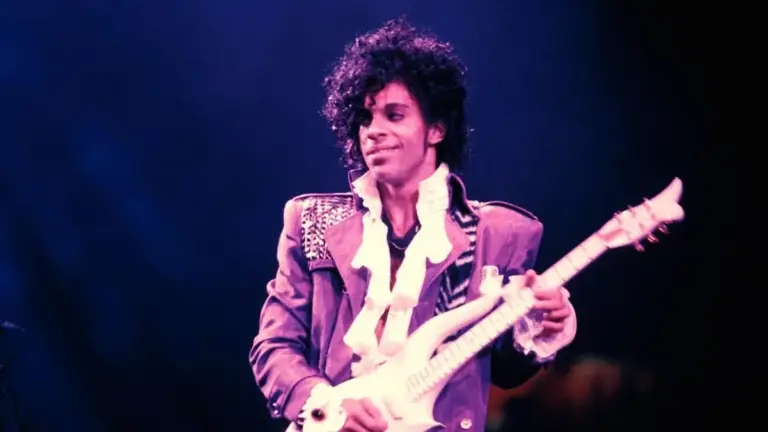
Few artists commanded the same level of mystical reverence, artistic protection, and sheer unpredictability as Prince. On December 9, 1999, the iconic multi-instrumentalist descended upon the TRL studio—and the resulting interview remains a masterclass in generational and ideological awkwardness.
From the opening moments, host Carson Daly struggled visibly to bridge the gap between mass-market teen television and Prince’s elevated, enigmatic artistry. Prince sat unenthusiastically, answering inquiries with low, barely audible mumbles under his breath, leaving dead air hanging heavily over the Times Square studio.
Desperate to rescue the segment and establish common ground, Daly attempted to flatter the musical legend. "Congratulations on the record," Daly offered earnestly. "It was just a lot of fun to listen to in an age of disposable music."
Prince seized upon the phrase instantly, freezing Daly in his tracks with a pointed, skeptical counter-inquiry: "What do you mean by ‘disposable music’?"
Sweating under the studio lights, Daly fumbled to elaborate: "Well, music that seems to come and go. Music that seems to last a couple of weeks sometimes. Your music seems to stay with us for a long time, which is refreshing."
Not letting him off the hook, Prince delivered a devastating, razor-sharp riposte that cut straight to the heart of the commercial music industry: "You don’t promote any of that disposable music, do you?"
Caught entirely off guard and backed into a professional corner, Daly dropped his polished television persona and responded with raw, defensive exasperation: "I got to pay rent! It’s like if I were a bartender, and I didn’t like Jack and Coke, I’d still serve it to anybody if that’s what they wanted. How’s that for an analogy?"
Prince absorbed the blue-collar, pragmatic metaphor for a long, agonizing beat before offering a flat, utterly unimpressed, "Oh, alright." The exchange stands as an immortal document of the eternal war between uncompromising artistic integrity and the grinding machinery of corporate media promotion.
Supporting Context & Metrics: The Cultural Footprint of TRL
To fully appreciate the magnitude of these viral moments, one must understand the sheer infrastructural dominance of TRL during its peak years between 1998 and 2003. At its height, the show was drawing millions of daily adolescent viewers, functioning as the premier promotional gateway for the global music industry. Record labels did not merely want their artists on TRL; placement on the daily countdown was a mandatory economic metric that could single-handedly propel a single to platinum status or stall an album’s momentum.
| Metric / Feature | TRL Peak Era (1998–2003) | Modern Digital Streaming Era |
|---|---|---|
| Primary Medium | Cable Television (Appointment Viewing) | On-Demand Streaming, Social Algorithms |
| Audience Engagement | Postal Mail, Phone-in Voting, Live Studio Crowds | Real-time Likes, Retweets, Global Comments |
| Censorship / Safety | Live Broadcast Risk (Zero Tape Delay Initially) | Heavily Curated, PR-Trained Digital Content |
| Industry Impact | Direct correlation to physical CD sales spikes | Playlist placement, algorithmic discovery loops |
The physical studio space at the MTV Times Square studios (MTV Studios) acted as a magnetic north pole for youth culture. Fans would camp out overnight on the pavement in freezing winter weather or scorching summer heat just to catch a glimpse of Britney Spears, NSYNC, Backstreet Boys, or Snoop Dogg waving from the balcony. This intense physical proximity between fans, screaming teenagers, and globally recognized icons created an electric pressure cooker. Unlike modern promotional tours—which are heavily mediated through pre-taped YouTube interviews, controlled TikTok challenges, and sanitized Instagram live-streams—TRL* was a live, raw wire.
Official Statements and Industry Reflections
In the years following the conclusion of TRL’s primary run, the principals involved have frequently reflected on the sheer insanity of what aired daily on live television.
Carson Daly, who transitioned from an MTV VJ into a powerhouse mainstream broadcasting career (hosting NBC’s The Today Show and The Voice), has spoken extensively about the psychological toll and chaotic nature of hosting the show. In retrospective interviews, Daly noted:
"We had no idea what we were building at the time. We were just flying by the seat of our pants every single afternoon in the middle of Times Square. There was no safety net, no digital delay that could catch everything, and we were dealing with the biggest egos in music at the absolute height of the CD boom. Looking back, it’s a miracle someone didn’t burn the studio down."
Industry analysts and former MTV executives have similarly pointed to TRL as the final golden era of appointment-based music television before the digital revolution fragmented media consumption forever. The show captured an irreplaceable window in time—the precipice of the digital age, where traditional broadcast media collided with the hyper-accelerated celebrity culture of the new millennium.
Future Outlook: The Enduring Legacy of Unfiltered Media
As media consumption habits continue to evolve away from linear television toward hyper-personalized, algorithmically generated content, the prospect of an unscripted, chaotic live cultural forum like TRL feels increasingly impossible. Modern celebrity appearances are meticulously choreographed masterpieces of public relations. Artists drop albums via surprise midnight streaming releases, interact with fans exclusively through carefully edited short-form videos, and subject themselves to interviews designed to minimize controversy and maximize brand safety.
Yet, public fascination with the raw authenticity of the TRL era continues to grow. Clips of Eminem’s calculated jabs, Mariah Carey’s ice-cream cart intervention, and Prince’s philosophical evisceration of commercial pop consistently rack up millions of views across YouTube and social media platforms decades after they originally aired.
This enduring nostalgia points to a collective cultural hunger for genuine human unpredictability. As audiences grow increasingly fatigued by the polished, frictionless perfection of modern digital media, the chaotic, beautifully flawed legacy of TRL serves as a poignant reminder of a time when pop culture was allowed to be messy, spontaneous, and vibrantly alive.