Executive Overview
Netflix continues to aggressively diversify its international streaming portfolio with the acquisition and premiere of S&X, a daring live-action television adaptation of Kisei Tada’s acclaimed 2021–2022 manga, S&X: The Confession of Therapist Ichito Shimotori. Spanning seven tightly paced episodes—each running between 39 and 51 minutes—the romantic drama series dives headfirst into a subject matter historically shrouded in silence, shame, and strict societal codes within Japan: human sexuality and the normalization of sex therapy.
At the center of the narrative is Ichito Shimotori, portrayed with remarkable vulnerability and multi-layered nuance by Japanese pop star and actor Kento Nakajima. Shimotori is a sincere, slightly eccentric sex therapist who dares to tackle public discomfort and conservative expectations head-on to heal his patients. Yet, beneath his professional composure lies deep-seated trauma and personal isolation that fundamentally complicate his capacity for intimacy and self-healing.
Through its uncompromising lens, S&X bridges the gap between raw emotional realism and cultural critique, examining how modern Japanese society grapples with intimacy, gender roles, queer relationships, and pervasive workplace dynamics. By drawing thematic parallels to Western hits like Sex Education and Masters of Sex, while retaining a distinctively localized cultural perspective, S&X establishes itself as a thought-provoking, high-stakes television event that demands global attention.
Detailed Chronology: The Narrative Arc and Character Dynamics
The Opening Landscape: Urban Isolation and Professional Taboo
The series opens with an atmospheric, deliberate zoom into a glowing, abstract circle, accompanied by a stark voiceover citing national statistics that rank Japan among the lowest globally in self-reported sexual satisfaction. The visual field then explodes into the frantic, vibrant, and neon-lit distortion of Tokyo’s nightlife. The narrator observes a striking dichotomy: once the sun sets, urban residents shed their conservative public personas, only to slip right back into a state of rigid prudishness by dawn.
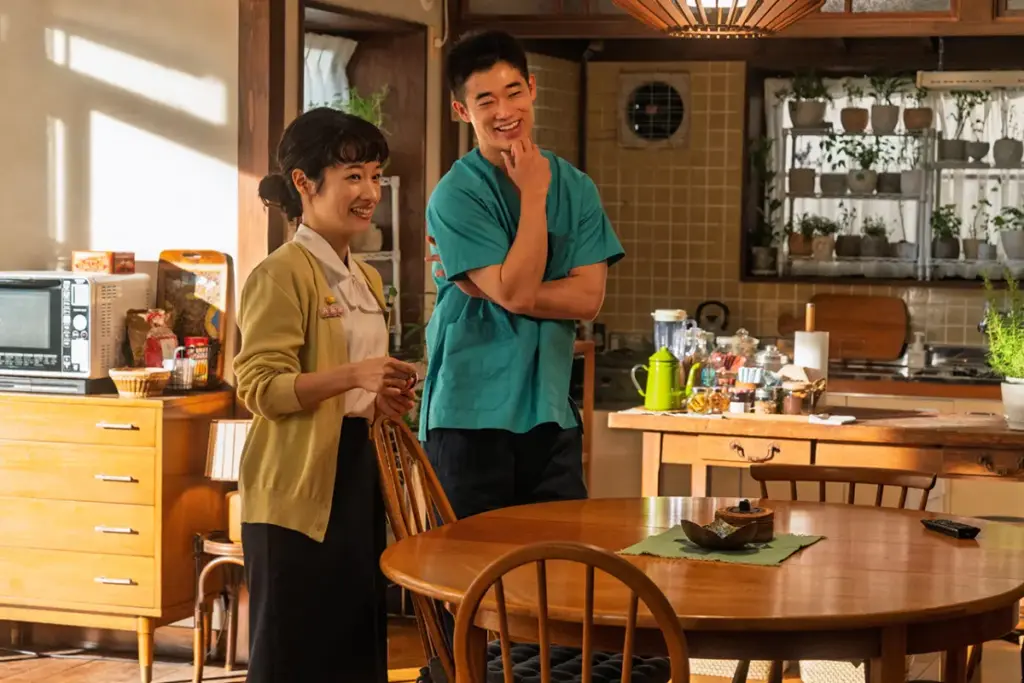
Enter Ichito Shimotori, a 32-year-old pioneer running the boutique Shimotori Clinic. He is flanked by a dedicated support team: the upbeat, mood-setting nurse Yuta Saikawa (played by Ryota Miura) and the grounded, highly capable administrative assistant Marin Natsume (played by Sawako Fujima). Operating in a country where declining birth rates and entrenched social modesty render sex therapy a borderline scandalous profession, Ichito and his staff offer non-judgmental, empathetic care. Their client roster runs the gamut of modern psychological and physical hurdles, including compulsive behaviors, communication breakdowns, and lingering post-traumatic stress.
The Protagonist’s Hidden Burden
Despite his professional empathy, Shimotori is far from invulnerable. He strictly conceals his own psychological vulnerabilities from the public, relying instead on private sessions with his therapist, Sion Kaze (Sayaka Yamaguchi), and guidance from his academic mentor, Professor Daisuke Kurusu (Yusuke Santamaria). Shimotori’s aversion to his own sexuality stems from a profoundly disruptive and traumatizing childhood incident—a secret he guards with fierce vigilance.
The status quo of Shimotori’s controlled environment is violently upended when his childhood first love, Yumi Ichinose (played by Yuko Araki), unexpectedly re-enters his life. Seventeen years prior, Shimotori had inexplicably vanished and severed all communication. Now, Yumi has carved out a public identity as a respected, impeccably polished field reporter for a local news station, celebrated for her wholesome, “pure” public image.
Professional Pressures and the Path to Self-Realization
The reunion triggers a cascade of personal crises. Compounding the emotional turmoil is the severe pushback Shimotori receives from conservative figures within the medical establishment, most notably Norio Toyohara (Shiro Sano), a respected medical school dean who views the Shimotori Clinic as an affront to traditional medical dignity.
As the narrative progresses across its seven-episode arc, Shimotori is forced to confront a sobering realization: to effectively heal others, he must first dismantle his own psychological defenses. This revelation sets off a moving trajectory toward redemption, self-acceptance, and the difficult pursuit of genuine love.
The series finale leaves audiences with a haunting parting shot. Following a sequence of fragmented, blurred flashbacks hinting at his past trauma, Shimotori sits across from his therapist, Sion Kaze, and delivers a stunning, paradoxical confession that turns the premise of the entire series on its head:
"I don’t have the right to love anyone. I don’t even want to imagine myself having sex. I became a sex therapist… because I hate sex."
Supporting Context & Metrics: Cultural Resonance and Production Value
Contextualizing Sexuality in Modern Japanese Media
While international hits like Netflix’s Sex Education or Showtime’s Masters of Sex paved the way for mainstream serialized explorations of clinical sexuality, Asian media markets have historically approached the subject with extreme caution due to strict broadcast regulations and cultural stigmas. S&X arrives as part of a progressive wave of Japanese television—alongside titles like Shrink: Psychiatrist Yowai and My Husband Won’t Fit—that explicitly seeks to dismantle mental health taboos and address structural issues within Japanese interpersonal relationships.
The series boldly navigates complex socio-cultural landscapes, offering unsparing critiques of:
- Public versus private identity: The stark psychological split between corporate/public conformity and hidden nocturnal desires in metropolitan Japan.
- Gender expectations: The societal pressure placed on women to maintain pristine, idealized forms of modesty, juxtaposed against the isolation experienced by men struggling with emotional articulation.
- Queer visibility and workplace harassment: Weaving systemic societal pressures into individual patient cases to highlight the broader institutional roots of personal trauma.
Production Metrics and Creative Execution
- Format: 7 episodes, with runtimes strategically optimized between 39 and 51 minutes to maintain narrative momentum without narrative bloat.
- Source Material: Adapted from Kisei Tada’s widely discussed seinen manga series S&X: The Confession of Therapist Ichito Shimotori, originally serialized between 2021 and 2022.
- Cast & Crew Highlights: Anchored by Kento Nakajima’s career-defining performance, the series benefits from an ensemble cast featuring Yuko Araki, Ryota Miura, Sawako Fujima, Sayaka Yamaguchi, Yusuke Santamaria, and Shiro Sano.
- Cinematography: The production utilizes a distinct visual contrast, shifting between the cold, sterile pastel tones of clinical environments and the neon-drenched, dreamlike distortions of Tokyo’s nightlife to reflect the internal psychological states of its characters.
Official Statements and Industry Insights
The adaptation of S&X marks a strategic milestone for Netflix’s Asia-Pacific content strategy, which increasingly emphasizes bold, issue-driven storytelling capable of bridging local cultural realities with global audience appeal.
While formal press releases from Netflix’s Tokyo production hub emphasize the streamer’s commitment to "adapting culturally resonant stories with universal emotional cores," creative stakeholders have noted the delicate balance required to translate an explicit, provocative manga into a prestige television drama.
Producers prioritized maintaining the psychological depth of Kisei Tada’s source material over gratuitous shock value. Although the series features mature content and sexual themes in every episode—necessitating strict viewer discretion—critics and early industry reviews have praised the production for its respectful, clinical framing of intimacy. Rather than relying on superficial skin-showing, the creative team leveraged nuanced dialogue, empathetic direction, and strong performances to frame sex therapy as a legitimate, vital branch of human healthcare.
Future Outlook: Implications for International Streaming and Potential Sequels
The premiere of S&X signals a pivotal test for the global appetite for Japanese live-action drama centered on psychological and sexual health. Historically, international audiences have embraced Japanese media primarily through the lens of anime, supernatural thrillers, or formulaic romantic comedies. By delivering a prestige drama that tackles adult themes with journalistic rigor and emotional gravity, Netflix is opening new pathways for Japanese television exporters.
Key Factors Shaping the Future of the Franchise:
- Critical Reception and Global Discovery: Early indicators suggest that S&X is successfully clearing the "one-inch tall barrier of subtitles," attracting cross-cultural viewership among fans of mature medical and psychological dramas.
- Manga Source Material Exhaustion: Because the original manga by Kisei Tada concluded its serialization run in 2022, a potential second season would either require original screenwriting or an expansion into peripheral character arcs—such as the backstories of nurse Yuta Saikawa or assistant Marin Natsume, both of whom have drawn significant praise as sleeper breakout characters.
- Shifting Censorship and Content Norms: The positive reception of S&X may embolden domestic Japanese networks and international platforms to greenlight further projects that confront systemic social issues, workplace power dynamics, and mental wellness without sanitizing the narrative.
Final Verdict
For viewers seeking high-caliber international television that treats sensitive subjects with intelligence, empathy, and artistic integrity, S&X is a mandatory addition to the watchlist. It proves that beneath the neon lights and societal facades of modern Tokyo lie universal human vulnerabilities that transcend borders. Stream it.