Executive Overview
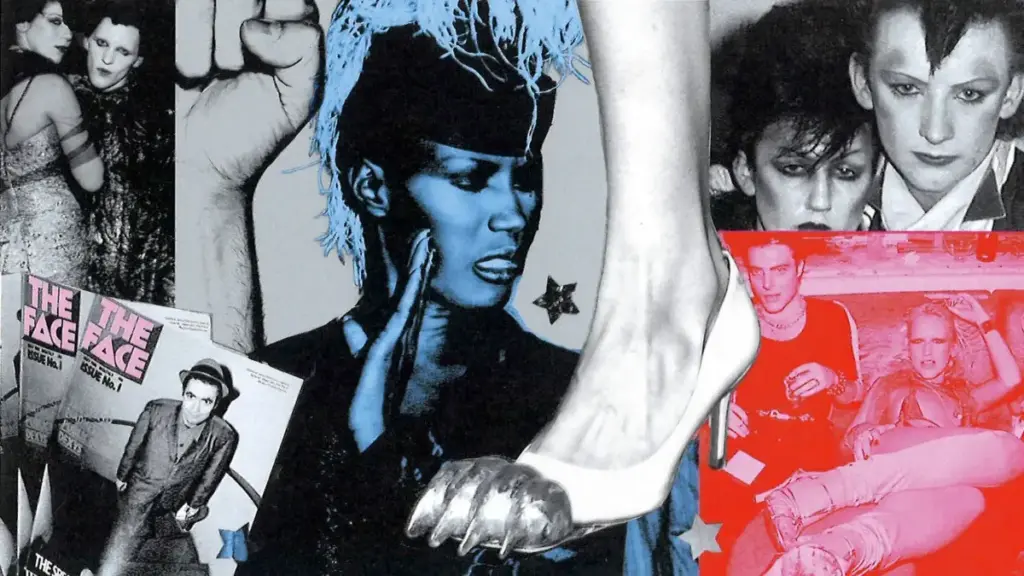
For generations, what we wore was more than mere fabric—it was a declaration of war, a visual manifesto, and a vital lifeline for the alienated. In the conservative, suburban sprawl of 1970s Virginia, a young Bud Thomas—now the library supervisor and operations manager at the University of Southern California’s ONE Archives—sought refuge in imported British style magazines like The Face and i-D. When he could not find a local merchant selling the leather trousers popularized by the punk movement and championed by Vivienne Westwood, he improvised. Armed with a sewing machine, zippers, D-rings, and an old pair of denim jeans, he engineered his own garments.
"When the reality you’re living in is so horrible, you have to go into your own head and create your own," Thomas reflects, capturing the raw alchemy of invention born out of systemic strife. "It’s that homespun kind of thing, because where else can you go?"
Today, that DIY ethos occupies a profoundly different ecosystem. Trousers boasting straps, heavy chains, and industrial buckles are mass-produced and instantly accessible online across a staggering array of silhouettes, price points, and fast-fashion loops. Legacy punk brands are traded in real-time on Whatnot livestreams, international Japanese street fashion is readily acquired via proxy apps on Mercari, and well-worn combat boots bearing the scuffs of countless mosh pits are bought and sold through closet-sale apps.
As we navigate an era defined by hyper-abundance, algorithmic curation, and ubiquitous choice, the very nature of countercultural dress has undergone a tectonic shift. Once the exclusive armor of the marginalized and the radical, the visual signifiers of dissent have been absorbed, commodified, and normalized into mainstream aesthetic categories. Safety pins have morphed from functional emergency fixes to high-fashion jewelry; Dr. Martens have transitioned from marginalized queer community signals to conventional corporate office attire; and thrifting has evolved from a survival tactic into a ubiquitous bourgeois weekend pastime.
This democratization of style begs a fundamental question for contemporary culture: When the symbols of rebellion are defanged by accessibility and reduced to digital moodboards, what rises in their place?
Detailed Chronology: A Century of Style as Resistance
To understand how contemporary style arrived at this crossroads of hyper-fragmentation and digital irony, one must trace the historical evolution of subcultural fashion. The Oxford English Dictionary defines a subculture as a distinct subgroup characterized by practices, beliefs, and interests that diverge from the dominant mainstream. Though youth-driven countercultures have ancient roots, the 20th century established the blueprint for how modern society interprets style as identity.
The Early-to-Mid 20th Century: The Genesis of Modern Dissent
- The Fin-de-Siècle Bohemians: Emerging at the turn of the 20th century, these artists and intellectuals rejected Victorian rigidities, utilizing flowing fabrics and unconventional silhouettes to signal an outright rejection of bourgeois respectability.
- The Swing Kids (1920s–1930s Germany): In direct defiance of the Hitler Youth and totalitarian uniformity, German youths adopted British and American jazz culture, wearing long hair, oversized jackets, and flamboyant ties as a quiet, yet dangerous, form of anti-fascist protest.
- The Zoot Suiters (1930s Harlem & Los Angeles): Rooted in African-American and Latino jazz communities, young men donned exaggerated, high-waisted, drape-shaped suits. The style was so potent—and perceived as so threatening to wartime rationing and racial hierarchies—that it sparked the violent Zoot Suit Riots of 1943.
- The Zazous (1940s Occupied France): As a localized response to Nazi occupation, French youth wore oversized jackets, tight trousers, and carried furled umbrellas, weaponizing eccentricity under the noses of censors.
- The 1950s: The post-war era bore witness to the birth of the "American teenager" as a distinct demographic, accompanied by the brooding, leather-clad iconography of beatniks and early rock-and-rollers who rejected Eisenhower-era conformity.
The Countercultural Explosion: 1960s to 1980s
- The 1960s: The hippie counterculture took center stage, utilizing floral prints, military surplus, and traditional garments from global indigenous cultures to protest the Vietnam War and advocate for peace and free love.
- The 1970s: Punk emerged in sharp, aggressive contrast to the perceived complacency of late-stage hippie idealism. Punks weaponized safety pins, ripped garments, garbage bags, and bondage gear to shock polite society.
- The 1980s: The advent of MTV in 1981 accelerated the global transmission of alternative aesthetics. The decade birthed a kaleidoscopic array of tribes: Blitz Kids, goths, New Romantics, and even the hyper-capitalist yuppies, proving that style tribes could scale commercially.
The 1990s and Beyond: The Mainstream Convergence
By the 1990s, underground movements rapidly collided with commercial media. Club kids, grunge rockers, mall goths, and working-class subcultures entered the retail mainstream. Thomas and his peers wryly referred to some commercial iterations of this phenomenon as "JCPenney punks."
As the 21st century dawned, the internet supercharged this evolution. Emos, scene kids, and analog hipsters spilled onto early digital forums, creating ultra-niche, highly specialized style communities that transcended geographical boundaries.
Supporting Context & Metrics: The Death of the Monoculture
Each of these historical epochs conjured distinct visual markers. Whether out of economic necessity—like goths and New Romantics thrifting Edwardian tunics and 1940s hand-me-downs—or an ideological longing for authenticity, style was inextricably linked to community. Late-2000s hipsters embraced retro technologies (vinyl records, Polaroid cameras) to evoke tangible histories, while contemporary neo-Luddites reject digital connectivity altogether.
However, the proliferation of digital platforms has fractured these movements. According to industry trend analyses by firms like WGSN, contemporary culture has seen an explosion of suffix-based "core" aesthetics—cottagecore, gothcore, fairycore—where the visual language of a subculture is decoupled from its political or philosophical roots.
"How do you say ‘fck you’ without saying ‘fck you?’" Thomas asks. "Wardrobe and costume are part of that."
The modern dilemma, however, lies in hyper-fragmentation. When elements of rebellion can be algorithmically purchased on-demand without context, subculture is reduced to aesthetic ornamentation—a flat digital moodboard pinned to a teenager’s bedroom wall or an Instagram feed. When rebellion becomes a scalable corporate business model, the natural reaction from the underground is to shift toward irony, radical absurdity, and an outright refusal to be defined.
Official Statements and Industry Perspectives
To combat the corporate homogenization of style, a new vanguard of designers, artists, and collectives are utilizing irony and anti-design as tools of resistance. Rather than adopting clean, easily digestible trend-cycles, these creators lean heavily into chaos and the rejection of standard beauty markers.
- The Women’s History Museum (New York): This collective reimagines clothing through found objects, transforming discarded items into wearable art infused with a distinct human touch—exemplified by claw-footed pumps and salvaged armor constructed from old coins.
- Dollar Store Couture: A digital-native movement that crafts charmingly grotesque, avant-garde looks exclusively out of 99-cent store finds.
- CFGNY: The self-described "vaguely Asian" art collective uses garments to interrogate the mechanics of mass production, cultural translation, and what it means to be perceived as "other" in a globalized market.
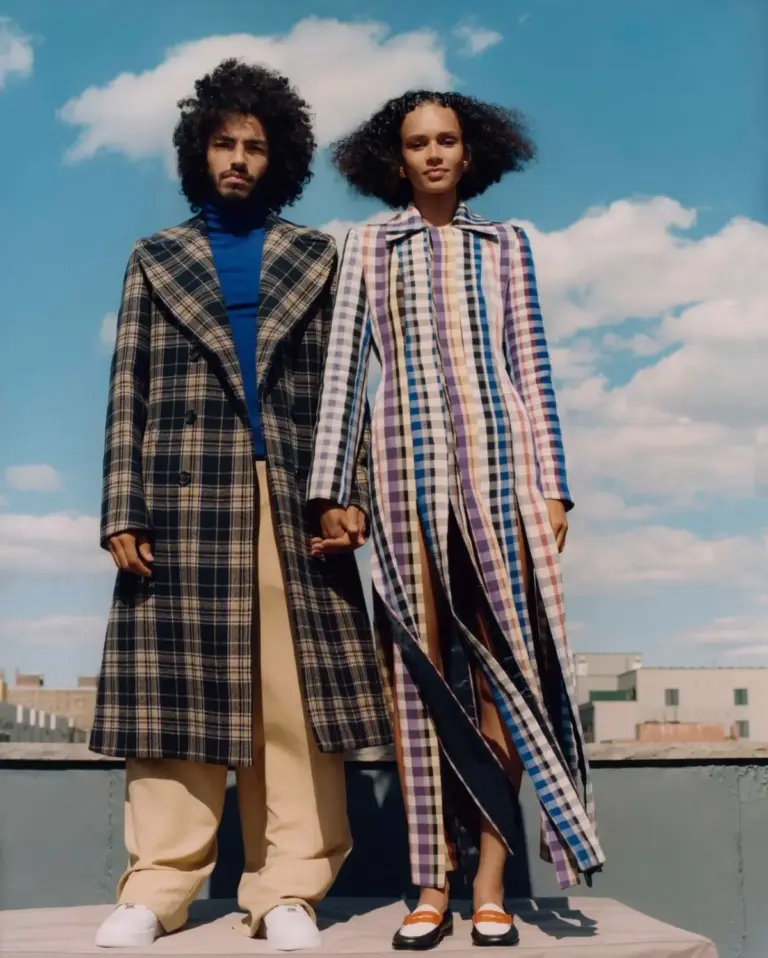
- Independent British Designers: Figures like Matty Bovan and John Alexander Skelton channel anachronistic amalgams of historical and modern textiles, successfully reviving the scrappiness and tactile resourcefulness of Thomas’s 1970s youth.
"It’s turning things sideways. It’s looking at things backwards," Thomas says, summarizing the vital importance of recontextualizing mainstream materials until they mutate into something wholly unrecognizable. "Not the absence, but the excess and pushing the boundaries of all of it."
Future Outlook: The Rise of Playlist Culture
As we look toward the future of fashion, the rigid subcultural gatekeeping of the 20th century has been thoroughly replaced by "playlist culture." Modern dressing operates on a principle of shuffle: a chaotic, highly personal mix-and-match of high-fashion and low-brow references, historical eras, and clashing textures.
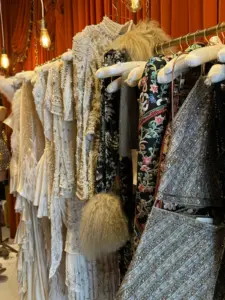
Today’s youth feel entirely emancipated from historical dress codes. A regular attendee can show up to a bass-heavy music festival in Brooklyn wearing a 100-year-old Victorian nightgown, transition seamlessly to a DIY underground noise show in corporate office-ready flats, and pair technical ravewear with everyday thrifted basics.
There is an irreplaceable psychological satisfaction derived exclusively from pulling a look from one’s own imagination—stitched together through flea markets, community clothing swaps, and personal, hand-applied embellishments. This grassroots ethos is experiencing a massive resurgence precisely because it reclaims a fundamental truth: the wearer makes the look, not the algorithm.
The uniform of rebellion has never been fixed to a single garment, era, or ideological blueprint, and that fluidity remains its most potent weapon. In an age characterized by political polarization, economic anxiety, and digital fatigue, embracing stylistic chaos may ultimately prove to be far more liberating than seeking comfort in conformity.