Executive Overview
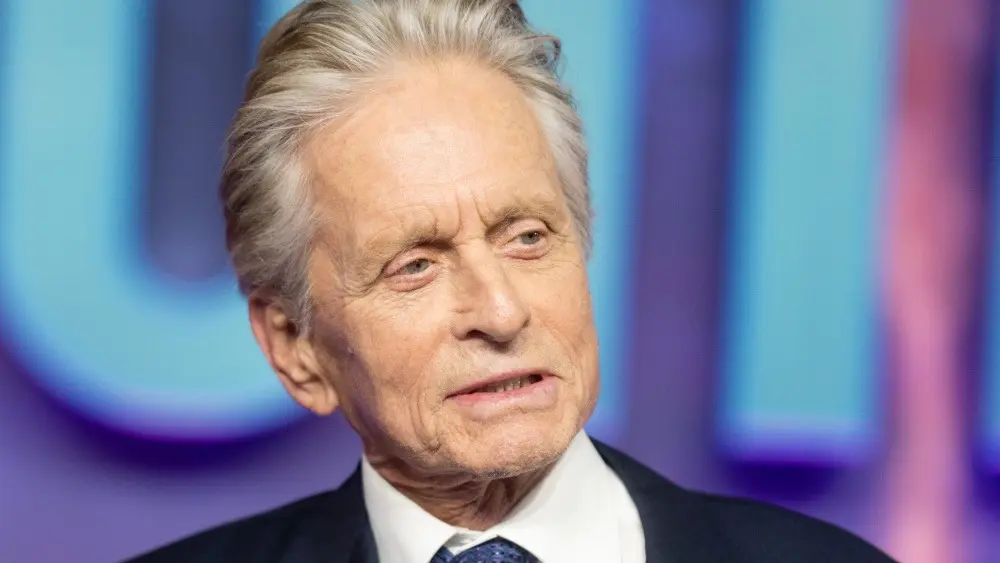
The fierce cultural debate surrounding Hollywood’s generational privilege—commonly colloquially dubbed the "nepo baby" phenomenon—has found a new and formidable critic in Academy Award-winning actor and producer Michael Douglas. Appearing as a featured guest on a recent installment of the hit SmartLess podcast, hosted by prominent entertainment personalities Sean Hayes, Jason Bateman, and Will Arnett, the Wall Street icon did not mince words regarding the modern nomenclature.
Addressing the hosts candidly, Douglas expressed deep frustration with the widespread scrutiny targeting second- and third-generation entertainment industry professionals. As the son of late cinematic titan Kirk Douglas, Michael Douglas is uniquely positioned within the lineage of Hollywood royalty. Yet, his defense extends beyond personal offense; it strikes at the heart of familial support across all labor markets, raising provocative questions regarding why the entertainment sector faces uniquely intense public ire over an age-old human impulse: parents helping their children succeed.
This explosive commentary arrives at a critical juncture in Douglas’s storied career. Beyond promoting his latest professional endeavors, the actor is preparing for the imminent release of his highly anticipated memoir, One Helluva Ride, scheduled to hit bookshelves this Tuesday. As Hollywood grapples with shifting paradigms of representation, access, and meritocracy, Douglas’s unfiltered remarks serve as a flashpoint in an ongoing cultural war over how modern audiences perceive talent, privilege, and the passing of the torch in the world’s most glamorous industry.
Detailed Chronology and Podcast Breakdown
The conversation on the SmartLess podcast began with the relaxed, unscripted banter that has made the audio program a massive commercial and critical success. However, the tone shifted decisively when hosts Jason Bateman, Sean Hayes, and Will Arnett steered the dialogue toward Douglas’s monumental family legacy. Discussing his entry into the business, the hosts touched upon the concept of Hollywood royalty—a term that immediately triggered a sharp, impassioned response from the seasoned actor.
"Well, first of all, you know, Hollywood royalty. I mean… this ‘nepo’ thing really pisses me off," Douglas declared, setting the tone for a broader critique of contemporary industry commentary.
Elaborating on his perspective, Douglas drew a parallel between the entertainment industry and standard, blue-collar or white-collar professions. He argued that familial mentorship and networking are foundational components of career development across virtually every sector of global commerce.
"I don’t know a career where a father or mother don’t try to help their son or daughter get into their business and this and that," Douglas noted, expressing bewilderment at why Hollywood has been singled out for such intense public cross-examination. "Why they picked on this because of the well-known aspect of it…" remains, in his view, an unfair and superficial critique driven by the hyper-visible nature of celebrity culture.
Rather than lingering solely on the controversies of modern social media discourse, the conversation seamlessly transitioned into actionable wisdom for the next generation of performers. When asked by the SmartLess team for the ultimate piece of advice he would offer to aspiring actors navigating the labyrinth of modern casting, Douglas pointed away from technical mechanics and toward textual foundation: recognizing and securing "good material."
"The problem we all have is we don’t play an instrument, or we don’t paint, or we don’t write," Douglas reflected during the episode. "We’re standing there. But a good piece of material, man, a good piece of material helps things along well."
This pragmatic approach underscores a career defined not merely by lineage, but by an uncanny eye for compelling scripts, complex characters, and groundbreaking narratives that have captivated global audiences for over five decades.
Supporting Context & Metrics: A Dynasty of Cinematic Excellence
To fully comprehend Michael Douglas’s reaction to the "nepo baby" discourse, one must examine the staggering weight of the Douglas family dynasty. Michael is not merely the beneficiary of a famous name; he is the custodian of a foundational pillar of American cinema, built by his father, Kirk Douglas, whose influence on the silver screen remains virtually unparalleled.
The Legacy of Kirk Douglas
Kirk Douglas, who passed away in 2020 at the remarkable age of 103, was the embodiment of the Hollywood golden era’s rugged individualism, intensity, and ambition. Rising from impoverished beginnings, Kirk carved out a legendary career characterized by morally complex antiheroes and towering cinematic presence.
His filmography reads as a masterclass in motion picture history:
- Spartacus (1960): Kirk not only starred in Stanley Kubrick’s monumental historical epic but also played a pivotal role as executive producer in breaking the Hollywood blacklist by publicly crediting screenwriter Dalton Trumbo.
- Champion (1949): The breakout role that earned Kirk his first Academy Award nomination for Best Actor, establishing his cinematic persona as a driven, uncompromising fighter.
- Paths of Glory (1957): A searing anti-war masterwork directed by Kubrick, featuring one of Kirk’s most emotionally resonant and morally steadfast performances.
- The Bad and the Beautiful (1952) & Lust for Life (1956): Films that secured his subsequent Academy Award nominations, showcasing his immense range from ruthless studio executives to tormented artistic geniuses like Vincent van Gogh.
- Additional Classics: Seven Days in May, 20,000 Leagues Under the Sea, and Lonely Are the Brave.
In recognition of his towering contributions to the medium, the Academy of Motion Picture Arts and Sciences awarded Kirk Douglas an honorary Oscar in 1996, celebrating 50 years as a creative and moral force in the global film community.
Michael Douglas: Blazing His Own Trail
While Michael Douglas inherited a formidable legacy, his career achievements easily stand alongside those of his father. What separates Michael within the multi-generational talent debate is his rare ability to conquer both sides of the camera, achieving the highest level of critical and commercial acclaim as both an actor and a producer.
- The Producer’s Triumph: Long before cementing his status as a leading man, Michael demonstrated visionary producing talent. In 1976, he took home the Academy Award for Best Picture as a co-producer of Ken Kesey’s adapted masterpiece, One Flew Over the Cuckoo’s Nest. The film swept the "Big Five" Oscars, a rare feat in motion picture history.
- The Leading Man: As an actor, Michael delivered iconic performances that defined the cultural zeitgeist of the 1980s and 1990s. His chilling yet magnetic portrayal of corporate raider Gordon Gekko in Oliver Stone’s Wall Street (1987) earned him the Academy Award for Best Actor in a Leading Role, immortalizing the phrase "Greed, for lack of a better word, is good."
- Critical Versatility: His filmography includes powerhouse performances in psychological thrillers like Fatal Attraction (1987) and Basic Instinct (1992), as well as transformative television work, such as his Emmy-winning portrayal of Liberace in HBO’s Behind the Candelabra (2013).
When viewed through this empirical lens, Michael Douglas’s frustration with the "nepo baby" label becomes clearer: while a famous last name may open an initial door, sustaining a decades-long career marked by two Academy Awards across entirely different disciplines requires a level of raw talent, business acumen, and relentless endurance that nepotism alone cannot manufacture.
Official Statements and Industry Perspectives
Michael Douglas’s remarks on the SmartLess podcast have reignited a broader industry conversation about the definition of meritocracy in the arts. While social media platforms have increasingly weaponized terms like "nepo baby" to critique the perceived lack of access for working-class actors, many veterans of the industry share Douglas’s sentiment that family businesses are a natural extension of human community.
Proponents of the multi-generational argument often point out that agriculture, law, medicine, small business ownership, and politics have long embraced familial succession without facing the same relentless public interrogation directed at Hollywood. In these fields, institutional knowledge, trusted networks, and early immersion are viewed as invaluable assets. Douglas’s argument hinges on this exact premise: why should the film and television industry be held to an idealized, impossible standard of absolute isolation from familial influence?
Conversely, cultural critics maintain that because the entertainment industry traffics in public representation, storytelling, and cultural influence, the barriers to entry warrant hyper-vigilance. The debate touches on sensitive nerves regarding diversity, equity, and access for marginalized creators who may lack the built-in safety nets, industry connections, and financial cushions enjoyed by industry scions.
Douglas, however, chooses to focus the lens back onto the practical realities of craft. By emphasizing that an actor’s ultimate survival depends on their ability to interpret material and connect with an audience—regardless of who their parents were—he frames the entire controversy as a distraction from the fundamental labor of making movies.
Future Outlook: Memoir Release and Continuing Relevance
As this media storm unfolds, public attention pivots toward the imminent release of Michael Douglas’s forthcoming memoir, One Helluva Ride, hitting shelves this Tuesday. The book promises to offer a deeply personal, unvarnished look at growing up in the shadow of a cinematic legend, navigating the intoxicating highs and crushing lows of Hollywood stardom, and maintaining a career of extraordinary longevity.
Industry analysts anticipate that One Helluva Ride will provide further context to Douglas’s views on family, industry politics, and the shifting landscape of entertainment. In an era where celebrity memoirs often lean into sanitized PR narratives, Douglas’s recent podcast comments suggest that his book will offer the same candid, unapologetic honesty that has defined his public persona for decades.
Furthermore, Douglas remains active in the creative ecosystem, continuing to select projects that challenge his range and captivate global audiences. Whether he is reflecting on the past through print or evaluating new scripts on screen, Michael Douglas stands as a living bridge between Hollywood’s golden age and its hyper-connected modern iteration.
Ultimately, his pushback against the "nepo baby" moniker is more than a defensive posture—it is a challenge to the industry and its audiences to look deeper. Names may open doors, Douglas reminds us, but it is the mastery of the craft, the respect for good material, and the relentless pursuit of excellence that keeps an artist standing under the lights long after the generational spotlight has shifted.