Executive Overview
For many beauty enthusiasts, a polished manicure is a year-round non-negotiable accessory—a small yet powerful form of self-expression. Yet, the moment the weather turns cold and our footwear shifts from open-toed sandals to heavy boots and thick socks, our feet enter a period of prolonged neglect. Sealed away in darkness and dampness, toenails are coated in polish and forgotten for months at a time, while soles develop thick layers of calluses completely unnoticed.
This seasonal oversight, while culturally common, creates a breeding ground for a host of dermatological issues. To uncover the truth behind proper foot and toenail maintenance, we consulted renowned board-certified dermatologist and nail specialist Dr. Dana Stern. Far from following arbitrary beauty standards, proper foot care is fundamentally a matter of hygiene, skin barrier health, and infection prevention.
This investigative report explores the hidden dangers of winter foot neglect, debunks common pedicure myths, and provides an authoritative roadmap for keeping your feet and toenails healthy throughout the colder months—without necessarily stepping foot into a nail salon.
Detailed Chronology: The Anatomy of Seasonal Foot Neglect
To understand how minor habits lead to major dermatological problems, we must trace the timeline of typical seasonal foot care, highlighting where standard routines go wrong and how small interventions can prevent severe complications.
Month 1: The Transition to Closed-Footwear and the "Set-It-And-Forget-It" Polish Trap
As temperatures drop, the frequency of professional pedicures naturally plummets. Many individuals apply a final dark or festive coat of nail polish to their toenails before shelving their open-toe shoes for the season. Because the feet are hidden from view, that initial pedicure often remains untouched for four, six, or even eight weeks.
According to Dr. Stern, this extended period of occlusion is the primary catalyst for surface-level nail damage. When nail polish is left on the toes for longer than three to four weeks, it frequently leads to the formation of keratin granulations. These appear as chalky, white, rough patches on the surface of the nail plate.
“These white spots occur because superficial nail cells become trapped and altered after being smothered under polish for prolonged periods,” Dr. Stern explains.
While keratin granulations can theoretically form on fingernails, they are vastly more common on toenails due to our tendency to abandon our pedicures during the autumn and winter months.
Month 2: The Hidden Dangers of Dry Winter Air and Hangnails
As winter deepens, indoor heating and frigid outdoor air strip the skin of its natural moisture. This dryness frequently manifests around the nail bed in the form of hangnails (or niednägel in German)—tiny, torn strips of skin adjacent to the nail plate.
During the winter season, Dr. Stern notes a sharp spike in painful nail-fold infections. Many people attempt to solve a hangnail by pulling, biting, or ripping it off. This creates an immediate microscopic tear in the skin barrier.
Because feet spend hours confined in warm, moist environments inside winter boots, they provide an ideal habitat for opportunistic bacteria to enter these open wounds. The result is often acute paronychia—a painful, throbbing, swollen, and sometimes purulent bacterial infection of the nail fold that frequently requires medical intervention, including professional drainage and a course of prescription antibiotics.
Month 3: The Callus Cycle and the Moisture Misconception
By mid-winter, the friction caused by heavy socks and stiff boots triggers a protective physiological response: the thickening of the stratum corneum, commonly known as calluses. To combat this, many people turn to aggressive, at-home scraping tools or long, soaking pedicures. However, without a scientific understanding of how skin and nails interact with water, these well-intentioned efforts often backfire, leading to cracked heels and peeling polish.
Supporting Context & Metrics: The Science of Foot and Nail Health
To properly care for our feet, we must examine the unique biological properties that set them apart from the rest of the integumentary system.
The Nail-As-Sponge Phenomenon
One of the most surprising insights shared by Dr. Stern challenges the traditional salon experience of soaking feet in warm water prior to a pedicure.
- Absorption Rate: Human nails are remarkably porous; they absorb water up to 1,000 times more efficiently than human skin.
- Cellular Expansion: When submerged, nail cells act as microscopic sponges, rapidly filling with water and expanding in volume.
- The Post-Soak Contracture: Once the feet are removed from the water, those same cells rapidly dry and contract. If nail polish was applied while the nails were expanded in their waterlogged state, the subsequent contraction of the nail plate causes the rigid polish to crack, bubble, and lift prematurely.
This scientific reality underpins Dr. Stern’s strong advocacy for the "dry pedicure," a method that bypasses the traditional soaking tub entirely.
The Microclimate of the Foot
Statistically, the human foot houses approximately 250,000 sweat glands, producing a significant volume of moisture daily. When combined with thick winter socks and enclosed footwear, this creates a distinct microclimate characterized by:
- Elevated local humidity and temperature.
- Restricted air circulation.
- An abundance of dead skin cells (food for microbes).
Without targeted hygiene, this environment fosters the proliferation of dermatophytes and bacteria, increasing the risk of fungal infections (such as tinea pedis or onychomycosis) and persistent foot odor.
Official Statements and Expert Protocols
Navigating foot care requires expert-backed strategies. Dr. Dana Stern outlines a clear, highly effective protocol for maintaining optimal foot and nail health at home during the winter months.
1. Enforce a Strict Three-Week Polish Limit
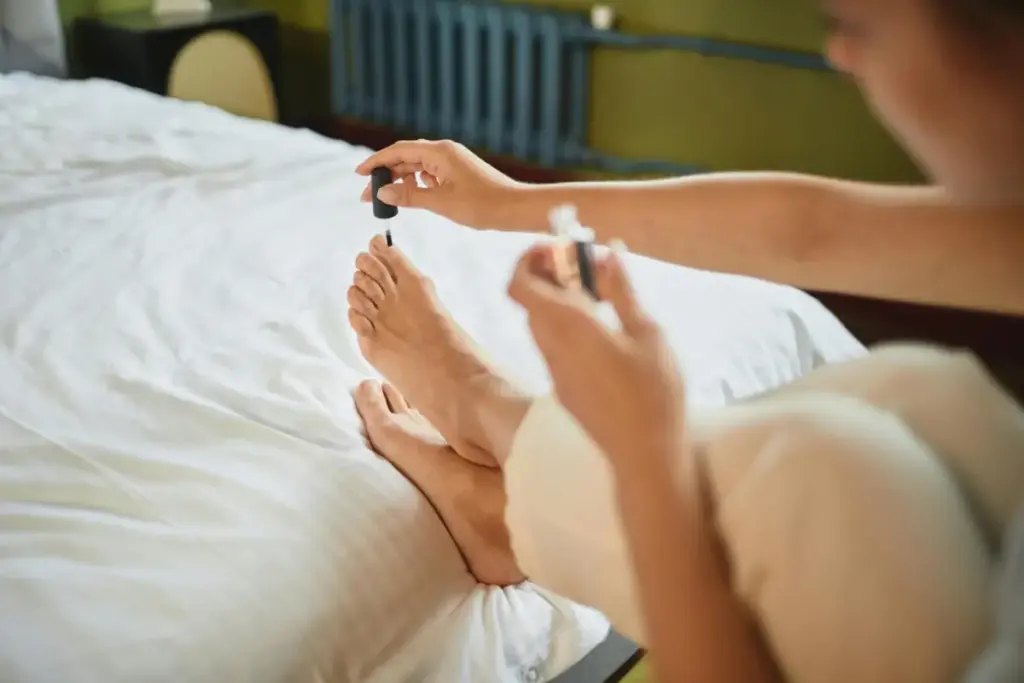
Never allow regular nail polish to sit on your toenails for longer than three to four weeks. Set a recurring calendar reminder to strip the polish using an acetone-free remover to prevent excessive drying of the nail plate. Furthermore, consider taking extended breaks from gel pedicures during the winter to allow the keratin layers to recover.
2. Embrace the "Dry Pedicure" Technique
To minimize structural damage to the nail and drastically reduce health risks, adopt the dry pedicure method.
- Infection Prevention: Traditional foot-soaking basins and whirlpool jets—particularly those equipped with internal pipes—are notoriously difficult to sterilize completely. They can harbor stubborn biofilms consisting of bacteria, fungi, and viruses.
- Longevity: By avoiding the water-soaking step, your nails do not swell, ensuring that any subsequent polish application adheres smoothly and lasts significantly longer without chipping.
3. Move Beyond the "Run-Off" Shower Myth
A common oversight in daily hygiene is assuming that the soapy water running down your body during a shower is sufficient to clean your feet.
- Targeted Cleansing: Dr. Stern emphasizes that the soles, the spaces between the toes, and the nail folds require deliberate, hands-on washing with a gentle cleanser or body wash.
- Microbial Control: Given the unique physiological profile of the foot, active scrubbing is necessary to break down lipid films and eliminate odor-causing bacteria before they can establish an infection.
4. Hydrate the Nail Plate with Cuticle Oil
Just as facial skin requires targeted hydration, the skin and cuticles surrounding your toenails need daily nourishment to prevent painful, infection-prone hangnails. Applying a high-quality, organic cuticle oil—such as Kure Bazaar Organic Cuticle Oil—regularly conditions the nail fold and maintains the integrity of the skin barrier, even in harsh winter conditions.
5. Utilize Keratolytic Agents Like Urea for Thick Skin
The skin on the soles of the feet is substantially thicker than skin on other parts of the body, meaning standard moisturizers often fail to penetrate deeply enough to make a difference.
- The Power of Urea: Dr. Stern recommends incorporating a targeted foot cream containing urea (such as The Inkey List SuperSolutions 10% Urea Moisturizer or Eucerin UreaRepair PLUS Lotion 10%).
- Mechanism of Action: Urea is a powerful keratolytic agent. It chemically dissolves the intercellular matrix of the stratum corneum, allowing dead skin cells to slough off naturally and efficiently while simultaneously preventing the rapid buildup of new calluses. This provides a much smoother, gentler alternative to aggressive physical rasping or harsh chemical foot peel masks.
Future Outlook: A Mindful Approach to Foot Wellness
As consumer awareness shifts away from purely aesthetic beauty routines toward holistic wellness and dermatological health, the way we view foot care is undergoing a quiet revolution. The traditional model of treating pedicures as an occasional, luxury cosmetic indulgence is being replaced by a preventive, hygiene-first maintenance mindset.
Moving forward, beauty and health experts predict a greater integration of clinical science into daily home-care regimens. By treating our feet with the same intentional care, active ingredient awareness, and barrier protection that we routinely apply to our faces and hands, we can eliminate seasonal discomfort, prevent painful infections, and ensure that our feet remain healthy, resilient, and ready for whatever footwear the seasons bring.