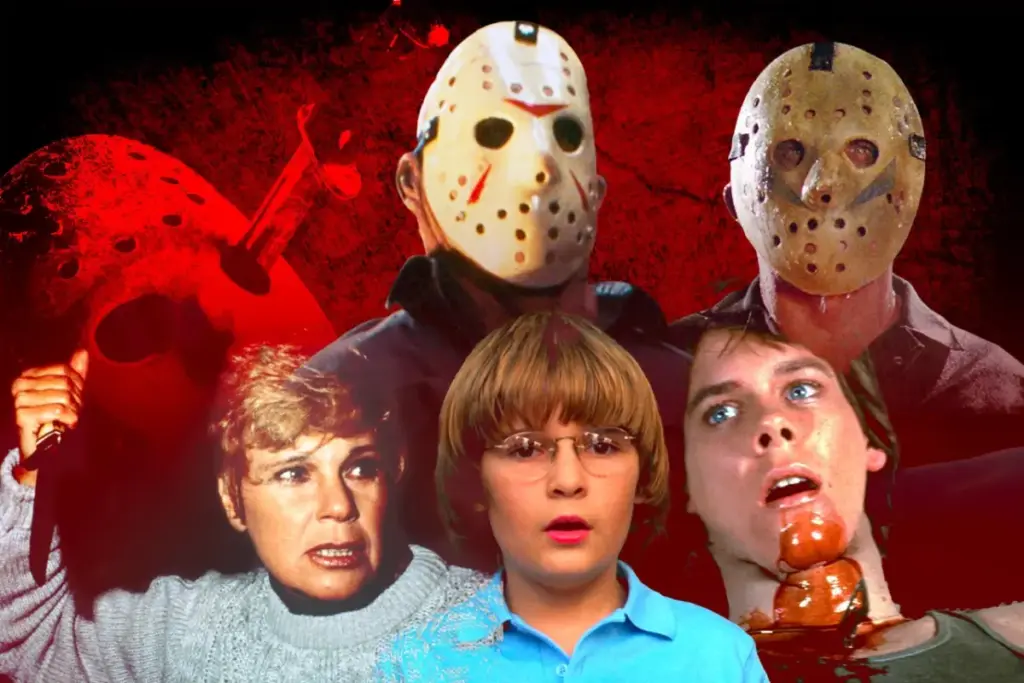
As spooky season reaches its peak and autumn brings its familiar chill, millions of horror enthusiasts turn their attention back to the foundational pillars of the slasher genre. Among the sprawling cinematic universes that define October viewing, few hold the cultural cachet, historical endurance, and chaotic charm of the Friday the 13th franchise. Centered around the lumbering, hockey mask-wearing apex predator Jason Voorhees—whose preferred hunting grounds range from the rustic woods of Camp Crystal Lake to the neon-drenched streets of Manhattan and, eventually, the cold void of deep space—this multi-decade property remains a masterclass in independent filmmaking turned global phenomenon.
For fans looking to dive headfirst into a weekend marathon, navigating the lineage of Jason Voorhees can prove deceptively tricky. Spanning twelve feature films released between 1980 and 2009, the franchise has changed studio hands, introduced supernatural elements that completely rewrote its own lore, and survived countless parodies, legal battles, and shifting cultural sensibilities.
The original 1980 classic is readily accessible for streaming on platforms like Tubi, while the entire library is available for digital rental across major video-on-demand services including Amazon Prime Video, Apple TV, and Vudu. For true completionists looking to contextualize the massive lore, the nearly seven-hour documentary Crystal Lake Memories: The Complete History of Friday the 13th stands as the definitive companion piece. This comprehensive guide breaks down all twelve cinematic chapters in order, detailing their historical contexts, behind-the-scenes trivia, and viewing options.
Detailed Chronology: The Complete Friday the 13th Movie Guide
1. Friday the 13th (1980)
Director: Sean S. Cunningham
IMDb Synopsis: A group of camp counselors trying to reopen a summer camp called Crystal Lake, which has a grim past, are stalked by a mysterious killer.
The Breakdown: This is the foundational text that birthed a modern mythology. Directed by Sean S. Cunningham and capitalizing on the massive, unexpected success of John Carpenter’s Halloween (1978), the original film introduces audiences to the doomed counselors of Camp Crystal Lake. Notably, Jason Voorhees is not the primary antagonist of this installment; instead, the killings are carried out by his grieving mother, Mrs. Voorhees (Betsy Palmer). Featuring early career appearances by Harry Crosby, Laurie Bartram, and a young Kevin Bacon, the film relies heavily on suspense, point-of-view camera angles, and Harry Manfredini’s iconic, breathless musical cues ("Ki-ki-ki, ma-ma-ma"). Despite polarizing initial reviews—most famously, critic Gene Siskel publishing Betsy Palmer’s home address in the Chicago Tribune out of pure disdain—the film grossed nearly $60 million on a meager $550,000 budget, securing its status as an independent horror milestone.
2. Friday the 13th Part 2 (1981)
Director: Steve Miner
IMDb Synopsis: Five years after the events of the first film, a summer camp next to the infamous Camp Crystal Lake is preparing to open, but the legend of Jason is weighing heavy on the proceedings.
The Breakdown: Released less than a year after its predecessor, Part 2 officially transitions Jason Voorhees from a tragic backstory into a flesh-and-blood killer. Seeking revenge for his mother’s demise, an adult Jason—initially hiding his deformed face beneath a burlap sack with a single eyehole—stalks a new batch of counselors at a training camp adjacent to the shuttered Crystal Lake grounds. Directed by Steve Miner, the film establishes the franchise’s penchant for brutal practical effects and relentless escalation. A notorious piece of censorship trivia surrounds this entry: a graphic double-impalement death scene was severely trimmed by the MPAA to avoid an infamous "X" rating, yet a still photograph of the excised gore was mistakenly printed on the back of early VHS box art.
3. Friday the 13th Part III (1982)
Director: Steve Miner
IMDb Synopsis: Jason Voorhees stalks a group of friends who’ve just arrived to spend the weekend at a cabin near Crystal Lake.
The Breakdown: While cinematic history often points to Part III as the birth of a cultural icon due to the introduction of Jason’s signature hockey mask, the film holds a unique distinction on review aggregation sites, currently sitting with an unlucky 7% score on Rotten Tomatoes. Designed to capitalize on the early-1980s 3D movie craze, characters frequently hurl yo-yos, popcorn, and eyeballs directly at the camera lens. Despite mixed critical reception, the film achieved a monumental box-office victory by knocking Steven Spielberg’s cultural juggernaut E.T. the Extra-Terrestrial out of the number one spot at the domestic box office.
4. Friday the 13th: The Final Chapter (1984)
Director: Joseph Zito
IMDb Synopsis: After being announced dead and taken to a morgue, Jason Voorhees spontaneously revives, escapes from the hospital, and stalks a group of friends renting a house in the countryside near Crystal Lake.
The Breakdown: Paramount Pictures attempted to put a definitive end to their cash-cow franchise with The Final Chapter, bringing in director Joseph Zito to deliver a darker, more aggressive tone. The film introduces a young Tommy Jarvis (played by Corey Feldman), a horror-obsessed kid whose tactical ingenuity ultimately brings Jason down. Of course, "The Final Chapter" was nothing more than a marketing illusion; the box office returns were far too lucrative to let the killer rest. Production trivia notes that the first day of principal photography fell on Halloween 1983, leading adult cast members Erich Anderson and Kimberly Beck to take a young Corey Feldman out trick-or-treating between setups.
5. Friday the 13th: A New Beginning (1985)
Director: Danny Steinmann
IMDb Synopsis: Still haunted by his past, Tommy Jarvis, who, as a child killed Jason Voorhees, is sent to a secluded halfway house in the countryside, where the killing of a young man triggers a brutal series of murders in the area.
The Breakdown: Following the events of The Final Chapter, a traumatized teenage Tommy Jarvis (John Stockwell/New kid actor) is placed in a rural psychiatric halfway house. When a series of axe murders plague the facility, it appears Jason has returned from the grave. This installment is famous—or infamous—among fans for its major narrative twist: the killer is revealed to be a copycat paramedic seeking revenge for a murdered patient, completely removing the supernatural Jason from the bulk of the runtime. Interestingly, Corey Feldman was heavily courted to reprise his role as Tommy as the lead, but turned it down after Steven Spielberg drafted him into Richard Donner’s The Goonies.
6. Friday the 13th Part VI: Jason Lives (1986)
Director: Tom McLoughlin
IMDb Synopsis: Tommy Jarvis exhumes Jason Voorhees to cremate his corpse, but inadvertently brings him back to life instead. The newly revived killer seeks revenge, and Tommy may be the only one who can stop him.
The Breakdown: Recognizing that fans felt cheated by the copycat formula of A New Beginning, writer-director Tom McLoughlin fully embraced the supernatural, transforming Jason into an unkillable, undead powerhouse reminiscent of James Bond or Frankenstein’s monster. Infused with tongue-in-cheek dark comedy, gothic atmosphere, and self-aware meta-commentary, Jason Lives is widely regarded by critics and purists as one of the absolute best sequels in the entire series. Its clever subversion of slasher tropes later served as a direct structural blueprint for Kevin Williamson when crafting the script for Wes Craven’s groundbreaking Scream (1996).
7. Friday the 13th Part VII: The New Blood (1988)
Director: John Carl Buechler
IMDb Synopsis: Jason Voorhees is accidentally freed from his watery prison by a telekinetic teenager. Now, only she can stop him.
The Breakdown: Pitting the unstoppable juggernaut against a literal psychic teenager (Lar Park Lincoln), The New Blood feels like Carrie meets Friday the 13th. This film also marks the debut of stuntman Kane Hodder inside the hockey mask, a casting decision that forever altered the character’s legacy. Hodder brought a distinct, aggressive physicality to Jason that resonated deeply with fandom. Behind-the-scenes accounts from Hodder’s memoir, Unmasked, reveal the wholesome side of the slasher set: the costume department thoughtfully crafted a custom crew jacket for Hodder’s mother that proudly read "Jason’s Mom!"—a piece of apparel she wore proudly while stocking her purse with autographed photos for curious fans.
8. Friday the 13th Part VIII: Jason Takes Manhattan (1989)
Director: Rob Hedden
IMDb Synopsis: Jason Voorhees is accidentally awakened from his watery grave, and he ends up stalking a ship full of graduating high school students headed to Manhattan, NY.
The Breakdown: Despite carrying one of the most memorable titles in horror history, Jason Takes Manhattan frequently draws friendly ribbing from fans for a glaring geographical truth: Jason actually spends the vast majority of the runtime aboard a slow-moving cruise ship (The SS Lazarus), only arriving in New York City during the final act. Budgetary constraints forced Paramount to abandon plans for an expansive, city-wide rampage; nearly all urban scenes were instead shot on location in Vancouver, save for a brief two-day shoot in Times Square. The film’s marketing campaign faced immediate controversy when the New York Tourism Committee forced the studio to scrap posters featuring Jason slashing through an "I Love NY" logo due to graphic violence concerns.
9. Jason Goes to Hell: The Final Friday (1993)
Director: Adam Marcus
IMDb Synopsis: Serial killer Jason Voorhees’ supernatural origins are revealed.
The Breakdown: Moving the franchise from Paramount to New Line Cinema, co-creator Sean S. Cunningham returned to produce a radical reinvention of the mythology. In this installment, Jason’s physical body is blown to pieces by an FBI sting operation, revealing that his spirit survives as a demonic, parasitic entity that can hop from host body to host body via oral possession. While critically reviled for its heavy departure from classic camp formulas, the film delivers one of the most famous stingers in cinematic history: in the final seconds, the spiked glove of Freddy Krueger bursts from the earth, dragging Jason’s mask down into the fiery depths of hell and setting the stage for an epic crossover.
10. Freddy vs. Jason (2003)
Director: Ronny Yu
IMDb Synopsis: Freddy Krueger and Jason Voorhees return to terrorize the teenagers of Elm Street. Only this time, they’re out to get each other, too.
The Breakdown: After nearly a decade of development hell, the ultimate horror heavyweight bout finally materialized on the silver screen. Directed by Ronny Yu, the film pits Robert Englund’s charismatic dream-demon against Ken Kirzinger’s towering iteration of Jason Voorhees. Skillfully balancing high-octane action, pitch-black humor, and practical gore effects, the crossover became a massive commercial triumph, grossing over $116 million worldwide and briefly revitalizing both horror franchises for the modern era. Astute viewers can even spot a pre-fame Evangeline Lilly appearing as an extra in the background.
11. Jason X (2002)
Director: Jim Isaac
IMDb Synopsis: Jason Voorhees is cryogenically frozen at the beginning of the 21st century, and is discovered in the 25th century and taken to space. He gets thawed and begins stalking and killing the crew of the spaceship that’s transporting him.
The Breakdown: Though released afterFreddy vs. Jason due to production delays, Jason X chronologically takes place at the absolute tail end of the cinematic timeline. Embracing pure sci-fi camp, the film finds a captured Jason frozen in cryogenic sleep, transported 400 years into the future, and thawed out aboard a university research vessel in deep space. Complete with a futuristic, cybernetically enhanced "Uber Jason," the movie leans heavily into self-aware comedy—most famously highlighted by a zero-gravity sleeping bag kill that remains a fan-favorite set piece.
12. Friday the 13th (2009)
Director: Marcus Nispel
IMDb Synopsis: A group of young adults visit a boarded up campsite named Crystal Lake where they soon encounter the mysterious Jason Voorhees and his deadly intentions.
The Breakdown: Produced by Michael Bay’s Platinum Dunes, this 2009 rebooted entry functions as a streamlined "greatest hits" compilation of the first four films, condensing the origins, the sack mask, the hockey mask, and the ruthless efficiency of Jason into a single, high-gloss package. Starring a crop of prominent television actors—including Jared Padalecki (Supernatural), Danielle Panabaker (The Flash), and Amanda Righetti (The O.C.)—the film opened strongly at the box office. Though plans for a direct sequel stalled out due to complex legal disputes over rights ownership and studio pivots, the 2009 reboot remains a polished, aggressive punctuation mark on the franchise’s cinematic history.
Supporting Context & Metrics: Cultural Impact and Box Office Realities
To understand the longevity of the Friday the 13th series, one must examine the economic landscape of modern horror. Across twelve films, the franchise has accumulated over half a billion dollars at the global box office against remarkably conservative production budgets.
The Low-Budget Titan: The original 1980 film cost a mere $550,000 to produce, yet pulled in roughly $60 million globally—demonstrating an unprecedented return on investment that greenlit the entire modern independent slasher boom.
The Critical Divide: While general audiences embraced the franchise for its adrenaline-fueled escapism, professional critics historically gave the series harsh reviews. Entries like Part III (7%) and Jason Takes Manhattan (11%) hold some of the lowest Tomatometer scores in horror history, yet their cult status has only grown stronger with each passing decade.
The Transition of Power: The shift from Paramount Pictures to New Line Cinema in the early 1990s altered the trajectory of the character, moving him away from traditional grounding and pushing him into cosmic, supernatural, and crossover territory (Jason Goes to Hell, Jason X, and Freddy vs. Jason).
Official Statements and Behind-the-Scenes Lore
Behind the blood and prosthetic makeup lies a rich tapestry of Hollywood storytelling, studio negotiations, and accidental casting choices.
Reflecting on his time entering the franchise for Part 5, actor Corey Feldman noted how a completely different blockbuster nearly derailed his involvement:
"Unfortunately, Spielberg fucked up all our plans, because he decided he wanted me in a couple of films… I was forced, quite begrudgingly, to participate in a little film called ‘Goonies’, and not participate, as I would have liked, in the full version of ‘Friday the 13th Part 5’."
Meanwhile, the meta-textual nature of Friday the 13th Part VI: Jason Lives left a lasting impression on future horror auteurs. Screenwriter Tom McLoughlin recalled a conversation with Scream creator Kevin Williamson years after the fact:
"I came in on a TV series that Kevin Williamson was doing… and at one point he said to me, ‘You know, your movie… had an impact on me in writing Scream’."
These anecdotes highlight how a series initially dismissed as exploitative schlock quietly laid the foundational DNA for generations of subsequent horror storytellers.
Future Outlook: What Lies Ahead for Camp Crystal Lake?
As legal disputes involving original writer Victor Miller and director Sean S. Cunningham have gradually stabilized over recent years, the future of Jason Voorhees is brighter than it has been in over a decade.
Industry reports and streaming initiatives indicate that the brand is poised for a major resurgence. Most notably, Peacock and A24 have been developing Crystal Lake, a prequel television series spearheaded by showrunner Bryan Fuller (though the production has navigated various creative retooling phases). Designed to dive deep into the tragic family history of Pamela and young Jason Voorhees before the events of the 1980 original, the series promises to bring cinematic production values to television screens.
Furthermore, horror aficionados and casual fans alike continue to hold out hope that a new feature film will eventually materialize, dusting off the hockey mask and returning the silent stalker to the moonlit shores of Camp Crystal Lake. Whether viewed during the crisp nights of October or revisited as a comfort-watch marathon throughout the year, the legacy of Jason Voorhees remains permanently carved into the bedrock of American pop culture—proving that some legends simply refuse to stay dead.