Executive Overview
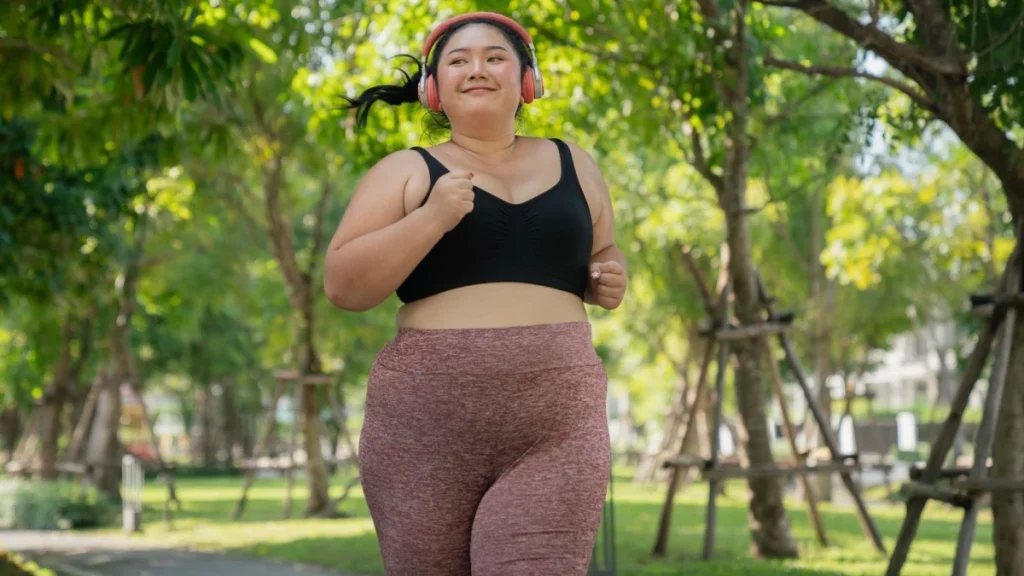
For distance runners, the forced hiatus of pregnancy and postpartum recovery is as much a psychological challenge as it is a physical one. The anticipation of lacing up running shoes once again represents a reclamation of identity, fitness, and mental well-being. However, returning to high-impact sports after a prolonged break is rarely a seamless transition.
When one postpartum runner—eager to resume her pre-baby routine—encountered the familiar, nagging pain of iliotibial (IT) band syndrome, it threatened to derail her progress before it truly began. Rather than resigning herself to another lengthy pause from the sport she loves, she embarked on a targeted two-week self-experiment: performing a daily standing IT band stretch to alleviate lateral knee discomfort and rebuild her endurance.
This deep dive examines the anatomy of IT band syndrome, the clinical realities of stretching dense collagen tissue, and the practical takeaways of a runner attempting to fast-track her comeback. Backed by expert insights from Dr. Zaki Afzal, founder of Optimize Physical Therapy and Performance, this article explores the fine line between progressive overload and injury relapse, offering a comprehensive roadmap for athletes navigating postpartum rehabilitation and repetitive strain injuries.
Detailed Chronology: The Two-Week Experiment
The decision to implement a daily stretching routine stemmed from a desire to maintain continuity between runs and prevent tightness from locking in. Here is how the two-week protocol unfolded, step by step.
Week 1: Establishing the Baseline and Building Consistency
- Frequency: Daily, regardless of whether it was a running day or a rest day.
- Duration: 30 seconds per side.
- Run Days: On days featuring a run (twice a week), the stretch was performed twice—once pre-run and once post-run, bringing the total stretching time on those days to double the daily baseline.
During the first week, the runner noticed incremental improvements in her distance thresholds. Historically, postpartum runs were capped strictly at three miles before dull, lateral knee pain would flare up, signaling the onset of IT band irritation.
- Run One: Yielded three-and-a-quarter miles before minor discomfort registered.
- Run Two: Pushed slightly further, reaching three-and-a-half pain-free miles.
While modest, these gains offered psychological reassurance. The daily routine appeared to be loosening the targeted area enough to delay the onset of symptoms.
Week 2: Intensifying the Protocol and Pushing Limits
- Frequency: Daily.
- Duration: Increased from 30 seconds to 45 seconds per side.
- Modifications: Incorporated a lateral hip lean. For instance, with the left leg crossed behind the right, the runner would actively lean her torso to the left to deepen the tension across the lateral hip complex.
- Run Days: Continued the pre- and post-run double-stretching protocol on her designated running days.
Entering the second week with heightened confidence, the runner successfully logged four miles without encountering IT band-related pain. This marked a significant milestone—a full mile further than she had managed at any point since giving birth. Emboldened by this success, she set a lofty goal for her final run of the two-week experiment: targeting five miles, her standard pre-pregnancy distance.
The Turning Point: The Five-Mile Wall
On the final outing of the trial, the runner set out to break the five-mile barrier. However, physiological reality intervened. At four-and-a-half miles, the familiar lateral knee pain struck, forcing her to halt the workout immediately.
While falling short of the five-mile target was disappointing, the experiment yielded crucial lessons regarding tissue adaptation, pacing, and the inherent dangers of escalating mileage too quickly after a long layoff.
Supporting Context & Metrics: Understanding IT Band Syndrome
To truly contextualize the runner’s experience, one must understand what IT band syndrome actually is—and what stretching does (and does not) accomplish.
What is IT Band Syndrome?
Iliotibial band syndrome (ITBS) is one of the most common overuse injuries among runners, cyclists, and multi-sport athletes. It manifests as sharp or aching pain on the lateral (outside) aspect of the knee, typically occurring repetitively after a specific mileage or duration of activity.
However, locating the pain at the knee is often misleading. As Dr. Zaki Afzal explains:
"IT band syndrome is basically lateral knee pain that’s actually deriving from the hip and the lateral hip muscles. The IT band is a dense collagen tissue that attaches to the TFL [tensor fasciae latae] muscle up at the hip, and runs all the way down to the outside of the knee. What causes the syndrome is irritation of that tissue at the outside of the knee, where it gets a little compression."
The Myth of "Stretching" the IT Band
A common misconception in sports medicine is that the IT band can be manually lengthened through static stretching. Dr. Afzal clarifies the biomechanical reality:
"The IT band is not built to be stretched. The forces needed to deform tissue like this are way beyond anything you can apply with your hands or a stretch, and the IT band is firmly anchored to the thigh bone along its whole length, so it’s not some loose strap you can lengthen."
Instead, when an athlete performs a standing IT band stretch, the therapeutic effect occurs upstream. By targeting the tensor fasciae latae (TFL) and the surrounding lateral hip musculature, the stretch reduces hypertonicity in the muscles anchoring the upper end of the IT band. This indirect influence relieves excessive tension down the chain, ultimately manifesting as a looser, more comfortable sensation at the knee joint.
Official Statements & Expert Analysis
Dr. Zaki Afzal brings elite-level clinical perspective to the table. As the founder of Optimize Physical Therapy and Performance—one of the largest out-of-network physical therapy practices in the United States—Afzal has treated everyone from everyday active adults to Olympians and NFL athletes during his extensive career, which includes orthopedic residencies at the University of Michigan and sports fellowships at Ohio State.
According to Dr. Afzal, isolated stretching is only one piece of a much larger rehabilitation puzzle. He emphasizes that tissue tolerance and force absorption are foundational to long-term injury prevention:
"Hip strength and hip reactive strength matter because your body has to absorb force when you run, and it will either do that with muscle or it will lean on structures like the IT band. Which strategy your body uses depends on the demands you put on it, your training history, and what resources it has available."
When runners increase their mileage too rapidly—as our postpartum runner did when attempting to jump straight from three miles to five miles—the musculoskeletal system is forced to absorb cumulative loads that unconditioned tissues cannot handle. When local muscles fatigue, the body shifts the burden onto passive structures like the IT band, resulting in friction, compression, and subsequent inflammation at the lateral femoral epicondyle.
Future Outlook: Building a Sustainable Running Routine
The two-week experiment proved that targeted hip stretching can successfully delay the onset of ITBS symptoms and aid in short-term distance progression. However, it also served as a sharp reminder of the cardinal rule of endurance training: progress requires patience.
Moving forward, the runner’s recovery roadmap incorporates several key adjustments:
- Strategic Pacing and Mileage Management: Recognizing that her attempt to hit five miles was a classic case of "too much, too soon," she plans to dial back her long-run distances and apply the 10% rule (increasing weekly mileage by no more than 10%) to allow connective tissues adequate time to adapt.
- Integrating Strength with Flexibility: While the standing IT band stretch will retain a permanent spot in her daily routine due to its efficacy in managing TFL tension, it will now be paired with targeted hip-strengthening exercises—such as lateral band walks, clamshells, and single-leg stability work—to enhance force absorption.
- Postpartum Body Literacy: Acknowledging that pregnancy fundamentally alters pelvic alignment, core stability, and load distribution, she is committed to listening to her body’s biofeedback rather than relying solely on pre-pregnancy fitness benchmarks.
By combining daily mobility work for the lateral hip complex with progressive strength training and conservative mileage increases, runners battling IT band syndrome can transition away from chronic injury cycles and return to the pavement for the long haul.