Executive Overview
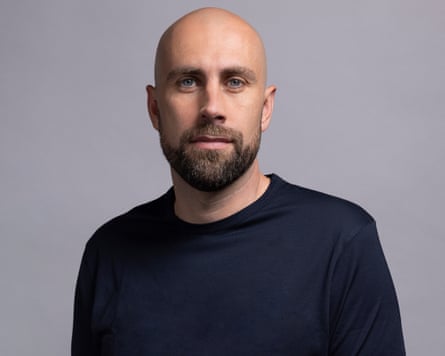
In the sprawling landscape of modern investigative journalism, few creators have plunged as deep into the geopolitical abyss as Josh Baker. Best known for his uncompromising BBC podcast series I’m Not a Monster, Baker has carved out a distinct niche by marrying raw human tragedy with sweeping narratives of espionage, state-sponsored terror, and the profound human cost of foreign policy failures.
Baker’s third season turns its narrative lens toward one of the most enduring and harrowing modern mysteries of the Middle East: the 2012 disappearance of Austin Tice, an American freelance journalist and former US Marine. What began as a traditional missing-person investigation quickly devolved into a labyrinthine narrative resembling a geopolitical spy thriller. Yet, beneath the layers of clandestine intelligence, double-dealing, and dictatorship, Baker’s work exposes a much grimmer reality—the industrial-scale apparatus of forced disappearance and torture engineered by the Assad regime in Syria.
As global focus shifts toward the shifting dynamics of the Middle East—particularly following the dramatic fall of Bashar al-Assad’s regime—Baker’s reporting offers a rare, penetrating look inside long-sealed facilities of oppression. Far from a straightforward cold case, the hunt for Austin Tice and the pursuit of accountability for Syria’s missing thousands have become inextricably linked. Through unprecedented access to global intelligence networks, relentless shoe-leather reporting, and a commitment to slowing down the news cycle to focus on human dignity, Baker’s latest work redefines what audio investigative journalism can achieve.
Detailed Chronology: From the Frontlines of Mosul to the Labyrinth of Damascus
To understand the tenacity driving Baker’s investigation into Austin Tice, one must first understand the perilous trajectory of Baker’s own career—a path forged in the crucible of modern urban warfare.
The Crucible of Mosul
Now 37, Baker’s journalistic foundations were laid on the night desk of The Times, followed by early reporting on the Serbian refugee crisis and hot spots across the Middle East. By the mid-2010s, he was directing Battle for Iraq—a Guardian/PBS co-production—where he embedded directly with Iraqi special forces.
The official coalition narrative at the time was clear-cut: ISIS was retreating, and coalition forces were decisively winning. The reality on the ground, however, was far more chaotic. While embedded in Mosul, Baker found himself trapped overnight in a residential home as intense fighting raged outside. Awoken by a radio operator’s frantic warning, Baker listened to the gunfire echoing through the streets.

"Without wanting to sound like a war bro, it was all going one way and it was all American weaponry," Baker recalls. "The sound is different when it’s Isis."
What Baker and his team failed to hear in time was a massive, heavily armored articulated lorry attempting to maneuver down the narrow street to execute a suicide bombing. Captured via drone footage by ISIS propagandists, the vehicle detonated directly outside their safehouse. The resulting blast caused the building to collapse, burying Baker and leaving him with a broken back.
The Birth of I’m Not a Monster
Evacuated back to England to recuperate, Baker’s life took another unexpected turn when a familiar source—a confidential contact with deep ties to militant networks—reached out. The source showed Baker a chilling home video filmed inside Raqqa, then the de facto capital of the Islamic State. The footage captured a young American boy, Matthew, being forced by his captors to assemble a suicide bomb.
Matthew was the eldest son of "Sam," an American woman who had vanished into the ISIS caliphate after her husband became a sniper. Fueled by a mixture of post-traumatic adrenaline and sheer moral resolve, Baker vowed to locate the child. Seven months later, against all operational odds, he succeeded, laying the groundwork for the inaugural season of I’m Not a Monster.
The success of that series birthed a secondary investigation into Shamima Begum, the British teenager who fled London in 2015 to join ISIS. Alerted by a Dutch former ISIS bride sequestered in the same refugee camp as Begum, Baker leveraged his deep institutional knowledge—having been inside the East London mosque on the exact day Begum and her school friends disappeared. His subsequent reporting unmasked the covert role played by Canadian intelligence in smuggling Begum across the Turkish border, exposing a careless disregard for operational tradecraft that heavily bolstered Begum’s legal claims of grooming and victimhood.
The Shift to Austin Tice
With his third season, Baker pivoted to the case of Austin Tice, who vanished near Damascus in August 2012 while reporting independently on the unfolding Syrian civil war. Tice, a former US Marine Corps captain, entered Syria to document the human toll of the uprising against Assad. Shortly after being detained at a checkpoint near Damascus, he disappeared.
Initially framed as a missing-person case, Baker’s investigation quickly spiraled into a complex web of intelligence leaks, espionage, and geopolitical posturing. With the sudden collapse of the Assad regime, Baker’s team found themselves walking through the very doors of the regime’s notorious detention facilities, shedding light on a 14-year campaign of industrial-scale disappearance that has claimed the lives or liberty of an estimated 100,000 Syrians.
Supporting Context & Metrics: The Scale of Atrocity
To contextualize the gravity of Baker’s reporting, it is vital to examine the macro-level metrics defining the Syrian conflict, the landscape of journalist safety, and the mechanics of modern intelligence leaks.
The Disappeared of Syria
- 100,000+: Conservative estimates suggest that upwards of 100,000 individuals have been forcibly disappeared by the Syrian state security apparatus since the civil war began in 2011.
- The Second-Longest Detention: If Austin Tice is confirmed to be alive, his captivity—spanning over a decade—places him as the second-longest detained journalist in modern global history.
- Global ISIS Recruitment: Security analysts estimate that tens of thousands of foreign fighters from roughly 100 nations were successfully recruited by ISIS during the height of the caliphate, driven by sophisticated digital propaganda campaigns.
The Intelligence Ecosystem: Washington vs. Whitehall
Baker draws a sharp contrast between the accessibility of intelligence sources in Washington, DC, compared to London:
| Metric / Attribute | United Kingdom (Whitehall) | United States (Washington, DC) |
|---|---|---|
| Source Accessibility | Highly restricted; "intelligence sources" often equate to institutional press officers. | Highly accessible; intelligence officers and senior law enforcement can frequently be engaged at social gatherings or private venues. |
| Operational Tradecraft | Rigid adherence to operational security (OpSec) makes uncovering rogue state actions (such as border smuggling) exceptionally difficult to prove. | Looser institutional tradecraft frequently results in a higher volume of leaks and whistleblowing data. |
| Political Climate Impact | Consistent levels of institutional opacity regarding national security matters. | Noticeable chilling effect under specific administrations (such as the Trump presidency), leading to increased reluctance among sources to speak out. |
Despite receiving an unprecedented volume of leaks from multiple geopolitical directions regarding Tice, Baker notes that filtering actionable truth from political posturing remains the ultimate journalistic hurdle.
Official Statements and Institutional Responses
The international community’s response to the disappearance of Austin Tice has long been characterized by diplomatic stagnation, public appeals, and cautious behind-the-scenes maneuvering.
- The Tice Family Campaign: Marc and Debra Tice, Austin’s parents, have maintained a tireless global advocacy campaign for over a decade. Speaking at international press conferences—including a notable appearance in Beirut in 2020—they have consistently urged successive US administrations to prioritize direct engagement with Damascus to secure their son’s release.
- US Government Position: Successive White House administrations have maintained that they have engaged directly and indirectly with Syrian officials to secure Tice’s freedom, though Syrian authorities have consistently denied holding him.
- The Post-Assad Reality: With the sudden fall of Bashar al-Assad, international human rights organizations and independent investigative journalists like Baker have called for immediate preservation of intelligence archives, prison logs, and torture facilities to uncover the fate of thousands of political prisoners, including foreign nationals.
Future Outlook: Accountability and the Pursuit of Truth
As Josh Baker reflects on the conclusion of his exhaustive investigation into Austin Tice, the implications of his work extend far beyond the confines of a podcast feed.

The collapse of the Assad regime has cracked open a dark vault of state secrets that were once deemed impenetrable. While Baker believes his reporting has yielded a remarkably clear picture of what likely befell Tice during his early days of captivity, the challenge of definitive proof remains monumental.
Furthermore, the broader lessons of Baker’s body of work—spanning from the ruins of Mosul to the refugee camps of Northern Syria and the corridors of Western intelligence—highlight a systemic failure in how modern democracies handle radicalization, citizenship, and accountability. By stripping individuals like Shamima Begum of statehood rather than managing the security threats transparently, Western governments have chosen political expediency over long-term security.
Ultimately, Baker’s transition away from traditional, fast-paced newsrooms into narrative investigative audio represents a triumph for slow journalism. By refusing to treat human tragedies as mere geopolitical talking points, he has forced audiences to confront the obscene realities of state-sponsored terror. Whether the ultimate fate of Austin Tice is ever brought to absolute light, Baker’s work ensures that the industrial complex of disappearance in Syria can never again be swept beneath the geopolitical rug.