In the season-three premiere of HBO’s Euphoria, an exhausted Rue—played by Zendaya—accepts a mug of raw cow’s milk from a child on a southwestern ranch. She slurps it down and proclaims it the "best f*cking milk" she’s ever tasted. The beverage is framed as so utterly transcendent that it momentarily rewrites Rue’s reality, romanticizing a simpler, internet-free lifestyle characterized by tradwife aesthetics and stark isolation. It brings her strength, offers a strange solace, and creates a sharp nostalgia for a bygone era she never actually lived through.
This dramatic invocation of dairy raises an intriguing question: Can a milky perfume achieve the exact same psychological effect?
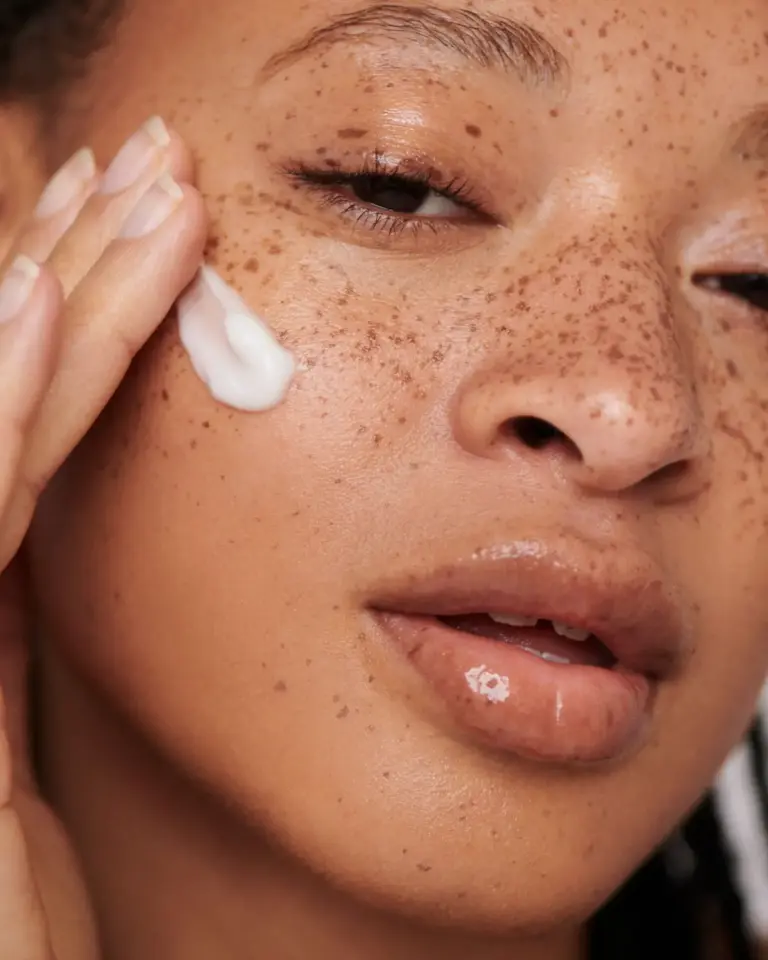
Over the past decade, milk has transformed from a breakfast staple into a dominant structural motif in the global beauty and wellness market. From Glossier’s iconic Milky Jelly Cleanser and Milk Makeup in 2016 to the avalanche of hair milks, milky toners, Rhode’s viral Glazing Milk, and Herbivore’s Coco Rose Milky Body Mist packaged to mimic old-school glass milk bottles, the beauty aisle is saturated with乳-inspired innovation.
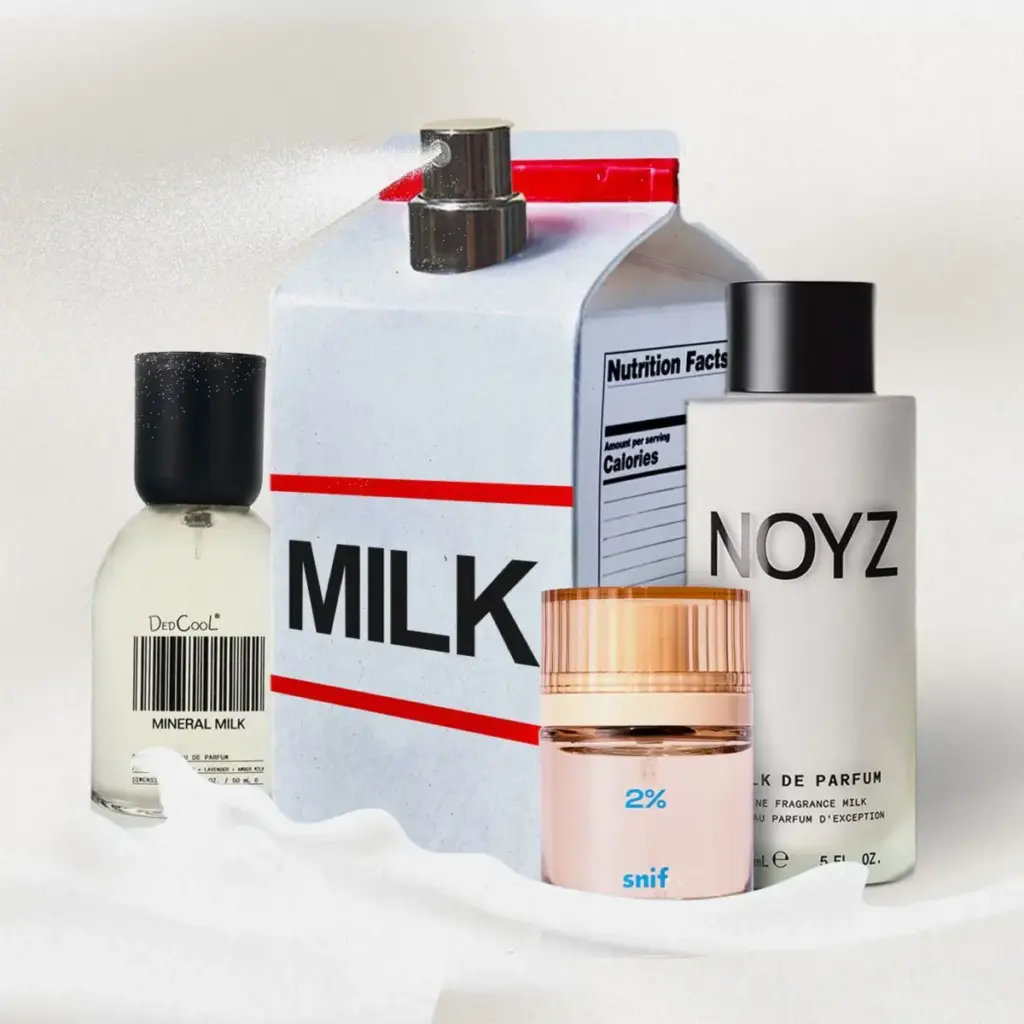
Parallel to this skincare boom, the fragrance market has undergone a dramatic dairy revolution. DedCool launched its signature "Milk" perfume in 2020—a masterclass in timing that coincided with pandemic-era shifts toward self-care and skin scents—before expanding the line with Xtra Milk, Mochi Milk, and Mineral Milk. Today, consumers can choose from an expansive gallery of lactonic creations, including Commodity’s Milk and Milk Orchid, The Nue Co.’s First Milk, Snif’s cereal-infused 2%, Bath & Body Works’ Milk, Dossier’s Milky White, Noyz’s Mylk de Parfum, and a host of international offerings.
This surging obsession with milk—both as a physical beverage and a conceptual fragrance note—does not exist in a vacuum. It arrives amid a fascinating convergence of modern wellness culture, "proteinmaxxing," the mainstreaming of GLP-1 weight-loss medications, shifting agricultural economics, and socio-political nostalgia encapsulated by the "tradwife" movement and the Make America Healthy Again (MAHA) campaign. This article investigates the multi-layered phenomenon driving the milk-perfume craze, examining why consumers are simultaneously drinking more whole milk and drenching themselves in lactonic, comforting aromas.
Detailed Chronology: From 2016 Beauty Pioneers to the 2026 Lactonic Explosion
To understand how the fragrance industry arrived at "eau de cereal milk," one must trace the evolution of milk as a modern cosmetic and sensory vehicle.
2010–2016: The Genesis of Skin Scents and Initial Disruption. Long before commercial shelves were crowded with dairy-named perfumes, niche brands were quietly experimenting with intimate fragrance profiles. DedCool’s Carina Chaz conceptualized the original "Milk" scent as a teenage passion project in 2010. At the time, the conversation around "skin scents"—fragrances designed to melt into the wearer’s natural body chemistry rather than project aggressively—was in its infancy. By 2016, brands like Glossier and Milk Makeup cemented the word "milk" as a shorthand for clean, fresh, accessible, and unpretentious beauty.
2020: The Pandemic Pivot and DedCool’s Official Launch. The global COVID-19 pandemic catalyzed a massive paradigm shift in consumer behavior. As documented by industry analysts, traditional lipstick sales plummeted while skincare and fragrance categories surged. Perfumes became a primary mechanism for escapism, emotional grounding, and micro-luxury. Capitalizing on this psychological shift, DedCool officially launched its signature Milk fragrance in 2020, selling out its initial run of a thousand units instantly.
2021–2024: The Gourmand and Lactonic Boom. As pandemic restrictions eased, the fragrance market leaned heavily into gourmand profiles, dominated by an obsessive appetite for vanilla, tonka bean, and warm, edible notes. Perfumers began pushing past traditional sweetness into "lactonic" territory—utilizing chemical compounds and softening elements to evoke the creamy, velvety texture of dairy without necessarily using animal-derived ingredients. Concurrently, public discourse shifted toward dietary self-optimization.
2025–2026: The Peak Dairy and Fragrance Convergence. The current landscape features an unprecedented saturation of milk-themed launches. In late 2025, The Nue Co. introduced First Milk, formulated by master perfumer Frank Voelkl to evoke our earliest sensory memories. In early 2026, indie favorite Noyz debuted its Mylk de Parfum collection, merging liquid skincare textures with high-end scent profiling. Most recently, Snif launched 2%, an explicit homage to cereal milk, accompanied by nostalgic body mists evoking Fruit Loops and Cinnamon Toast Crunch. Today, the milk perfume trend stands as a dominant pillar of modern olfactory design.
Supporting Context & Metrics: Proteinmaxxing, GLP-1s, and Big Milk’s Resurgence
The sudden ubiquity of milk-inspired products is underscored by dramatic shifts in the agricultural and health sectors.
The Rise of Proteinmaxxing and GLP-1s
Diet culture has entered a hyper-optimized era characterized by "proteinmaxxing"—the relentless pursuit of high protein intake relative to minimal caloric consumption. Concurrently, the proliferation of GLP-1 weight-loss medications has reshaped nutritional needs across the United States. With approximately 12% of U.S. adults utilizing GLP-1 drugs for diabetes, weight management, or other conditions as of 2025, medical professionals frequently recommend high-protein diets to preserve muscle mass during rapid weight loss.
While these trends have driven agricultural investments into plant-based proteins like peas, lentils, and chickpeas (though, as market observers note, we are unlikely to see "eau de chickpea" dominating Sephora shelves anytime soon), they have simultaneously breathed new life into the traditional dairy industry.
Big Milk’s Historic Rebound
After decades of declining per-capita consumption driven by the rise of plant-based milk alternatives (such as oat, almond, and soy), the U.S. dairy industry experienced a landmark resurgence. According to data highlighted by The New York Times, 2024 marked the first increase in whole-milk consumption in years, and only the second-ever increase recorded since the 1970s.
Even as the total number of dairy farms contracts, herd sizes and overall milk production are climbing. This resurgence is fueled by consumer pushback against ultra-processed foods. Shoppers are increasingly seeking "real, farm-to-table" beverages that offer straightforward nutritional profiles without complex chemical additives.
The Political and Cultural Subtext of Dairy
This agricultural pivot is deeply intertwined with cultural and political narratives. The "tradwife" social media movement, which romanticizes traditional domestic roles and homesteading, has heavily popularized raw milk and artisanal dairy production. High-profile political figures, such as U.S. Department of Health and Human Services official Robert F. Kennedy Jr., have publicly championed raw milk as a superfood, fueling double-digit percentage growth in raw milk sales despite warnings from the FDA and CDC regarding foodborne pathogens. (Even high-profile homesteads like TikTok-viral Ballerina Farm have temporarily paused raw milk sales following health test failures, highlighting the friction between romanticized agrarian ideals and modern public health realities).
Official Statements and Industry Insights
Industry veterans, perfumers, and agricultural executives offer compelling perspectives on why milk has captured the collective imagination.
Lorna McKay, Perfumer and Co-Founder of The Perfume Society:
"Milky is not a material or an ingredient; it’s a concept and a feeling. You’ll get things like tonka, vanilla, sandalwood, and all these softening elements that will make the milky fragrance in the end. But a perfumer will make a milky fragrance—they’ll call it lactonic or all sorts of things—but there’s not a milky ingredient. It’s the feeling that the people get when they wear these ingredients."
Rachel Kyllo, Chief Marketing Officer for Dairy Brands at Dairy Farmers of America:
"I think as people are looking for a beverage that harkens back to a simpler time, and also a product that isn’t ultra-processed, it just takes them to milk. It’s just a simple, real, farm-to-table nostalgic kind of beverage, and then you couple that with the nutrition that folks are looking for today."
Kara Kowalski, Director of Fragrance and Formula Development at Snif:
"When the world is uncertain and we don’t know what to do, we want to go back to our creature comforts. I know in perfumery, we say that’s why gourmands are trending, because they’re comfortable. I think, in some way, milk does that too." Reflecting on the creation of their cereal-milk fragrance, 2%, Kowalski notes how deeply tied dairy is to childhood memory: "Do you remember the Matilda movie? When she’s eating her bowl of cereal and milk, and that song [‘Little Bitty Pretty One’] comes on, that’s so iconic."
Malena Higuera, CEO of Noyz:
Noting how cultural backgrounds inform consumer habits, Higuera explains the philosophy behind their accessible, high-volume Mylk de Parfum line: "It’s so much for us, too, about how if we feel good on the outside, we actually feel good on the inside. [We’re] flipping that script about self-care in a way that it is about the micro luxuries that are within reach."
Carina Chaz, Founder and CEO of DedCool:
Reflecting on the evolution of skin scents since launching Milk in 2020, Chaz observes: "It was a noninvasive, everyone-likes-this scent profile. It changes on everyone’s skin… We’re seeing a lot of milk, and it’s not only in fragrance; it’s in so many different categories in beauty. I think it makes sense. It’s something you can interpret in any way."
Future Outlook: What’s Next for the Lactonic Fragrance Market?
As we look toward the future of scent design and wellness culture, the milk-perfume trend appears to be more than a fleeting TikTok micro-trend. It represents a fundamental shift in how consumers articulate safety, comfort, and identity through fragrance.
The Evolution of Genderless and Quiet Luxury Fragrances: As veteran perfumer Lorna McKay notes, milky perfumes resonate strongly with younger generations because they reject aggressive, traditional typecasting. They are soft, genderless, and understated—aligning perfectly with the broader "quiet luxury" movement that values personal sensory experience over loud projection.
Technological Innovations in Lactonic Accords: Perfumers will continue to refine synthetic lactones, moving beyond simple vanilla-and-sandalwood blends to capture hyper-specific dairy nuances—ranging from cold, crisp skim milk to rich, condensed cream, toasted cereal grains, and malted milks.
Cross-Category Expansion: Following the playbook of brands like DedCool and Snif, we can expect to see lactonic scent profiles bleed further into lifestyle categories, including laundry detergents, home care, premium body washes, and multi-sensory skincare formats.
The Psychological Counter-Weight to Macro-Uncertainty: In an era defined by persistent economic inflation, geopolitical friction, and digital overwhelm, consumers will continue to seek out olfactory sanctuaries. Milk fragrances offer an evolutionary regression to our earliest memory of safety—the warm embrace of infancy, the uncomplicated comfort of a morning bowl of cereal, and the soothing reassurance of home.
Ultimately, milk perfumes succeed because they are a blank canvas. Whether interpreted as a symbol of rustic tradwife purity, a nod to wellness-driven protein optimization, or simply a cozy, wearable security blanket after a grueling day, the lactonic wave is here to stay. Spritzing a cloud of warm, almond-infused milk or floral orchid-milk across the skin is not just about smelling good—it is a conscious act of emotional reclamation in a chaotic world.


.jpg)