Executive Overview
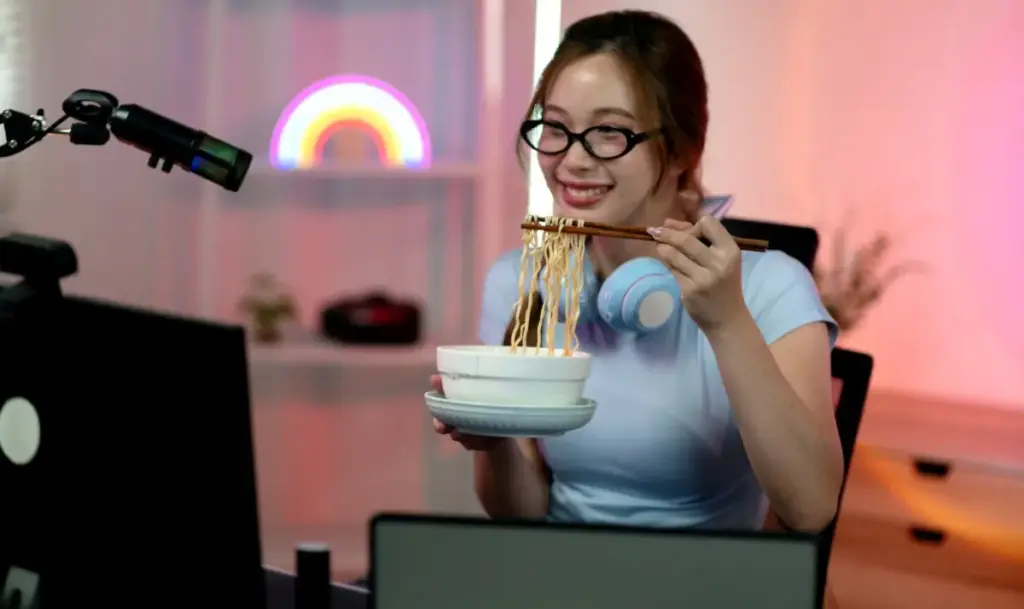
For over a decade, mukbang—the digital phenomenon centered on live-streamed and pre-recorded eating broadcasts—has reigned as one of the internet’s most hypnotic and culturally pervasive curiosities. Originating in South Korea as a remedy for a burgeoning nationwide loneliness epidemic, the genre quickly transcended its geographical borders, evolving into a multi-billion-view global entertainment sector on platforms like Twitch and YouTube. Yet, as the calendar turns to 2026, the genre stands at a precarious crossroads.
A mounting wave of anxiety from parents, public health officials, and major tech companies has converged around a singular, alarming issue: imitable patterns of disordered eating embedded within high-profile creator content. What was once celebrated as quirky, communal digital dining is now facing rigorous institutional scrutiny.
Driven by tragic health crises, mounting controversies, and aggressive algorithmic interventions by platforms like YouTube, the mukbang ecosystem is undergoing a seismic transformation. Creators who once built their empires on gargantuan, life-threatening food binges are suddenly finding their monetization stripped, their reach artificially suppressed, and their core content models legally and socially untenable. As top-tier creators pivot toward moderation, the era of unbridled, extreme food consumption on mainstream video platforms appears to be drawing to a definitive close.
Detailed Chronology: From Communal Dining to Algorithmic Crisis
To understand the current regulatory and cultural reckoning facing mukbang, it is necessary to examine how the format evolved from a localized social experiment into an international juggernaut, and subsequently, a public health flashpoint.
Phase 1: The Genesis and Global Expansion (2010s)
The term mukbang is a portmanteau of the Korean words for "eating" (meokneun) and "broadcast" (bangsong). Emerging in South Korea during the early 2010s, the broadcasts served a deeply social function. Driven by a widening demographic of single-person households and a profound loneliness epidemic, viewers tuned in to watch hosts consume vast quantities of food in real-time, creating an artificial sense of shared meals and companionship.
It did not take long for the format to cross linguistic and cultural divides. Western creators adapted the concept for YouTube and Twitch, where it spawned dedicated categories. However, as the genre expanded outside of its communal Korean roots, the underlying philosophy shifted. The emphasis on shared dining frequently mutated into a spectacle of excess. Creators began competing for attention through shock value, escalating portion sizes, and performing increasingly extreme stunts centered on food.
Phase 2: Controversies, Escalation, and Health Crises (Late 2010s – Early 2020s)
As the years progressed, the darker side of extreme mukbang content began to surface. The internet witnessed the rise—and subsequent physical toll—of creators pushing their bodies to dangerous extremes. One of the most infamous case studies of the genre’s dark underbelly involved American YouTuber Nikocado Avocado (Nicholas Perry), who amassed millions of subscribers while systematically documenting dramatic weight gain and severe psychological distress resulting from years of relentless, performative binge eating.
Beyond individual creators, the genre faced compounding controversies:
- Severe Health Impacts and Fatalities: The physical toll of the lifestyle began to manifest tragically. High-profile incidents, such as the sudden death of Chinese mukbang influencer Yingying at the age of 24 following a fatal cardiac arrest brought on by exhaustive binge-eating schedules, shocked the public and drew sharp rebukes from medical professionals.
- Activism and Institutional Pushback: Animal rights organizations also targeted the genre for promoting excessive waste and cruelty. This backlash famously led to a high-profile, PETA-sponsored vegan mukbang campaign featuring internet personality GloZell Green, attempting to pivot the genre’s cultural footprint toward plant-based alternatives.
Phase 3: The Algorithmic Crackdown and Monetization Freeze (2023–2026)
Recognizing the liability and public health risks associated with imitable behavior, YouTube initiated a multi-year crusade to suppress content that promoted eating disorders or dangerous consumption habits. The platform updated its moderation guidelines to aggressively target videos featuring harmful tropes, such as restrictive dieting mixed with binging cycles, and actively deranked these clips within its recommendation engine.
Despite these policies, enforcement remained a moving target. By 2026, the friction between platform rules and creator output reached a boiling point, particularly in the genre’s homeland. Prominent South Korean mukbang creators DietJo and Miso made international headlines after reporting that their channels had their monetization completely disabled. The platform’s automated and manual enforcement flags were triggered by videos containing diet tips juxtaposed with heavy binge-eating sequences, signaling that policy enforcement was translating into acute financial penalties for creators.
Supporting Context & Metrics: The Science and Statistics Behind the Backlash
The mounting pressure on mukbang is not merely a moral panic; it is anchored in hard data concerning adolescent psychology, digital consumption habits, and public health metrics.
The Algorithmic Loop: CCDH Findings
Despite YouTube’s stated commitments to protecting vulnerable users—especially teens and tweens—independent audits reveal persistent systemic failures. A landmark study published by the Center for Countering Digital Hate (CCDH) shed light on the pervasive nature of eating disorder-adjacent content on mainstream platforms.
According to the CCDH investigation, one out of every nine video recommendations served to newly created accounts featuring young demographic profiles contained harmful tropes related to eating disorders and extreme body modification. The study underscored that recommendation algorithms inherently favor high-engagement, sensational content, making mukbang videos featuring shocking volume or psychological distress prime candidates for algorithmic amplification, directly undercutting YouTube’s Trust and Safety guardrails.
Psychological Vulnerability and Imitable Behavior
Public health researchers point out that mukbang consumption acts as a psychological double-edged sword. While some viewers report temporary comfort from the perceived companionship, vulnerable populations—particularly adolescents struggling with body dysmorphia or disordered eating patterns—frequently internalize the behaviors showcased by creators.
Psychologists note that the parasocial relationships built between creators and their audiences heighten the risk of imitable behavior. When a charismatic influencer normalizes consuming 10,000 calories in a single sitting or cycles through extreme binge-and-restrict routines, it establishes a toxic benchmark for impressionable viewers. This neurological reinforcement mechanism is precisely what regulatory bodies and safety coalitions have sought to dismantle.
Official Statements and Industry Reactions
As the structural foundation of the mukbang economy begins to crack, stakeholders across the digital media landscape have begun to weigh in on the future of food-centric broadcasting.
Platform Policies and Tech Giants
While YouTube has declined to comment on individual channel demonetization cases, the platform’s public policy framework explicitly states that content depicting or promoting eating disorders, dangerous weight loss strategies, or imitable binge-eating behaviors violates community guidelines. In official briefings, trust and safety representatives have reiterated their ongoing investment in machine-learning detection models and human moderation teams designed to curb the spread of harmful health-related content.
The Creator Reckoning
For the creators who built their livelihoods on the old paradigm, the writing is clearly on the wall. The era of unchecked excess is giving way to a more sanitised, cautious approach to content creation.
South Korean mega-star Tsuyang, one of the most recognizable faces in the global mukbang community, addressed the changing landscape candidly in a recent broadcast. Recognizing the shifting cultural winds and the tightening grip of platform algorithms, she noted:
"Apparently, eating a lot isn’t the trend these days. From now on, I’ll become a YouTuber who eats in moderation."
Tsuyang’s pivot reflects a broader survival strategy across the creator economy. Influencers who once relied on jaw-dropping culinary volume are hurriedly repackaging their channels to focus on culinary education, cultural storytelling, restaurant reviews, and health-conscious dining, attempting to salvage their subscriber bases before algorithmic penalties render their channels entirely obsolete.
Future Outlook: What Lies Ahead for Mukbang?
The transformation of the mukbang genre in 2026 marks the end of an era of digital excess, but it does not necessarily spell the death of the format entirely. Instead, the industry is splitting down the middle, separating exploitative shock entertainment from sustainable, community-driven content.
1. The Rise of "Clean" and Moderate Mukbangs
As algorithmic enforcement hardens and monetization policies weed out channels promoting unhealthy habits, the surviving creators will likely be those who embrace moderation. The future mukbang video will likely feature normal-sized portions, an emphasis on gastronomic appreciation, and a pivot toward culinary arts rather than competitive eating endurance.
2. Heightened Regulatory Scrutiny Beyond YouTube
While YouTube has shouldered the brunt of the responsibility in recent years, other platforms—including TikTok, Twitch, and Meta’s ecosystem—are facing mounting calls from child advocacy groups to implement uniform safety standards regarding food-related content. In the coming years, we can expect cross-platform compliance frameworks that treat dangerous eating content with the same regulatory seriousness applied to self-harm and substance abuse material.
3. A Cultural Redefinition of Digital Community
Ultimately, the evolution of mukbang forces a reckoning with how digital spaces foster connection. The original impetus for the genre—combating loneliness and creating shared human experiences around food—remains a powerful and valid cultural need. The challenge for the next generation of creators will be decoupling that fundamental human desire for connection from the toxic mechanics of excess, proving that audiences can gather for a digital meal without sacrificing their health, their safety, or their digital well-being in the process.