Executive Overview
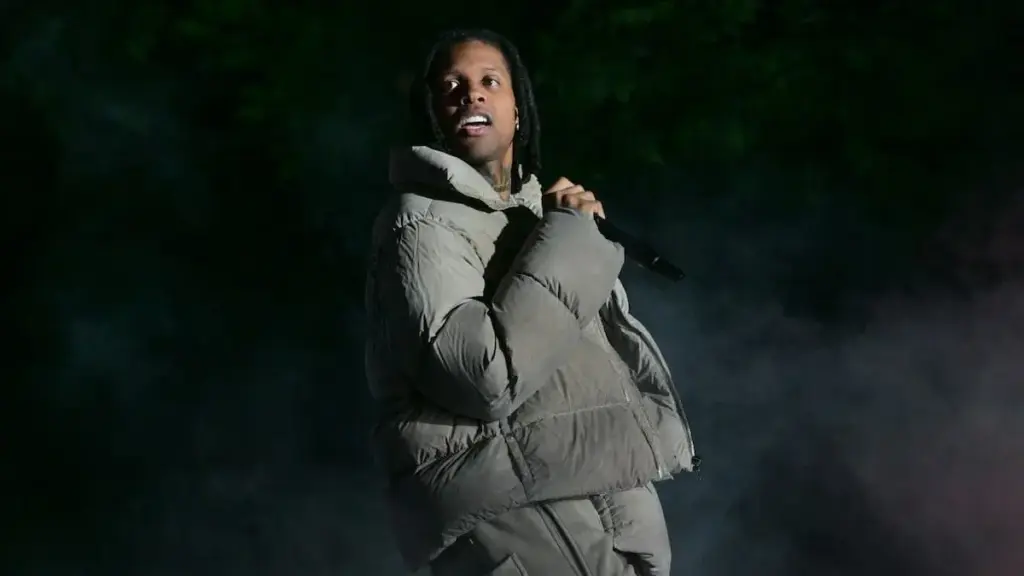
In the wake of a high-profile legal victory that saw rap star Lil Durk cleared of all charges in a heavily scrutinized murder-for-hire trial, the artist’s celebration has taken a peculiar turn into the digital spotlight. Following his acquittal, the Chicago-born rapper—legally known as Durk Derrick Banks—took to Instagram to share a powerful photograph of slain civil rights icon Malcolm X. Accompanying the image was an inspirational message emphasizing resilience, purpose, and the endurance of a message.
However, journalistic investigation and digital footprint analysis quickly revealed a glaring discrepancy: despite the juxtaposition of Malcolm X’s image and the philosophical tone of the post, historical records and exhaustive searches confirm that the civil rights leader never uttered the quoted words. Whether the passage was an original composition by Durk himself or an accidental misattribution remains unclear, but the incident highlights the complex intersection of modern celebrity culture, historical iconography, and digital verification.
This lyrical and philosophical posture arrives at a precarious moment for the rapper. While the murder-for-hire acquittal marked a monumental courtroom victory for his legal team—shielding him from the most severe allegations he faced—Durk’s legal troubles are far from over. Co-defendants in the sprawling case faced a mixed verdict, and Durk himself remains incarcerated as he braces for a far more complex trial scheduled for November, which involves serious weapons and racketeering-related charges.
This report provides a comprehensive examination of Lil Durk’s recent legal exoneration, the viral social media post and its historical inaccuracies, exclusive insights from the jury room, and a look ahead at the formidable legal hurdles standing between the artist and his freedom.
Detailed Chronology: From the Courtroom to the Digital Sphere
The sequence of events leading up to Lil Durk’s current status paints a vivid picture of a high-stakes legal drama playing out simultaneously in a federal courtroom and across public social media feeds.
The Murder-For-Hire Trial and Verdict
The core of the recent proceedings centered on allegations that tied Durk to a high-profile murder-for-hire plot. Federal prosecutors presented their case over several weeks, aiming to link the prominent hip-hop artist to sophisticated criminal conspiracies. However, after intense deliberation, the jury returned a verdict that completely cleared Durk of all charges tied to the indictment.
While Durk walked away from the murder-for-hire allegations completely exonerated, his co-defendants—Deandre “OTF DeDe” Wilson and David “Browneyez” Lindsey—did not emerge unscathed. Both men were found guilty of stalking and stalking conspiracy, though they managed to secure acquittals on three additional charges levied against them by the prosecution. The bifurcated nature of the verdict underscored the jury’s granular approach to weighing evidence for each individual defendant.
The Instagram Post and the Malcolm X Mystery
On September 19, 2026, fresh off the momentum of his legal win, Lil Durk utilized his official Instagram account to address his millions of followers. The post featured a striking photograph of Malcolm X, a figure frequently invoked in hip-hop culture as a symbol of unyielding defiance, intellectual rigor, and systemic resistance.
Directly adjacent to or within the caption of the image, Durk shared the following text:
“The message outlives the man, Courage, Knowledge Purpose Speak Truth. Stand for something. A voice can become a movement. The mission is bigger than me. Learn, Lead, Build Never silence the message.”
The post was punctuated with the hashtag “#freedom,” a poignant nod to his recent courtroom outcome.
Almost immediately, pop culture and music outlets—notably XXL—began analyzing the post. A deeper look into the archives of Malcolm X’s speeches, writings, and documented interviews revealed a startling truth: the legendary orator never spoke or wrote those words. Digital sleuths and simple search queries confirmed that the text had no historical anchor to the civil rights leader.
Media analysts quickly began parsing the intention behind the post. The most plausible hypothesis is that Durk authored the statement himself as an original reflection on his recent ordeal, utilizing the image of Malcolm X as a parallel or thematic accompaniment rather than a direct attribution. Nevertheless, the lack of contextual clarification sparked minor debate across social media platforms regarding the misattribution of historical quotes by public figures.
Supporting Context & Metrics: Inside the Jury Room
To truly understand the weight of Lil Durk’s recent acquittal, one must look beyond the surface headlines and examine the mechanics of the trial itself. Federal criminal trials involving prominent figures are notoriously grueling, and the jury deliberation process in this case was no exception.
An Unprecedented Inside Look
In a rare departure from post-trial silence, an anonymous juror stepped forward to discuss the inner workings of the deliberation room. Speaking with content creator Ceddy Nash for his digital series Nightly Nash, the juror provided a candid, behind-the-scenes account of the intense atmosphere that defined the three-day deadlock.
“I just hope that people understand the process that went in, the how much work we put in, how proud I am of the other jurors [put in] though there were differences,” the juror revealed during the interview.
The juror did not sugarcoat the friction among panel members, admitting that the emotional and intellectual toll of reviewing the case brought them to the brink of hostility.
“I ain’t going to lie, we were at each other’s throats,” the unnamed juror continued. “There was a lot of back and forth. It was three days of deliberation. It would have gone on to like a week more because we were that thorough.”
Weighing the Evidence
Public speculation often assumes that celebrity defendants receive preferential treatment or face immediate prejudice; however, the juror insisted that the panel maintained absolute impartiality throughout the proceedings. According to the insider, the jury spent an immense amount of time dissecting specific exhibits and witness testimonies before arriving at their final verdict.
“There were about three pieces of evidence that were really important; that was the hang-up at the end,” the juror explained. “We gave the same importance to Durk as we did to DeDe and Lindsey; we gave them all a fair shot.”
This meticulous scrutiny ultimately led to the splintered verdict: complete vindication for Lil Durk on the murder-for-hire counts, combined with targeted convictions for his co-defendants on stalking-related charges. The insights from the jury room validate the defense team’s strategy and highlight the rigorous evidentiary standard required to secure convictions in federal conspiracy cases.
Official Statements and Legal Realities
While the murder-for-hire acquittal was celebrated by fans and supporters worldwide with chants of "MVP" outside the courthouse, the legal reality of Lil Durk’s current situation remains starkly sobering.
The Illusion of Immediate Release
Media outlets and legal commentators have been quick to clarify a crucial point of confusion: an acquittal on one set of federal charges does not equate to immediate freedom for a defendant facing multiple indictments across different jurisdictions or dockets.
Legal analysts point out that the federal justice system operates in layers, especially when dealing with high-profile individuals linked to organized street movements or large-scale enterprises. While supporters flooded social media with congratulatory messages and interpreted the Malcolm X post as a triumphant declaration of a completely free man, the prison gates remain firmly shut for the rapper for the foreseeable future.
Future Outlook: The November Trial and Beyond
Lil Durk’s journey through the American judicial system is far from reaching its conclusion. The momentum generated by his recent legal win will soon be tested by an even more formidable legal hurdle.
The Upcoming Weapons and Racketeering Trial
Despite beating the murder-for-hire charges, Lil Durk remains securely in federal custody as he prepares for his next major court appearance. Legal schedules indicate that the rapper is slated to stand trial this coming November to face a battery of serious weapons and racketeering-related charges.
Racketeering indictments—often brought under statutes designed to dismantle organized criminal enterprises—carry severe mandatory minimum sentences and require massive defense coordination. Prosecutors in these cases typically rely on extensive webs of digital evidence, financial transactions, and cooperating witnesses, making them notoriously difficult to dismantle.
What’s at Stake?
For Durk, the November trial represents a critical pivot point in his life and career. A victory would effectively clear his slate of the remaining federal clouds, paving the way for a potential return to the music industry and public life. Conversely, an adverse verdict on the racketeering and weapons charges could result in a lengthy federal prison sentence, rendering his recent murder-for-hire acquittal a pyrrhic victory.
As the hip-hop community watches closely from the sidelines, the rapper’s legal team is undoubtedly pouring over discovery documents and formulating a strategy to counter the upcoming federal onslaught. Whether Lil Durk’s invocation of Malcolm X’s spirit of endurance proves prophetic or merely aspirational will ultimately be decided not by Instagram captions, but by the rigorous machinery of the federal court system this November.