For decades, the intersection of video games and cinema has been defined by a graveyard of critical failures, narrative misfires, and alienated fanbases. From the campy, hyper-stylized misadventures of Paul W.S. Anderson’s franchise to the heavy-handed, universally panned Netflix television series, Capcom’s legendary survival horror titan, Resident Evil, has long struggled to find a credible cinematic voice.
That narrative has decisively changed.
Directed by visionary filmmaker Zach Cregger—fresh off his triumphs with the white-knuckle thrillers Barbarian and Weapons—the 2026 feature film adaptation of Resident Evil has shattered expectations. Launching with an astonishing 97% approval rating on Rotten Tomatoes (briefly peaking at 98%), the film has been heralded by critics not merely as a good video game movie, but as a masterclass in modern horror.
Departing from predictable shot-for-shot remakes or reliance on legacy characters from the source material, Cregger has opted for an original, standalone narrative. Set during a bleak, claustrophobic night in a snow-choked Raccoon City, the film stars Austin Abrams as medical courier Bryan. With a taut 90-minute runtime, blistering pacing, and a delicate tonal balance of sheer terror and dark, gallows humor, Cregger’s film is projected to dominate the global box office with an estimated $80 million opening weekend.
Detailed Chronology of a Cinematic Revival
1. The Long, Troubled History of Resident Evil on Screen
To truly understand the magnitude of Cregger’s success, one must look back at the franchise’s cinematic history. Capcom’s survival horror series, inaugurated in 1996, revolutionized interactive media by blending resource management, puzzle-solving, and visceral dread. However, translating that atmospheric tension to the silver screen proved historically elusive.
The Milla Jovovich Era (2002–2016): Paul W.S. Anderson helmed the initial live-action film series starring Milla Jovovich as Alice. While commercially viable—grossing over $1.2 billion collectively—the films steadily drifted away from survival horror, leaning instead into high-octane, sci-fi action blockbusters that largely ignored the psychological roots and atmospheric dread of the games.
The 2021 Reset (Welcome to Raccoon City): Directed by Johannes Roberts, this installment attempted to course-correct by leaning closer to the lore of the first two games. Despite pleasing hardcore fans with Easter eggs, it suffered from a fractured narrative and a lackluster critical reception.
The 2022 Netflix Series: Attempting to explore a dual-timeline narrative featuring Albert Wesker’s daughters, the streaming adaptation was canceled after a single season, plagued by mixed reviews and audience apathy.
2. Enter Zach Cregger: A New Visionary at the Helm
Following the critical and commercial triumph of his breakout horror hit Barbarian (2022) and his follow-up phenomenon Weapons—which grossed $270 million worldwide and earned Amy Madigan an Oscar-winning role—Zach Cregger established himself as one of Hollywood’s most exciting creative voices.
Sony Pictures handed the reins of their prized intellectual property to Cregger, granting him the creative freedom and budget necessary to realize his unique vision. Rather than treating the project as a corporate obligation, Cregger approached it as a passion project rooted in his personal experience with the games.
Instead of adapting Resident Evil 1, 2, or 4 directly, Cregger crafted an original story set within the franchise’s iconic universe. The film follows Bryan (Austin Abrams), a lowly medical courier navigating a routine delivery in a perpetually snowbound, decaying Raccoon City, only to find himself trapped in the epicenter of an unfolding biological nightmare.
3. The 2026 World Premiere and Critical Deluge
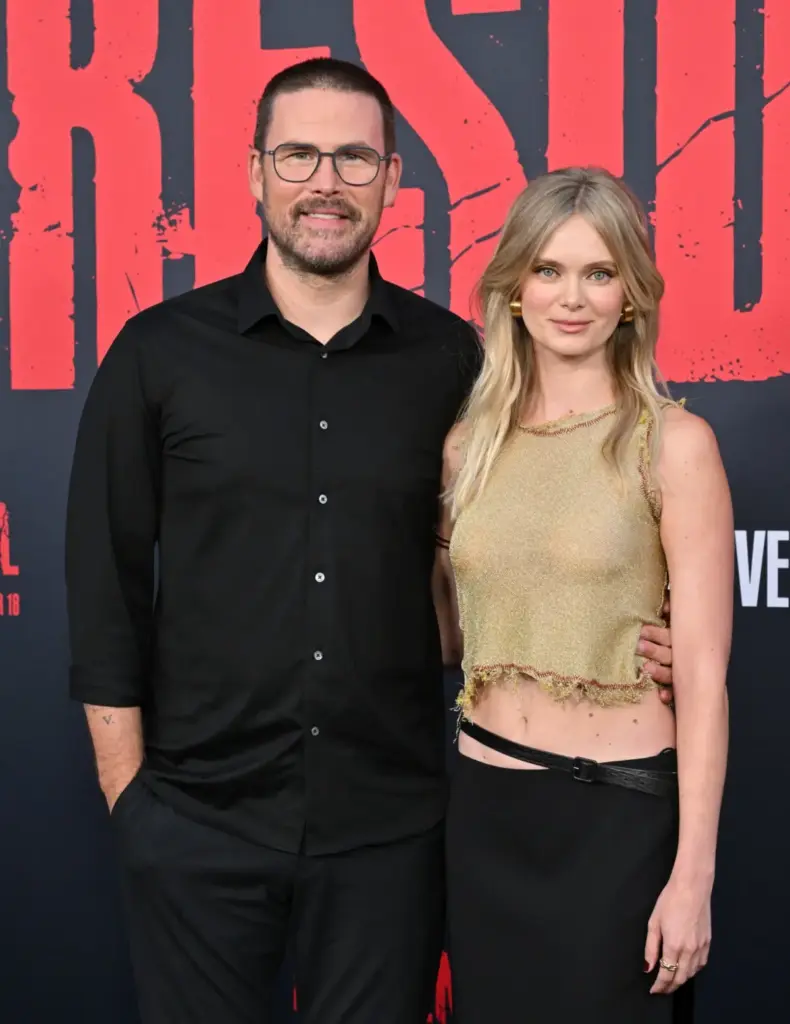
The film held its star-studded world premiere on September 15, 2026, at The United Theater on Broadway in Los Angeles, California. Director Zach Cregger walked the red carpet alongside his wife, actress Sara Paxton, and lead actor Austin Abrams.
When the embargo lifted, the critical response caught the industry by surprise. Social media lit up with hyperbolic, ecstatic praise from major entertainment journalists and critics alike:
Zach Pope took to X (formerly Twitter) to call the film a "near PERFECT Resident Evil experience," praising its brutal, funny, and gory execution.
Perri Nemiroff hailed it as "far and away one of the best video game adaptations I’ve ever seen," noting its unique ability to balance side-splitting comedic beats with genuine, pulse-pounding stakes.
Dominic Baez of the Seattle Times awarded the film a rare 4/4 rating, writing: "At a taut 90 minutes, ‘Resident Evil’ is everything I’ve ever wanted in an ‘RE’ film: It’s scary, it’s clever, and it feels like it could be an ‘RE’ game but doesn’t just do a shot-for-shot remake."
Danny Leigh of the Financial Times praised the movie’s tonal equilibrium, defining it as a "giddy, playful horror-comedy, judged exactly right."
Supporting Context & Metrics
Box Office Projections and Financial Outlook
Industry analysts anticipate that the film will shatter the historical box office ceiling associated with video game adaptations. With an anticipated global opening of $80,000,000 (£59.78m), Sony Pictures is poised to recoup its production investment within its opening weekend.
The financial success follows a broader industry trend where high-concept, critically acclaimed video game adaptations—such as The Last of Us on television and The Super Mario Bros. Movie on the big screen—prove that intellectual property can be handled with artistic integrity without sacrificing commercial appeal.
Critical Metrics Breakdown
Rotten Tomatoes Approval Rating: 97% (Debuted at 98%)
Runtime: 90 minutes (praised for its relentless, fat-free pacing)
Global Opening Weekend Projection: $80 Million USD (£59.78m)
Key Cast: Austin Abrams (Bryan), supported by an ensemble cast embodying the vulnerability of ordinary citizens caught in corporate warfare.
Official Statements and Creative Philosophy
Addressing the inevitable skepticism from hardcore purists regarding the absence of legacy protagonists like Leon S. Kennedy, Jill Valentine, or Chris Redfield, Cregger remained candid during press interviews with The Hollywood Reporter.
"I know that when you dive into an IP you’re going to get flack, a certain degree, from the fandom. It would be weird if I were shocked that that was happening," Cregger admitted.
"But I think that when the people who love these games the way I do see the movie, my hope is that they feel seen and they feel like this movie is paying homage to the games, because it is, it’s obvious."
Explaining his decision-making process behind avoiding a direct game adaptation, Cregger noted:
"I feel like I had a clear idea of what would be my favorite Resident Evil movie and I was lucky enough to have a studio that gave me the resources to make it."
Future Outlook: The Dawn of a New Era for Video Game IP
The triumph of Zach Cregger’s Resident Evil signals a paradigm shift in how major studios manage gaming properties. For years, Hollywood treated video game narratives as rough outlines to be discarded in favor of generic action tropes. By entrusting a visionary auteur with a distinct aesthetic voice, Sony Pictures has proven that fidelity to a franchise’s atmosphere and emotional landscape is far more important than superficial fan service.
As the film rolls out globally on September 18, 2026, audiences and critics alike are preparing to re-enter the snowy, blood-soaked streets of Raccoon City. Whether this standalone masterpiece will spawn sequels or remain a self-contained lightning-in-a-bottle achievement remains to be seen. However, one thing is certain: the video game movie curse has officially been broken, and horror cinema has a new benchmark to beat.